Fed's Williams Flags 3.5% Inflation, Dec. Hike Is 100% Priced
NY Fed's John Williams puts inflation at 3.5% and says "work remains." Markets now price a 100% probability of a 25 bps hike on December 8–9.
Key Points
- NY Fed President John Williams pegged current inflation at 3.5% — nearly double the FOMC's 2% target — and stated explicitly that "there is still work to do."
- Three compounding forces are driving the inflation overshoot: tariff pass-through, energy cost disruptions from Middle East conflict, and demand surge tied to AI investment spending.
- Wednesday's simultaneous release of October Core PCE, the Q3 GDP second estimate, and initial jobless claims at 8:30 AM EST will determine whether the December 8–9 hike holds as a certainty or invites a last-minute re-pricing.
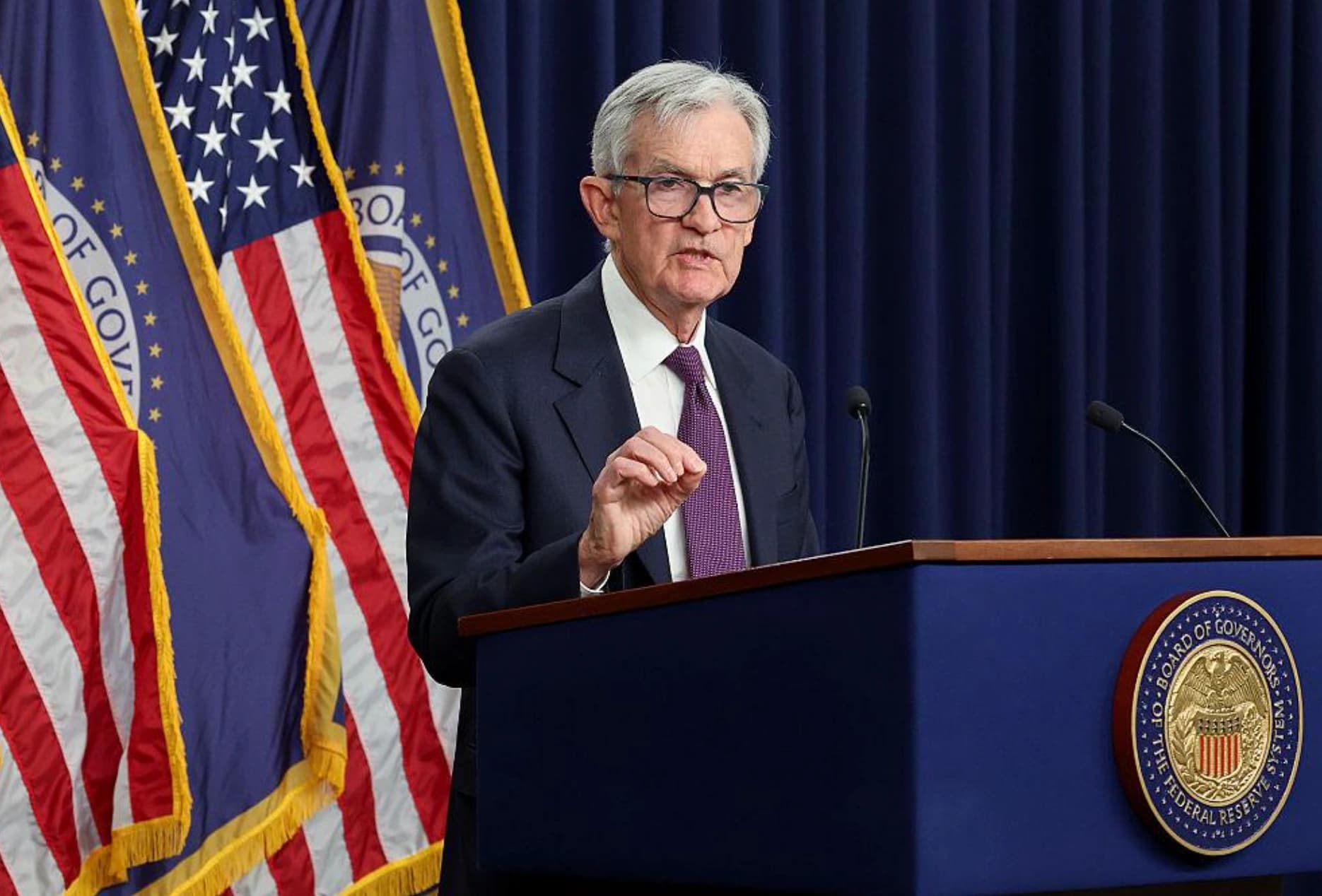
New York Fed President John Williams walked into the University of Mount Saint Vincent on Tuesday and left no ambiguity: inflation is running at 3.5%, the Fed's work is unfinished, and policy will need to keep adjusting. By the close of Tuesday's session, CME FedWatch was pricing a **100% probability** of a +25 basis point hike at the December 8–9 FOMC meeting — the most complete market consensus the Fed has commanded in this tightening cycle.
Williams Lays Out the Inflation Anatomy
The 3.5% inflation figure Williams cited isn't a rounding error or a one-month anomaly — it represents a persistent overshoot of 150 basis points above the FOMC's 2% mandate. What made Williams' remarks unusually useful for traders is that he broke the overshoot into three identifiable and separately trackable drivers, each with its own trajectory and policy implication.
The first is tariffs. Import levies have mechanically pushed goods prices higher, and unlike demand-driven inflation, tariff-induced price increases don't respond to rate hikes in any direct sense — the Fed is effectively tightening to suppress the second-order demand effects of a supply-side price shock. That's a blunt instrument, and Williams knows it, which is why the language around "timely manner" is doing a lot of work in his phrasing.
The second driver is energy cost disruption tied to ongoing Middle East conflicts, compounded by supply-chain dislocations that have not fully resolved. Energy's role here matters not just at the pump but as a production cost embedded throughout the goods and services supply chain. When energy inflation embeds itself in core services — through transportation, logistics, and utilities — it becomes structurally stickier, and that's precisely what the FOMC appears to be observing in the data.
The third, and most structurally interesting, is AI-driven demand. The surge in AI-related capital expenditure has created a broad demand impulse — for data center construction, power infrastructure, semiconductor inputs, and high-skilled labor — that is functioning like a fiscal stimulus embedded in the private sector. Williams didn't treat this as transitory. The FOMC's October 27–28 minutes separately flagged that AI-related debt has ballooned through "complex and opaque" financing structures, raising financial stability questions that sit alongside the inflation concern. The Fed is simultaneously managing an inflation problem and monitoring a leverage problem, and both have AI at the center.
The Treasury Market's Muted Reaction
Despite the unambiguous hawkishness of Williams' remarks, Treasury yields moved broadly lower on Tuesday — a surface-level contradiction that deserves unpacking. The move likely reflects two things: first, that a December hike is so completely priced that there is no incremental yield upside from Williams confirming it; and second, that the market is beginning to look through the December hike and toward the 2027 trajectory, where the FOMC's newly announced reduced meeting schedule introduces genuine uncertainty about the pace of future adjustments.
The 10-year yield's behavior matters here because it is the rate that actually governs corporate borrowing costs, mortgage rates, and equity valuations. The MBA 30-year mortgage rate was last reported at 7.35%, a level that has effectively frozen housing turnover and suppressed construction activity. Building permits for October are forecast at 1.295 million — down sharply from 1.398 million previously — and Wednesday's data will confirm whether that directional decline is accelerating.
Meanwhile, the broader economic backdrop remains stronger than the bond market's rate-sensitive sectors would suggest. S&P Global's chief business economist, following Monday's flash PMI releases, estimated Q4 GDP growth at 3% annualized even after the composite PMI eased to 54.6 from 55.9. The services PMI falling to 54.7 from 56.1, missing the 55.6 consensus, is a deceleration from an elevated base — not a contraction signal. The manufacturing PMI held at 54.5, in line with expectations. The economy is cooling from hot, not rolling over, which is exactly the scenario in which a central bank stays the course on tightening rather than pivoting.
What Wednesday's Data Actually Decides
The December 8–9 hike is priced as a lock, but Wednesday morning's 8:30 AM EST data dump will either cement that consensus or introduce the first credible reason to question it. Three releases hit simultaneously: October Core PCE month-over-month, forecast at +0.3% (matching September's +0.3%); Core PCE year-over-year, forecast at 3.2% against a prior 3.1%; and the Q3 GDP second estimate, expected to confirm the 3.4% advance print.
A Core PCE year-over-year print above 3.2% — say, 3.3% or higher — would validate Williams' 3.5% characterization and lock in not just December but raise the question of whether January 2027 is live as well under the new reduced-meeting schedule. A print at or below 3.0% would be the first real data-driven challenge to the consensus, and even a modest Treasury rally would likely follow. Real consumer spending is forecast at 3.8% for Q3, and if the GDP revision confirms that alongside sticky PCE, the Fed's argument for continued tightening becomes nearly unassailable.
There is also the Bowman distraction to monitor, though it is unlikely to move markets directly. The Fed's inspector general is examining whether Vice Chair for Supervision Michelle Bowman violated ethics rules by attending a Bank of America client dinner on June 17 — inside the FOMC blackout window that ran through the day after the June 16–17 meeting concluded. If the probe escalates or Bowman is asked to recuse from December's deliberations, the governance optics compound an already complicated communications environment for the FOMC.
Wednesday's core PCE release is the last significant inflation data point the FOMC will see before December 8. If it comes in at 3.2% or hotter, traders holding duration exposure in the 2- to 5-year part of the curve face a straightforward reassessment. Watch the 2-year Treasury specifically — it is the most sensitive to near-term Fed rate expectations and will move fastest if Wednesday's print surprises in either direction. The level to track: a 2-year yield break above the cycle high would signal that markets are beginning to price not just December, but the first meeting of 2027 as well.
The Weekly Investor
Daily market analysis for active traders. Free.