SOXX +13.65%, XLK +9.27%: Nvidia Rewrites Sector ETFs
Nvidia's reinstatement of Jensen Huang sent SOXX surging 13.65% and XLK 9.27% Monday. Here's what the sector ETF scorecard means for traders now.
Key Points
- SOXX surged 13.65% and XLK gained 9.27% Monday as Nvidia's board announced Jensen Huang's reinstatement, sending NVDA up 34.06% in a single session.
- The move was singular in scope — 9 of 11 S&P sectors closed higher, but the gap between tech and every other sector was extraordinary, with the second-best performing sector ETF finishing more than five percentage points behind XLK.
- Traders should watch whether SOXX can hold above its pre-gap open level and whether QQQ sustains the $651 handle into month-end, as a failure to consolidate would signal the move was a one-day event rather than a trend resumption.
The Philadelphia Semiconductor Index jumped 14% Monday — its largest single-day gain in over two years — after Nvidia's board announced the reinstatement of Jensen Huang as chief executive. SOXX, the iShares Semiconductor ETF, posted a 13.65% gain on the session, closing with $43.7 billion in assets. XLK added 9.27%, settling at $162.38 with $107.92 billion in AUM and $3.87 billion in day's volume. The distance between tech and the rest of the market was not a gap — it was a canyon.
One Event, One Winner
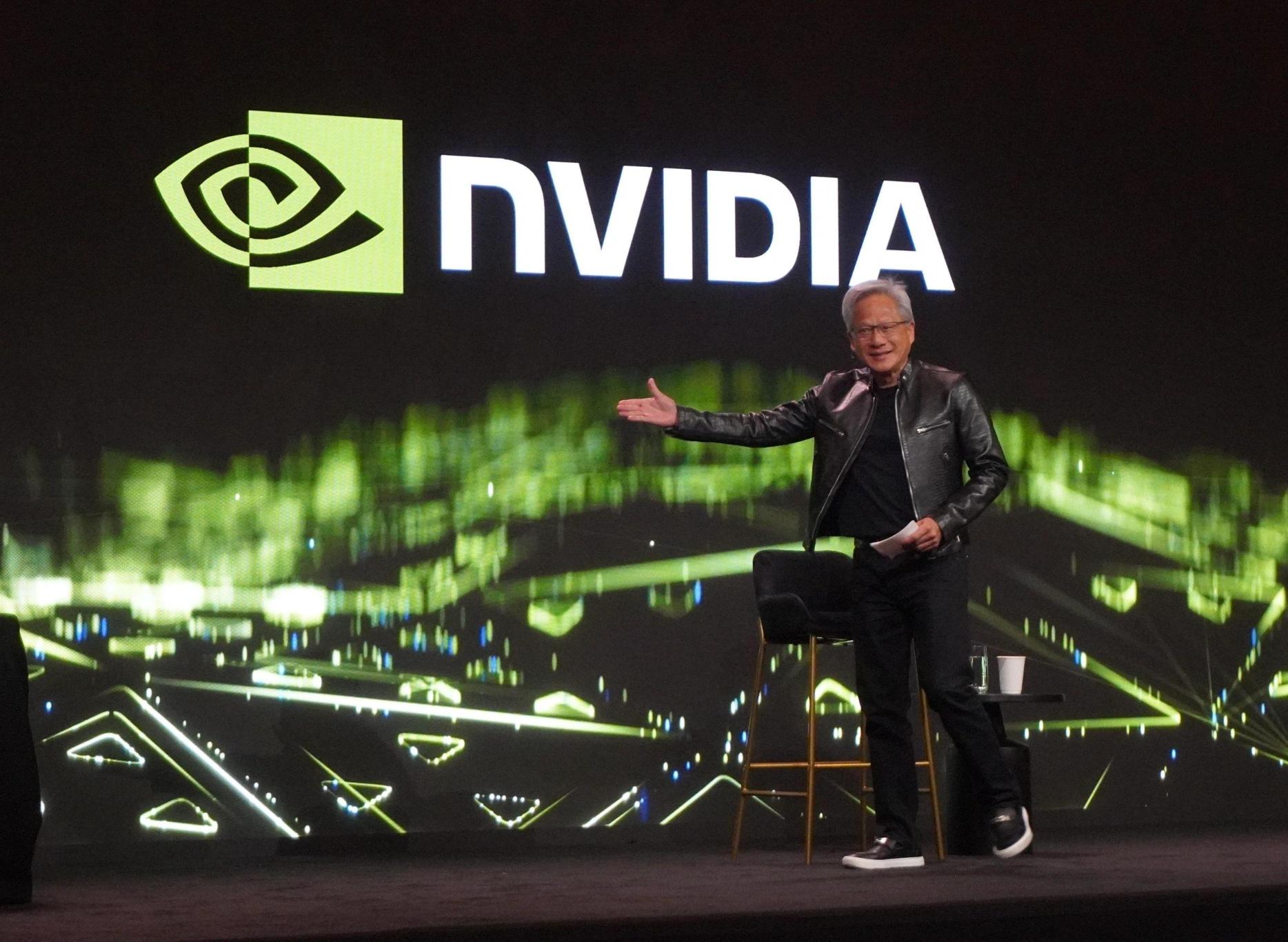
Nvidia's 34.06% single-session gain is the number that explains everything else on Monday's sector ETF scorecard. Jensen Huang's reinstatement resolved a specific and acute source of uncertainty that had hung over the semiconductor complex for weeks. When that uncertainty cleared, the market repriced not just Nvidia but the entire supply chain, the cloud buildout thesis, and the AI infrastructure trade in a matter of hours. ORCL added 13.17% within XLK. TSLA gained 12.90% inside XLY. The ripple was immediate and broad, but it was not random — it ran precisely along the lines of AI and technology exposure.
The breadth of Monday's rally across the major index ETFs was real, but the dispersion tells the more important story. QQQ rose 7.00% to $651.03. SPY gained 4.71% to $722.29. DIA rose 3.06% to $495.80. IWM, which tracks small caps with far less tech concentration, rose 3.56% to $265.74. The gap between QQQ and DIA — 391 basis points on a single session — reflects exactly what kind of rally this was: a mega-cap, tech-heavy, AI-driven repricing event, not a broad cyclical recovery. Investors chasing the move in small caps or value were buying the wrong vehicle.
The Sector-by-Sector Breakdown
The sector ETF rankings for Monday read like a heat map of AI and technology adjacency. XLK at +9.27% was the clear leader. XLY, the Consumer Discretionary fund, finished second at +4.29%, carried by Tesla's 12.90% gain and Amazon's 4.33% move — both names whose valuation frameworks are inseparable from AI expectations and cloud infrastructure spending. XLC, Communication Services, added 3.33%, reflecting similar dynamics in its largest holdings. After that, the returns stepped down sharply: Materials at +2.42%, Financials at +2.16%, Health Care at +1.26%, Real Estate at +1.13%, Utilities at +0.99%.
The thematic ETFs that sit adjacent to semiconductors confirmed the read. The Philadelphia Semiconductor Index itself jumped 14%. Cloud computing via CLOU added 5.6%. Software through IGV gained 3.9%. Fintech via FINX rose 4.4%. COPX, the Global X Copper Miners ETF, jumped 6.8% as copper prices rose 2.7%, snapping a three-session slide — a signal that the market is once again pricing in the industrial demand implications of an accelerating AI buildout, since copper is a critical input for data center power infrastructure. Even international ETFs caught meaningful bids: EWJ, the Japan fund, gained 4.16% to $86.90, while EWG and EWU added 2.35% and 1.74% respectively.
The two laggards were instructive. XLE, the Energy Select Sector SPDR, closed down 1.06% at $59.87 with $38.66 billion in AUM — the only sector ETF to finish meaningfully in the red. Energy's underperformance on a day when every other risk asset rallied hard signals something specific: oil's demand outlook was not revised upward by the Nvidia news, and the sector's rate sensitivity kept a lid on any sympathy bid. XLP, Consumer Staples, barely registered, closing down 0.09%. Defensive positioning was unwound, not rewarded.
What Traders Watch Next
The critical question for the semiconductor complex is whether Monday's move marks the resumption of a trend or the exhaustion of one. SOXX's 13.65% gain in a single session is extraordinary, but gap-up moves of this magnitude on catalyst events frequently see partial giveback in the sessions immediately following as short sellers cover and momentum traders take profits. The fund's pre-announcement trading range becomes the reference point: any close in SOXX below Monday's opening price would indicate that the move failed to attract new buyers at higher levels, a bearish technical signal regardless of the fundamental catalyst.
For QQQ, the $651 handle is the number to hold. The fund closed exactly at $651.03 on Monday, and that level now represents both a psychological reference and the top of a range that QQQ had been unable to clear for the prior three weeks. A sustained close above $651 through the Thanksgiving holiday-shortened week — with Friday November 27 representing the first meaningful test of post-catalyst conviction — would be the first confirmation that institutional buyers are building positions rather than simply reacting to news. Failure to hold $651 by the end of the week would shift the interpretation of Monday's session from breakout to bull trap, with the next meaningful support level for QQQ sitting near $610, representing the mid-October consolidation zone. The Nvidia trade has rewritten the near-term sector ETF map. The only remaining question is whether the market has the follow-through to redraw it permanently.
The Weekly Investor
Daily market analysis for active traders. Free.