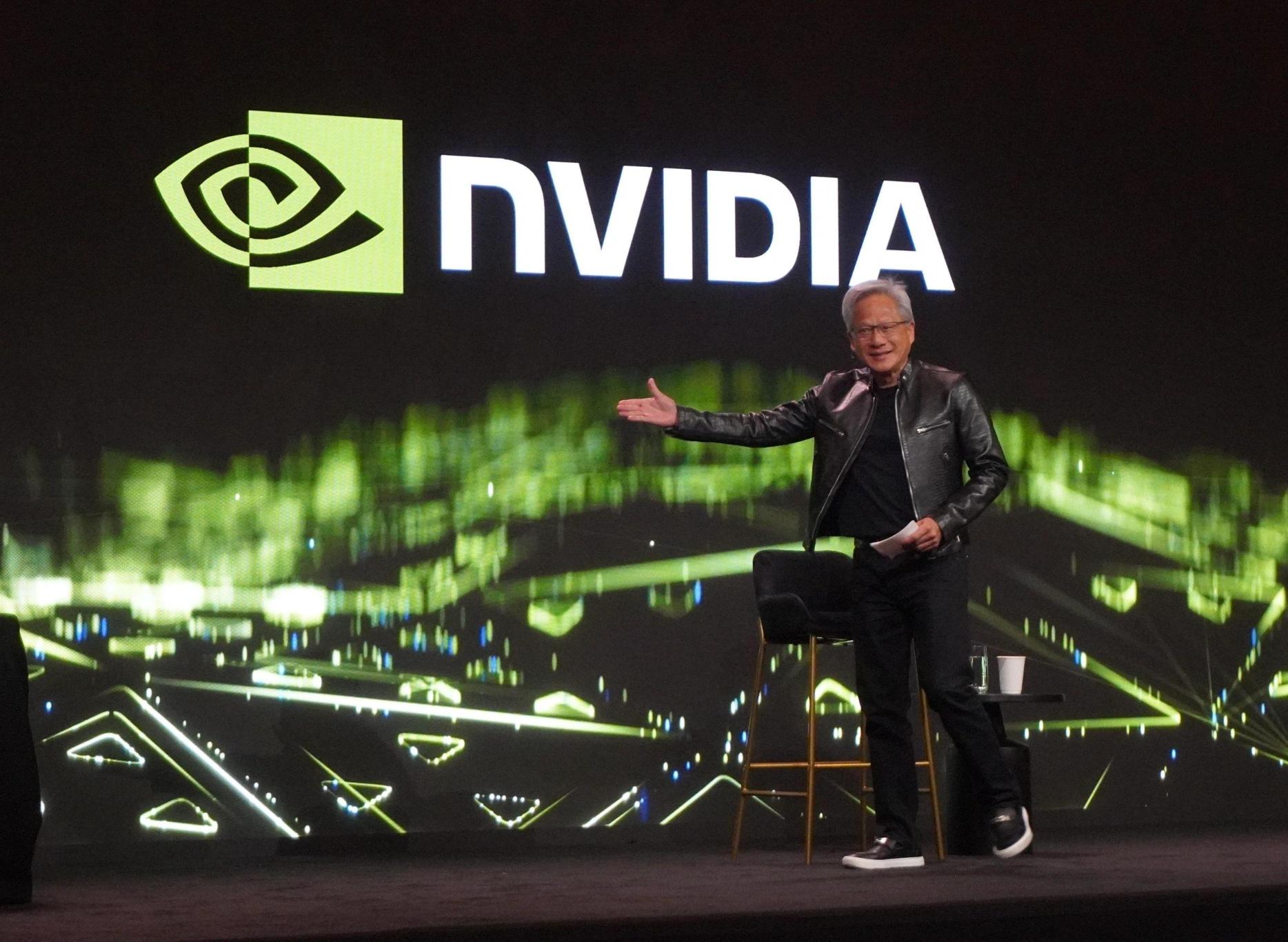
XLK Drops 2%, Then Nvidia Flips the Script After Hours
XLK fell 2.06% Tuesday as tech led a nine-sector selloff, before Nvidia's earnings beat sent shares up 2% after hours and reset the tape for Wednesday.
Key Points
- Technology Select Sector SPDR Fund (XLK) fell 2.06% Tuesday, the worst sector performance of the session, before Nvidia's post-close earnings beat sent NVDA shares up roughly 2% in extended trading.
- Nine of eleven S&P sectors finished in the red as the Dow shed 1.65% to 50,764.09, with software ETFs dropping 3.29% and Microsoft falling 2.27%.
- Traders should position for a gap-up open in XLK and semiconductor ETFs Wednesday, while monitoring whether the Nvidia bounce is broad enough to drag software and small caps out of Tuesday's hole.
Technology Select Sector SPDR Fund (XLK) fell 2.06% Tuesday in a nine-sector selloff that pushed the Dow down 1.65% to 50,764.09 — then Nvidia reported after the bell and changed the calculus entirely. NVDA shares rose approximately 2% in extended trading after the chipmaker projected revenue above consensus analyst estimates, triggering a gain of more than 1% in a widely tracked South Korean technology ETF and setting up XLK and semiconductor funds for a meaningful gap at Wednesday's open.
Nine Sectors Down, One Stock Up
Tuesday's regular session was broad and ugly. Nine of eleven S&P 500 sectors finished in negative territory, with XLK's 2.06% decline leading the damage. The software sector fund was worse on an absolute basis, falling 3.29% — a move that underscores how concentrated Tuesday's selling was in high-multiple, rate-sensitive growth names. Microsoft dropped 2.27%, serving as the bellwether for the software complex's pain. The equal-weighted S&P 500 fell 1.45%, and small caps declined 1.43%, meaning the selling was not confined to mega-cap names. This was a risk-off session with reach.
The semiconductor ETF held up considerably better, sliding just 0.39% even as Nvidia itself fell 0.44% to $155.46 ahead of its earnings report. That relative resilience in semiconductors versus the broader tech complex is a meaningful divergence — it suggests the market was already pricing in a reasonable probability of a Nvidia beat and treating the earnings event as a circuit breaker rather than a source of additional downside. Traders who read that divergence correctly were positioned for exactly the after-hours move that materialized.
On the positive side of the ledger, only two sectors finished green. Energy Select Sector SPDR Fund (XLE) gained 0.34%, carried by ConocoPhillips (+0.97%), ExxonMobil (+0.76%), and EOG Resources (+0.51%). Materials Select Sector SPDR Fund (XLB) added 0.13%, with Newmont (NEM) contributing the most at +2.34%. The energy and materials outperformance on a broad down day fits the classic defensive rotation pattern and is consistent with the options flow data for the session, which showed demand for positions that gain if long-dated Treasury yields fall — a signal that the bond market's read on growth is quietly getting more cautious.
Reading the Options Tape
The options flow picture from Tuesday adds texture that the price action alone doesn't capture. According to Saxo Bank's options brief, sector and ETF options flow leaned heavily toward puts on the index, with notable skew toward long-dated rather than near-term protection. The absence of demand for near-term tail protection is a specific and important detail: it means sophisticated options participants weren't hedging against an imminent crash. They were making a measured, medium-term bearish bet — the kind of positioning that reflects concern about the macro environment over weeks, not days.
The financials protection trade similarly moved further out in time. When institutional hedgers push their protection purchases into longer-dated contracts, it typically signals they view near-term volatility as manageable but are genuinely uncertain about conditions three to six months out. For sector ETF traders, that's a reason to be tactical rather than directional in the near term — fading sharp single-session moves in either direction rather than building large positional bets on a sustained trend. The one clear directional lean in Tuesday's flow was in Treasury-linked structures: positions that pay if long-dated yields decline. That's a growth-skepticism trade wearing an interest-rate costume.
The post-close pivot on Nvidia complicates Tuesday's bearish read considerably. When the single most watched stock in the technology complex reports revenue above estimates and trades up 2% after the bell, it functions as a pressure-release valve for the entire sector. The South Korean technology ETF — a leading indicator for Asian semiconductor supply chain names that trade overnight — gaining more than 1% in after-hours trading suggests the Nvidia beat is being read as a broad AI infrastructure signal, not just a company-specific event. Equipment makers, memory producers, and data center component suppliers globally will all gap alongside NVDA on Wednesday morning.
What Traders Watch Next
Benzinga's sector flow analysis for Tuesday noted that cyclicals led the decline during the regular session — an important detail for Wednesday's positioning. If Nvidia's earnings beat is enough to reverse XLK and semiconductor ETFs at the open, the question becomes whether that reversal is narrow (confined to semiconductors and large-cap tech) or broad enough to lift the cyclical complex that bore the brunt of Tuesday's selling. Consumer discretionary (XLY, -0.71%), industrials (XLI, -0.48%), and real estate (XLRE, -0.91%) all need a catalyst to recover, and a chipmaker's earnings beat is not automatically that catalyst.
For traders sizing into XLK or semiconductor ETFs at Wednesday's open, the gap-up setup carries meaningful fading risk. After-hours enthusiasm driven by a single earnings report frequently overestimates the breadth of the follow-through during regular trading hours. The more durable trade is to watch whether XLK can hold above its Tuesday close of approximately 2% below Monday's levels — if the gap up merely returns XLK to Monday's price and stalls, the intermediate-term downtrend that Tuesday confirmed remains intact.
The launch of Bitwise's ZDAY — an actively managed AI cybersecurity ETF that began trading November 17 — adds a thematic subplot worth tracking this week. With a 0.75% management fee and a mandate focused on companies defending against AI-enabled attacks and securing AI infrastructure, ZDAY is a direct bet on the same AI buildout narrative that Nvidia's revenue beat reinforces. If NVDA's guidance points specifically to accelerating data center and enterprise AI demand, ZDAY's underlying holdings — which overlap with the AI security infrastructure stack — could see meaningful first-week volume as the Nvidia tailwind redirects attention to adjacent AI plays. The key date for XLK traders is the November options expiration cycle: watch whether implied volatility in XLK compresses or expands in the first two hours of Wednesday's session, as that will reveal how seriously the market is treating the Nvidia bounce as a trend change versus a one-day event.
The Weekly Investor
Daily market analysis for active traders. Free.