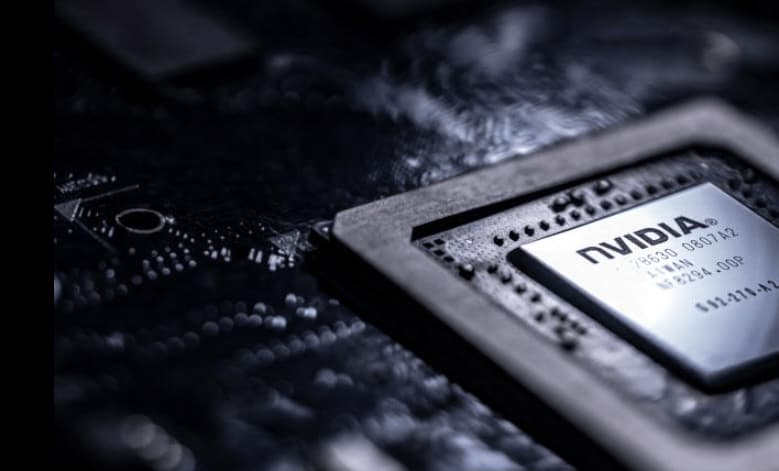
Nvidia Bounces 8.78% But the Legal Storm Isn't Over
Nvidia surges 8.78% pre-market after a 23% weekly collapse, but DOJ, SEC, and California AG probes keep the overhang very much alive.
Key Points
- Nvidia is surging 8.78% in pre-market trading on November 23 after losing 23% last week — its worst five-day stretch in years — closing Friday at $125.53.
- The bounce is technically driven but fundamentally contested: an active SEC accounting review, three simultaneous DOJ inquiries, a California AG subpoena, and a shareholder class action remain fully in play.
- Former CEO Jensen Huang is scheduled to testify before House committees on December 1, the next hard catalyst that could either stabilize or re-accelerate the selloff.
Nvidia is bouncing 8.78% in pre-market trading this morning, clawing back roughly $11 from Friday's close of $125.53 — but every experienced trader on this desk knows what that number doesn't tell you: the company is simultaneously navigating the most crowded regulatory docket in modern semiconductor history, with active enforcement tracks at the SEC, the DOJ, the California AG's office, and two congressional committees. The question isn't whether the bounce is real. It's whether it lasts past December 1.
One Week That Rewrote the Story
The scale of last week's damage deserves a full accounting before anyone gets comfortable with the green pre-market tape. Nvidia fell 23% across five sessions, dragging the Nasdaq down 10.0% and the S&P 500 down 8.6% in what ranked as the worst week for US equities since April 2025. The VanEck Semiconductor ETF (SMH) closed Friday at $400.06, off 10.60% on the day alone. AMD closed at $424.39, down 13.25%. TSMC closed at $318.71, off 9.48%. These weren't sector rotation numbers — they were liquidation numbers, the kind that happen when institutional holders decide the risk profile of a core position has changed structurally, not cyclically.
Nvidia's own fundamentals were never the proximate cause. The company reported $115.8 billion in quarterly revenue — a print that, in any other environment, would have been celebrated as validation of the AI infrastructure buildout thesis. Instead, it became almost irrelevant. The stock's collapse was driven by the November 20 report of an SEC enforcement division review into potential accounting irregularities, which alone knocked NVDA down 11.5% in a single session. That came on top of a California AG subpoena issued November 19 investigating whether Nvidia's advanced chips reached China and whether investors were misled about the associated risks. By Friday's close, Nvidia was down more than 22% year-to-date, on pace for its first annual loss since 2022.
The Regulatory Stack Is Unprecedented
What makes this situation structurally different from previous Nvidia pullbacks — the 2022 crypto unwind, the 2023 export control scares — is the simultaneous nature of the enforcement actions. This isn't one agency taking a look. This is five separate institutional actors moving at the same time, on overlapping but distinct legal theories.
The DOJ alone has three active inquiry tracks involving Nvidia and its business partners. One focuses specifically on antitrust grounds, examining whether customers received larger chip allocations in exchange for purchasing Nvidia's networking equipment and Groq processors — a classic tying arrangement that, if proven, is a per se antitrust violation. The House Energy and Commerce Committee, chaired by Brett Guthrie, has separately requested briefings from Nvidia and the Commerce Department about Megaspeed, the company's internal security controls, and federal semiconductor export enforcement. The House Foreign Affairs Committee released documents showing the US authorized the sale of nearly 900,000 Nvidia and AMD AI chips to Defense Department-designated Chinese military companies — a disclosure that reframes the export compliance narrative from "Nvidia was cautious" to "the whole system may have been compromised."
Then there is the shareholder class action filed November 9, which accuses Nvidia and Jensen Huang of concealing Huang's alleged affair with a suspected Chinese spy and misleading investors about national security exposure. That claim is extraordinary on its face, and regardless of its ultimate legal merit, it introduces a personal liability dimension that changes how institutional holders model governance risk. When the man who built the company and is synonymous with its strategy becomes a named defendant in a securities fraud action with a national security angle, the discount rate on the stock goes up — full stop.
What Traders Are Actually Watching
Today's pre-market rally is sector-wide and technically coherent. Micron is up 7.6%, TSMC up 7.3%, Arm up 7.3%, Lam Research up 7.0%, ASML up 6.8%, Marvell up 6.7%, AMD up 6.4%, Applied Materials up 6.4%, Intel up 6.0%, Broadcom up 5.8%, KLA up 5.5%, and Qualcomm up 4.3%. When the entire supply chain bounces in lockstep at this magnitude, it reads as short covering and dip-buying rather than a fundamental re-rating. That doesn't make it untradeable — but it does mean the burden of proof for a sustained recovery sits entirely on what happens next, not on what happened Friday.
There are two near-term catalysts that will determine whether this bounce has legs. The first is Dell Technologies reporting Tuesday after the US close. Dell's AI server backlog stood at $95 billion last quarter, and AI orders reached a record $60.9 billion. But Dell, HPE, Lenovo, and Supermicro are all reportedly raising prices on signed AI-server contracts by up to 45%, as memory costs have surged more than 400% since early 2024. If Dell's margins show visible compression from that cost inflation, it will reignite the debate about whether the AI infrastructure buildout is becoming a margin-destruction trade at the hardware layer — and that is a direct read-through to Nvidia's data center revenue quality.
The second, harder catalyst is December 1: Jensen Huang's testimony before House committees. Congressional hearings are inherently unpredictable, but this one carries specific binary risk. If Huang delivers a credible, detailed account of Nvidia's export controls and internal compliance — and if committee members are satisfied — the stock gets a news-driven pop and the narrative shifts toward "regulatory peak." If the hearing surfaces new disclosures, produces adversarial exchanges that become clips, or if Huang invokes privilege on key questions, the selloff resumes with fresh institutional justification. Traders need to be sized for that event specifically, not for a week of drift. For NVDA, the December 1 hearing is the event that sets the technical range heading into year-end. Watch the $125.53 Friday close as the downside anchor; a close above $138 — roughly the 8.78% recovery translated to a session close — would be the first evidence this bounce is something more than a Monday relief trade.
The Weekly Investor
Daily market analysis for active traders. Free.