Nvidia's $181 Close Has a November 18 Problem
Nvidia's Nov. 17 earnings collide with a congressional briefing request the next day. Here's what the DOJ probe and $4.8B Megaspeed deal mean for NVDA.
Key Points
- Nvidia closed at $181.60 on November 5, down 9.26% in a single session, its largest single-day decline since January 2025, as Jensen Huang's net worth fell $15.1 billion in one day.
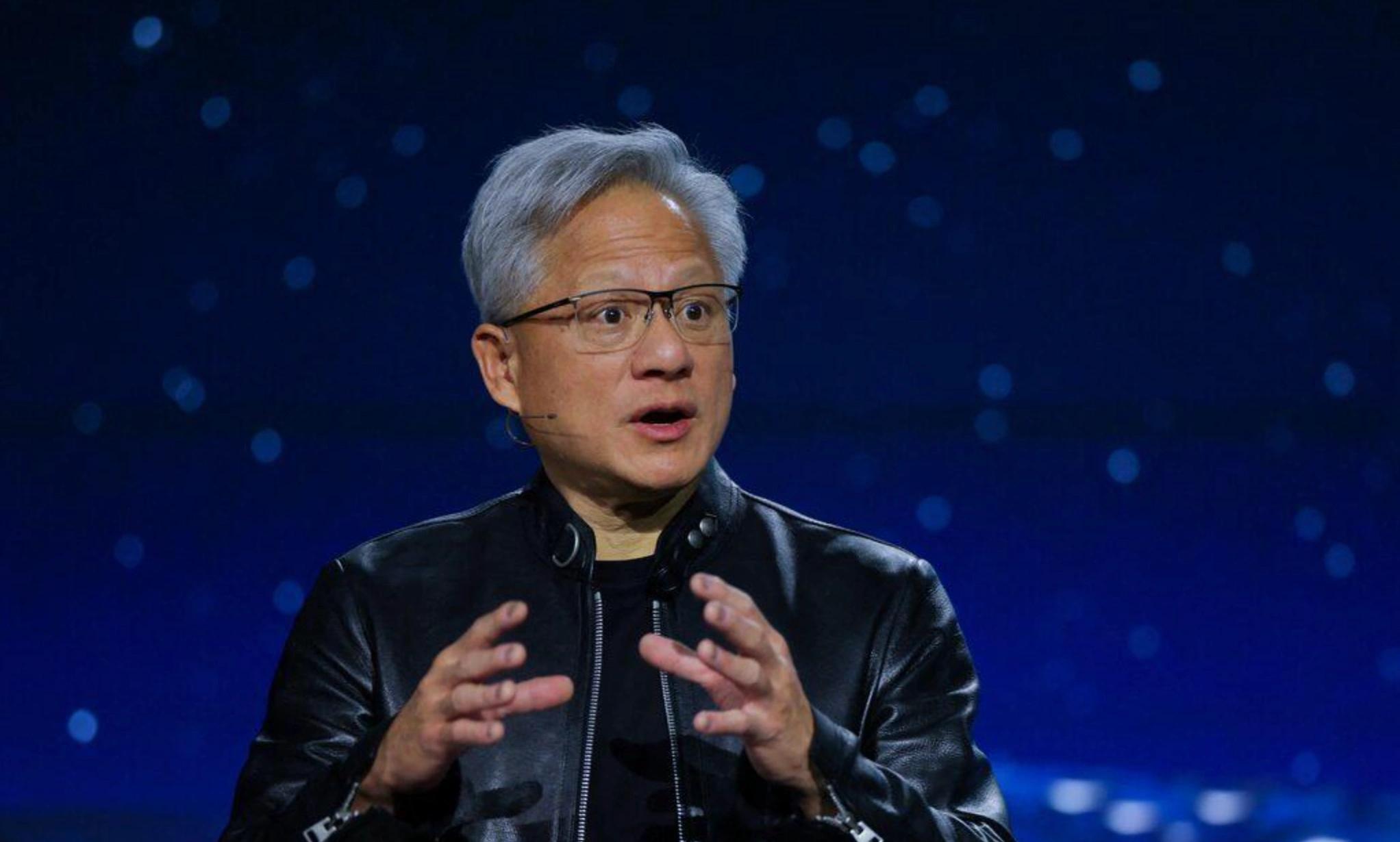
- Three Republican House committee chairs have formally requested a joint closed-door briefing with Huang on November 18 — the morning after Nvidia's scheduled Q3 earnings report — tied to the $4.8 billion Megaspeed-China intelligence assessment.
- The DOJ antitrust investigation into Nvidia has escalated to include third-party subpoenas, with the $20 billion Groq arrangement as the stated focal point, and a Democratic Senate majority in January gives Elizabeth Warren the power to compound that pressure.
Nvidia closed at $181.60 on Wednesday, down 9.26%, with Jensen Huang's net worth falling $15.1 billion in a single session — and the stock's real problem isn't the price. It's the calendar. The company reports Q3 earnings on November 17, and three House committee chairs have formally requested Huang appear for a congressional briefing on November 18. No chip stock in recent memory has faced this combination of earnings exposure and political targeting inside the same 24-hour window.
The Briefing That Changes the Calculus
The letter from House Foreign Affairs Chairman Brian Mast, Strategic Competition Chairman John Moolenaar, and Intelligence Chairman Rick Crawford was sent following an October 29 New York Times report that U.S. intelligence assessed Megaspeed executive Alice Huang as having passed information to Beijing. The specific dollar figure attached to this concern is not trivial: Megaspeed purchased at least $4.8 billion of AI equipment containing Nvidia chips between June 2024 and February 2026, according to trade-data firm ImportGenius. That is not a rounding error. That is a procurement pipeline that would rank Megaspeed among Nvidia's most consequential customers during that period, and the intelligence assessment puts Nvidia's export compliance infrastructure under a microscope that no amount of Q3 earnings outperformance can immediately remove.
The closed-door format is worth parsing carefully. Congressional briefings of this nature — joint, across three committees simultaneously, requested with a named executive rather than simply company counsel — are typically precursors to formal investigative action. The committees involved span foreign affairs, strategic competition with China, and intelligence, meaning the breadth of the inquiry is not limited to a single regulatory lane. Huang has not publicly responded to the letter as of Friday morning. Whether he accepts, declines, or proposes an alternative arrangement will itself be a market event: a refusal or delay risks triggering a subpoena under the new Democratic majority that takes control in January, while an acceptance hands opponents a televised forum regardless of what is said behind closed doors.
The timing relative to earnings is the critical variable for traders. Nvidia is scheduled to report Q3 results on November 17. If, as AMD's $13.38 billion beat and $17 billion Q4 guide suggest, Nvidia's data center revenue comes in at or above consensus — analysts have been modeling aggressive growth given AWS's 39.3% Q3 expansion and Broadcom's $21.7 billion Q4 AI semiconductor target — the stock will face an immediate test of whether a strong print can hold into the November 18 briefing. Any hint of downward guidance revision, margin compression, or commentary about export restrictions biting into the forward revenue pipeline would remove whatever cushion a beat might provide.
The DOJ Thread Running Underneath
The congressional briefing is the visible risk. The DOJ antitrust investigation is the structural one. The probe has escalated significantly: the department has now issued subpoenas not just to Nvidia but to third-party companies with business relationships in the AI chip ecosystem. The disclosed focal point is Nvidia's $20 billion arrangement with Groq, the AI-inference startup, under which Nvidia licensed Groq's technology and absorbed its leadership team without triggering a standard merger review filing. Senior DOJ officials stated as recently as May 2026 that antitrust law applies fully to arrangements structured to avoid traditional thresholds — the department's framing has consistently been that deal architecture cannot substitute for substantive review.
The Groq arrangement is precisely the kind of deal that becomes an enforcement case when political conditions shift. Nvidia holds approximately 70-80% of the AI training chip market by most estimates, and the Groq deal touched inference — the adjacent market where competition was beginning to emerge. A Democratic Senate majority that holds 54 seats and potentially adds two more gives Warren and her colleagues the ability to pressure both the DOJ and FTC simultaneously. The FTC is already investigating Microsoft's bundling of productivity software with AI and cloud services, establishing a template for how the new majority intends to approach platform power in the AI stack. Nvidia is the most dominant platform in that stack. The investigative logic follows directly.
What makes the antitrust exposure uniquely dangerous for NVDA shareholders is the timeline asymmetry. Antitrust cases move slowly — the DOJ's consent decree process can take 18 to 36 months from investigation to resolution. But the market reprices antitrust risk immediately upon escalation signals, not upon final disposition. The escalation to third-party subpoenas, combined with a congressional majority motivated to generate headlines on AI accountability, creates a persistent headline risk that will accompany every earnings cycle through at least mid-2027. Nvidia's trailing P/E of 40x was defensible when the company had a clear regulatory runway. It is harder to defend at 40x when the runway has three separate government entities standing on it.
The Levels and the Date That Matter
Friday's pre-market action is offering a partial reprieve. Nvidia is trading up approximately 3.4% before the open — recovering roughly one-third of Wednesday's 9.26% loss. That underperformance relative to Lam Research's 9.8% bounce and Marvell's 7.8% gain is not random. Equipment and memory names are reclaiming ground more aggressively because they carry less direct regulatory and political exposure. The market is making a distinction, and that distinction is accurate. Lam Research does not have three congressional committees requesting its CEO for a briefing. Nvidia does.
The options market is the instrument to watch through November 17. Pre-earnings implied volatility on NVDA has historically compressed into the report and spiked on the event; this cycle, the political overlay means the post-earnings IV crush may not materialize in the usual way, because the November 18 briefing reintroduces event risk the morning after the print. Traders who have played Nvidia earnings as a volatility-selling opportunity in prior cycles should model the November 18 briefing as a secondary expiration event — one that could keep implied volatility elevated even if the earnings number is clean. The specific level to watch on the downside is $166, which represents a full retracement to Nvidia's pre-Q2 earnings base; on the upside, $200 is the first round-number resistance that algo and options positioning clusters around. The November 17 earnings report will determine which of those levels gets tested first. The November 18 briefing will determine whether the move holds.
The Weekly Investor
Daily market analysis for active traders. Free.