NVDA's 8.7% Bounce Is a Dead-Cat Trap
NVIDIA surged 8.7% Monday on a Trump social media post, but with the stock down 33.9% in November and China revenue gone, the rally may not hold.
Key Points
- NVIDIA surged 8.72% Monday to approximately $136.46 after Trump posted on social media urging NVIDIA's board to retain CEO Jensen Huang — but the stock remains down 33.9% in November alone.
- The catalyst is a social media statement with zero binding authority over a public company's board, arriving while China Hopper chip revenue of $2.4 billion per quarter has been permanently zeroed out of forward guidance.
- Traders should watch whether NVIDIA's board issues a formal response before Friday's early close at 1:00 p.m. ET — silence will likely collapse this bounce back toward the $125.53 Friday closing low.
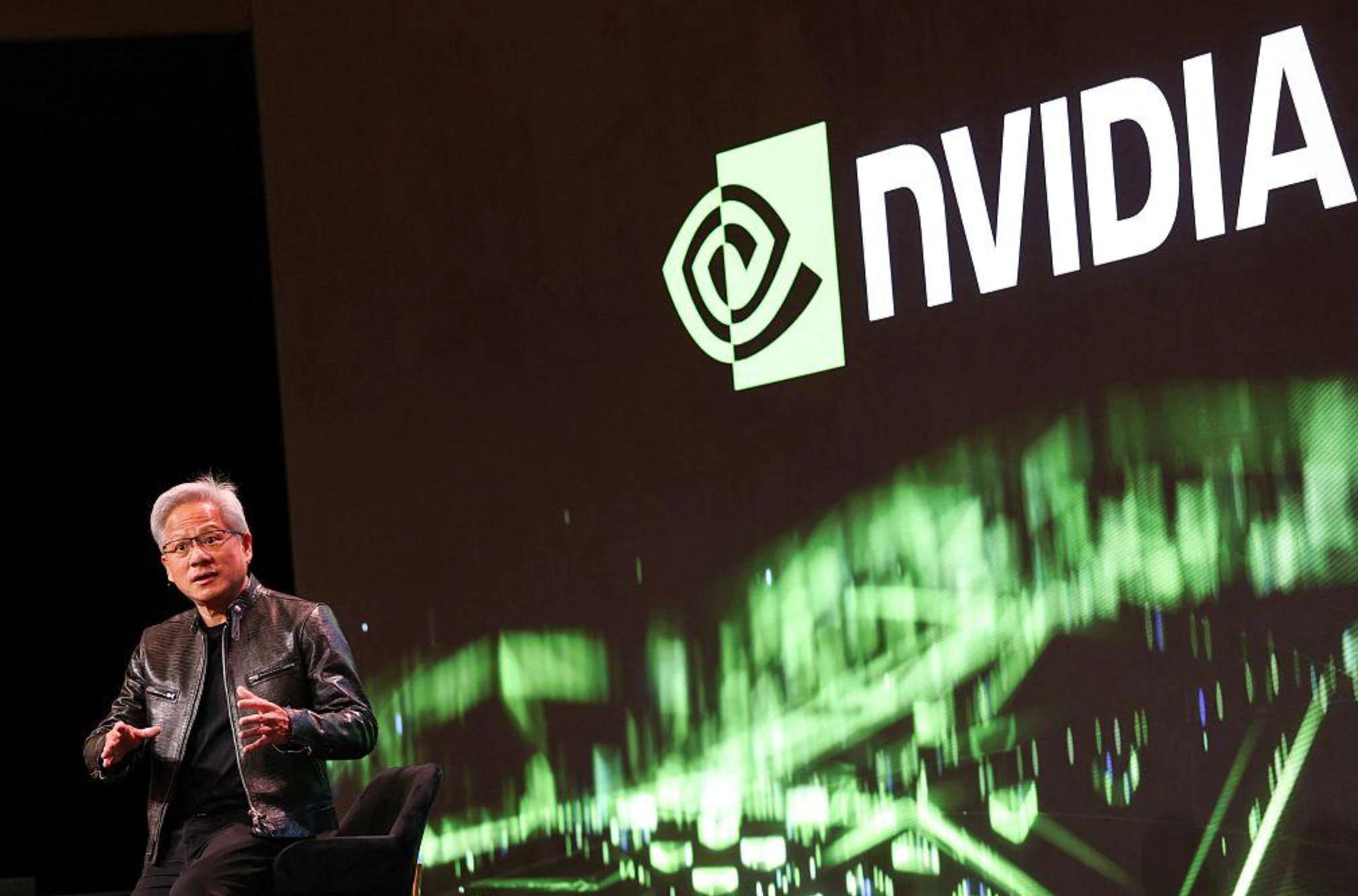
NVIDIA jumped 8.72% Monday morning on a single social media post from Donald Trump urging the company's board to retain CEO Jensen Huang, calling it "the best decision for the company and the nation." That is the entire fundamental basis for a move that temporarily added roughly $12 billion in market cap to a stock that just had its worst month since 2008. Traders should treat this as a political headline bounce until proven otherwise — and the burden of proof is high.
The Hole in the Thesis
Strip away the Trump post and nothing has changed since Friday's close at $125.53, the lowest print in over a year against a 52-week high of $239.24 set on October 6, 2026. NVIDIA's fiscal Q3 2027 results, reported November 17, contained a structural revenue problem that one presidential social media post cannot fix: management confirmed it has stopped shipping licensed Hopper data center chips to China and that Q4 guidance includes zero revenue from those sales. In Q3, that China Hopper revenue line contributed $2.4 billion. That is not a rounding error — it is roughly 16% of the $14.9 billion quarterly revenue NVIDIA was generating at peak. It does not come back without a policy reversal that neither NVIDIA nor Trump's post addresses directly.
The sell-off that preceded Monday's bounce was severe and systematic. NVIDIA fell 14.0% on Friday, November 20, while the S&P 500 itself was down 3.7% — meaning NVIDIA underperformed the broader index by roughly 10 full percentage points in a single session. That was not pure market contagion. Investors were responding to the accumulating weight of four distinct negative catalysts: the China chip revenue elimination, reported scrutiny of NVIDIA's accounting practices, leadership uncertainty around Jensen Huang's tenure, and broader concerns about whether the debt-financed AI infrastructure buildout can sustain the demand levels NVIDIA's valuation still implies. Friday's move brought NVIDIA to its seventh consecutive weekly loss — matching the longest losing streak in the company's modern history, set back in July 2008. Context matters: in 2008, NVIDIA was a graphics chip company with $4 billion in annual revenue. Today it is the central node of global AI compute infrastructure with far greater systemic exposure.
What the Analyst Community Is Saying
Melius Research's November 12 downgrade to Hold with a price target cut from $315 to $185 is the most consequential recent analyst action, and it landed before Friday's additional 14% decline. At $185, Melius was still implying roughly 47% upside from Friday's close — which tells you either that the sell-off has been technically overdone or that the fundamental reset has further to run. Given that the $185 target was set before the magnitude of Friday's move was known, it is reasonable to expect at least one additional round of target reductions from the Street this week as analysts incorporate the new price levels and the finality of the China revenue loss.
The broader analyst posture reflects genuine uncertainty about what NVIDIA's normalized earnings power looks like without China Hopper sales, without the ability to sell future Blackwell-architecture chips into China at scale, and with the leadership cloud that the Trump post paradoxically made more public rather than less. If Jensen Huang's position were truly secure, there would be no need for a presidential intervention. The fact that markets interpreted the post as meaningful news is itself evidence of how deep the leadership anxiety runs among institutional holders. NVIDIA's market cap at Friday's close was approximately $306 billion — down from a peak above $580 billion earlier this year — and even at current levels, the stock trades at a premium multiple that requires sustained hyperscaler capital expenditure to justify.
What Traders Watch Next
Monday's 8.72% gain puts NVIDIA around $136.46, and the technical picture is straightforward: the stock needs to hold above $125.53 on any retest or the bounce fails conclusively. The $150 level, which NVIDIA traded through on the way down in early November, represents the first meaningful resistance zone. A close above $150 this week would shift the near-term narrative from dead-cat to base-building. A failure to hold $136 into Tuesday's open would be the cleaner short signal, particularly in the context of a holiday-shortened week where volume compression on Wednesday and Friday can exaggerate moves in either direction.
The board's response — or non-response — to the Trump post is the binary catalyst. NVIDIA's directors have no legal obligation to comment on social media statements from political figures, and a prolonged silence could itself become the story by midweek. If the board issues a statement affirming Huang's tenure before markets close Wednesday, the squeeze could extend toward $145–$150 as short-sellers who pressed the position through $125 cover. If the board says nothing through the holiday, the vacuum will fill with speculation, and the broader market correction context — VIX still at its highest since Liberation Day in April 2025, S&P 500 in correction territory at 6,910.39 — does not favor risk-on positioning in a name with this many unresolved fundamental questions. The next hard date for NVIDIA is its next earnings report, but traders do not have the luxury of waiting that long. The board speaks first, or the chart does.
The Weekly Investor
Daily market analysis for active traders. Free.