NVDA's 31% Monster Session Is Already Fading
Nvidia surged 31.5% Monday on Jensen Huang's reinstatement — its best day since 2003. Now premarket is giving it back. Here's what traders watch next.
Key Points
- Nvidia closed Monday at $165.05, up 31.48% — its single best session since May 2003 — pushing market cap to $3.978 trillion.
- Jensen Huang's board reinstatement triggered a full-sector short-squeeze, lifting SOXX 13.63% and dragging every major chip name higher regardless of fundamentals.
- BNP Paribas already cut its NVDA target to $225 from $345, and the stock is down 4% in premarket Tuesday — traders need a confirmed hold above $155 before adding.
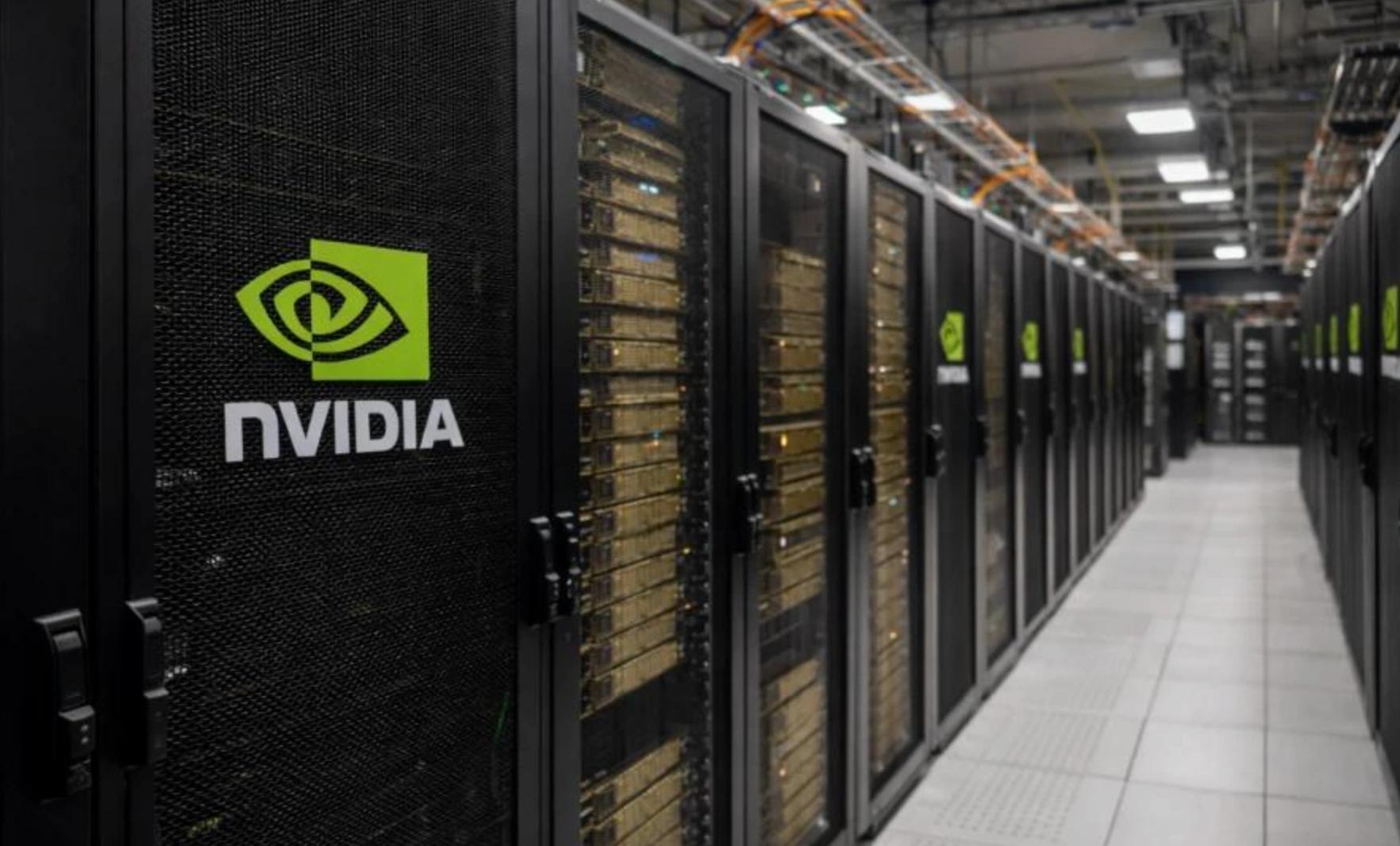
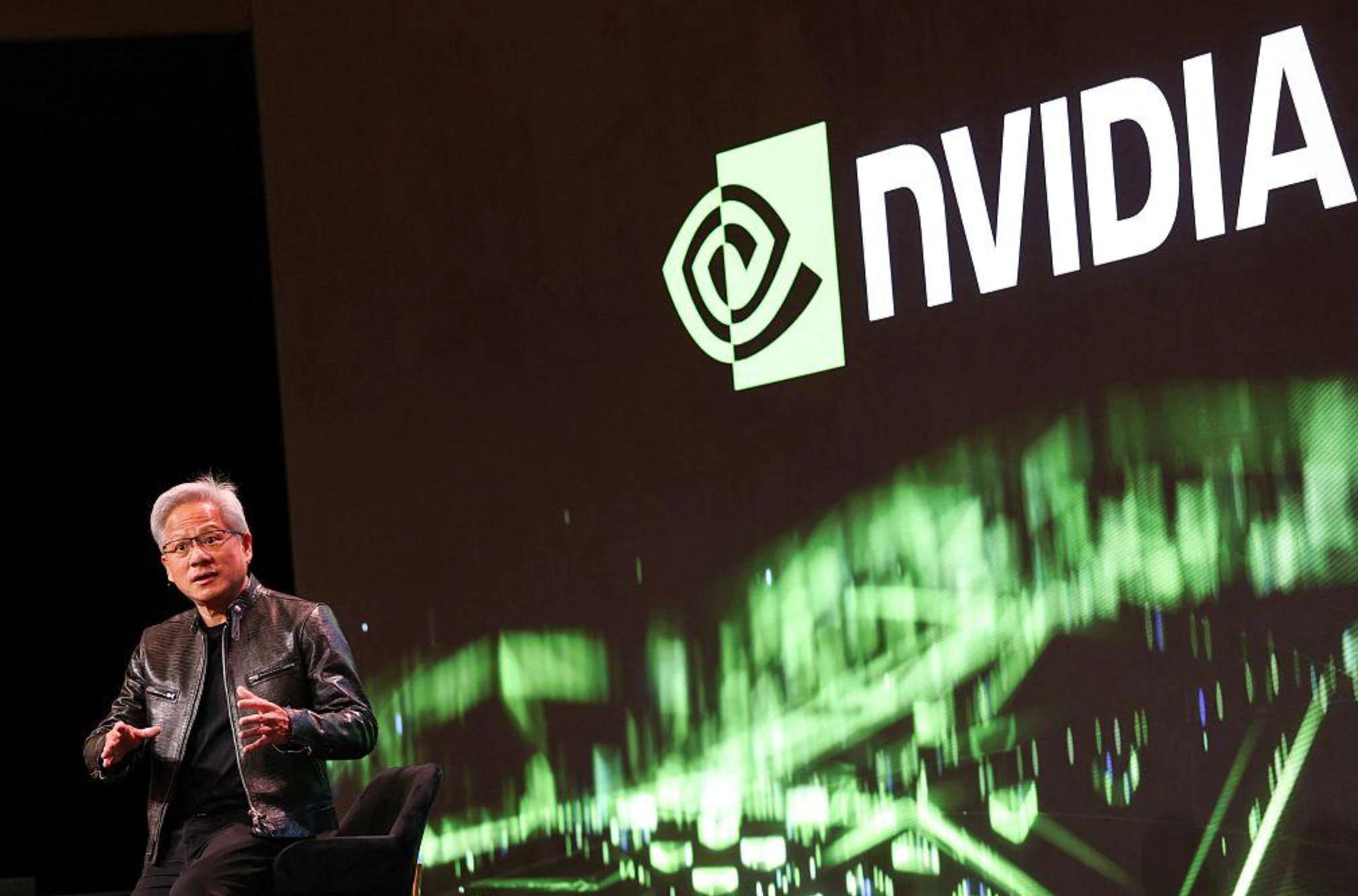
Nvidia closed Monday at $165.05, up 31.48%, posting its best single session since May 2003 and briefly vaulting its market cap to $3.978 trillion. The catalyst was blunt: Nvidia's board reinstated Jensen Huang as CEO, and every semiconductor desk on the Street had to reprice risk simultaneously. By Tuesday premarket, roughly 4% of that gain is already gone, and the broader chip complex is unwinding with it.
The Anatomy of a Short-Squeeze
Monday's move was not a re-rating on new earnings data or a product breakthrough. It was a forced repricing event — the market had spent weeks building a world without Huang at the helm, and when that thesis collapsed, shorts got run. The Philadelphia Semiconductor Index rose 14% in a single session. The iShares Semiconductor ETF (SOXX) surged 13.63%. These are not numbers that reflect a calm reassessment of silicon demand; they are the mathematical fingerprint of a short-squeeze compressing across an entire sector simultaneously.
The collateral beneficiaries make that case clearly. Intel, a company whose competitive position relative to Nvidia has not changed one basis point, gained 16.3% to close at $59.66. TSMC surged 14.1% to $363.60 — notable context being that TSMC had fallen 9.5% on November 20 alone and was down 20.1% for the prior week before Monday's reversal. Micron added 19.0%. CoreWeave — a pure-play AI infrastructure name with direct Nvidia GPU dependency — jumped 22.3%. Dell Technologies rose 20.8%. Even Tesla, with only indirect semiconductor leverage, tacked on 11.5%. The Nasdaq Composite gained 6.51% and the S&P 500 advanced 4.73%, meaning the Huang reinstatement didn't just lift chips — it temporarily repriced the entire risk complex.
Jensen Huang's personal net worth surged approximately $34 billion in a single session to $144 billion. That number is the most visceral illustration of how completely the market had de-rated Nvidia under its interim leadership. The board didn't just reinstate a CEO; it signal-flared that whatever went wrong operationally or politically during Huang's absence is, at minimum, manageable — and that the original architect of Nvidia's AI dominance retains the confidence of the people who control the company's strategic direction.
The Fade Is Already Underway
Tuesday premarket tells a more complicated story. NVDA is down approximately 4%. But the more telling moves are in the names that had no fundamental reason to rally Monday in the first place: Intel is down roughly 5% in premarket, Micron is down 5%, Marvell is down 5%, and Arm has shed 3.7%. When the stocks that led the sympathy rally are giving back more in premarket than the primary catalyst stock itself, that is the market distinguishing between the genuine re-rating and the reflexive panic-cover. The sympathy names are deflating; the primary name is consolidating.
BNP Paribas moved fastest among the sell-side. The bank cut its Nvidia price target to $225 from $345 — a 34.8% reduction — the morning after the stock's best day in over two decades. That is not a typical post-earnings trim; that is a firm recalibrating its model for a regime it still doesn't fully understand. The gap between $225 and Monday's $165.05 close implies roughly 36% upside at BNP's revised target, but the direction of the revision — a massive cut, not an upgrade — signals that the analyst community is not uniformly endorsing the rally. It is worth noting that $345 was a pre-reinstatement target set under different assumptions about Nvidia's competitive moat and leadership continuity. Traders should not read a $225 target as bearish per se; they should read the size of the cut as a signal that uncertainty around Nvidia's near-term trajectory remains elevated.
The DOJ antitrust subpoena overhang did not go away when Huang walked back into the building. The Justice Department has escalated its investigation into Nvidia's vertical supply chain practices, specifically targeting whether tier-1 cloud providers are using preferential GPU and custom ASIC access to crowd out third-party AI competitors. That probe now involves subpoenas to third-party companies — meaning the investigation has moved beyond the document-request phase into compelled testimony territory. That is a material legal risk that Monday's euphoria temporarily eclipsed.
What the Level-Headed Case Actually Requires
The fundamental bull case for Nvidia has not changed, and that matters. TSMC, which manufactures Nvidia's leading-edge GPUs, stated explicitly on Tuesday that global demand for AI applications "continues to outstrip its supply of advanced chips." Taiwan's semiconductor industry output is expected to expand more than 40% this year to approximately NT$9.19 trillion, or roughly $279.4 billion. That is the demand backdrop into which Huang is returning — not a cooling market, but one where supply remains the binding constraint. If Huang's reinstatement accelerates Nvidia's ability to navigate supply allocation at TSMC and push CoWoS packaging capacity, the operational case for a re-rating holds.
AMD's competitive posture provides useful context. AMD's Zen 6 server processors launched November 10 on the SP7 platform, with the flagship EPYC 9996 packing 256 cores at $14,904. AMD's AI GPU roadmap is real and funded. But AMD gained only 6.9% Monday to $453.46 — the smallest move among major chip names — which suggests the market is not yet treating the competitive landscape as dramatically altered. Nvidia's moat is CUDA and the full-stack software ecosystem, not just the silicon, and Huang's return does not erode AMD's standing while also not threatening Nvidia's core advantage.
The substrate bottleneck is an underappreciated limiting factor that Huang's return doesn't solve. Both AMD and Nvidia are competing for substrate capacity amid what Digitimes describes as a 4x expansion constraint. Memory is similarly tight; HPE warned this week that memory shortages are expected to persist into 2028. These are supply chain realities that exist independent of who runs Nvidia's day-to-day operations.
For traders sizing positions here, the specific level to watch is $155. That figure represents roughly the pre-announcement baseline adjusted for Monday's sector-wide re-rating, and a failure to hold it on Tuesday's close would suggest the squeeze is fully unwound and the stock needs to base before the next directional move. The next hard catalyst is Dell's earnings tonight — Dell is expected to report $49.32 billion in revenue with $19 billion in AI server guidance — which will function as a real-time referendum on whether enterprise AI infrastructure spending is as robust as Nvidia's rally implied. If Dell delivers, it validates the demand story and gives NVDA a floor. If Dell disappoints or guides cautiously, the 4% premarket fade will look like the opening act.
The Weekly Investor
Daily market analysis for active traders. Free.