Global Central Bank Super-Week Starts Now
Five major central banks decide rates between Oct 27–30. ECB, BoJ, BoE, Fed, and Turkey all move within 96 hours. Here's how to trade the sequencing.
Key Points
- Five central banks — the Fed, ECB, BoJ, BoE, and Turkey's TCMB — all deliver rate decisions within a 96-hour window beginning October 27, with BoJ and ECB both carrying live hawkish tail risks that could move the dollar index materially.
- The BoJ, already at 1.25% after its September hike, releases a fresh Outlook Report alongside its October 29–30 decision; board member Koeda has explicitly called for "timely" further hikes given "persistent upside price risks."
- Traders should watch Lagarde's 4:00 PM ET speech today for any deviation from the 70-of-73 economist consensus for an ECB hold — the one dissenting signal that could shift EUR/USD positioning before Sunday's open.
Five central banks will set interest rates within a 96-hour window beginning October 27 — the Fed, ECB, BoJ, BoE, and Turkey's TCMB — making next week the most compressed and consequential period for global rate markets in 2026. Two of those five carry live tail risks for hawkish surprises, one is cutting, and the sequencing of their decisions means volatility compounds rather than disperses across the trading week.
Five Banks, Four Days, One Sequencing Problem
Start with what is known. Turkey's central bank already delivered today — or is delivering today — a 100 basis point cut to 36%, moving in the opposite direction from every other major central bank on this list. The TCMB's easing cycle is domestically driven and the lira's reaction will be confined largely to EM FX traders. The Bank of Korea held at 3.0% in its 1:00 AM ET decision, also today — a non-event that confirms Asia's second-largest economy is in a holding pattern.
The decisions that matter to global asset allocators begin Sunday night into Monday. The Fed drops its statement October 28 — a hold is consensus, with 15–25% odds of a 25 basis point hike. The ECB follows the same day, October 29, with the rate announcement at 14:15 CET (8:15 AM ET). The ECB's current deposit rate sits at 2.50%; 70 of 73 surveyed economists expect no change. The BoE decides October 28 as well, at its current 3.75% rate. The BoJ wraps the sequence October 29–30, releasing its decision alongside a fresh Outlook Report — the quarterly document that functionally sets the BoJ's forward guidance for the following two quarters.
The problem for traders is not any single decision in isolation. It is the interaction effects. If the Fed holds but signals December is live — which it almost certainly will — the dollar's reaction depends entirely on what the ECB and BoJ do in the subsequent 24 hours. A BoJ hike surprise on October 30 would drive yen strength and dollar weakness even if the Fed signals tightening bias. A hawkish Lagarde on October 29 would push EUR/USD higher and drag the dollar index lower. Traders who position purely on the Fed outcome without accounting for the 96-hour sequence will be caught offsides.
The BoJ and ECB Tail Risks
The Bank of Japan is the most underpriced risk in the sequence. At its September meeting, the BoJ raised rates 25 basis points to 1.25% in a 7-2 vote — the second hike of 2026 — and the October 29–30 meeting comes with a fresh Outlook Report that could meaningfully upgrade the BoJ's inflation projections. Board member Koeda's public comments before the blackout were explicit: the BoJ "should not be overly cautious about further rate hikes given persistent upside price risks" and called for "timely policy adjustments." That is not the language of a board member preparing to hold indefinitely. With Japanese inflation running above target and wage growth accelerating, the Outlook Report's CPI projections will tell traders whether a November or December BoJ hike is the base case.
A BoJ hike at this meeting — even 15 basis points — would be the biggest single market-moving event of the week, outweighing any Fed language. USD/JPY positioning has been building on the assumption of an October hold; an unexpected move would unwind carry trades that have accumulated since the September BoJ decision. Watch the yen cross into Wednesday for signs of positioning stress.
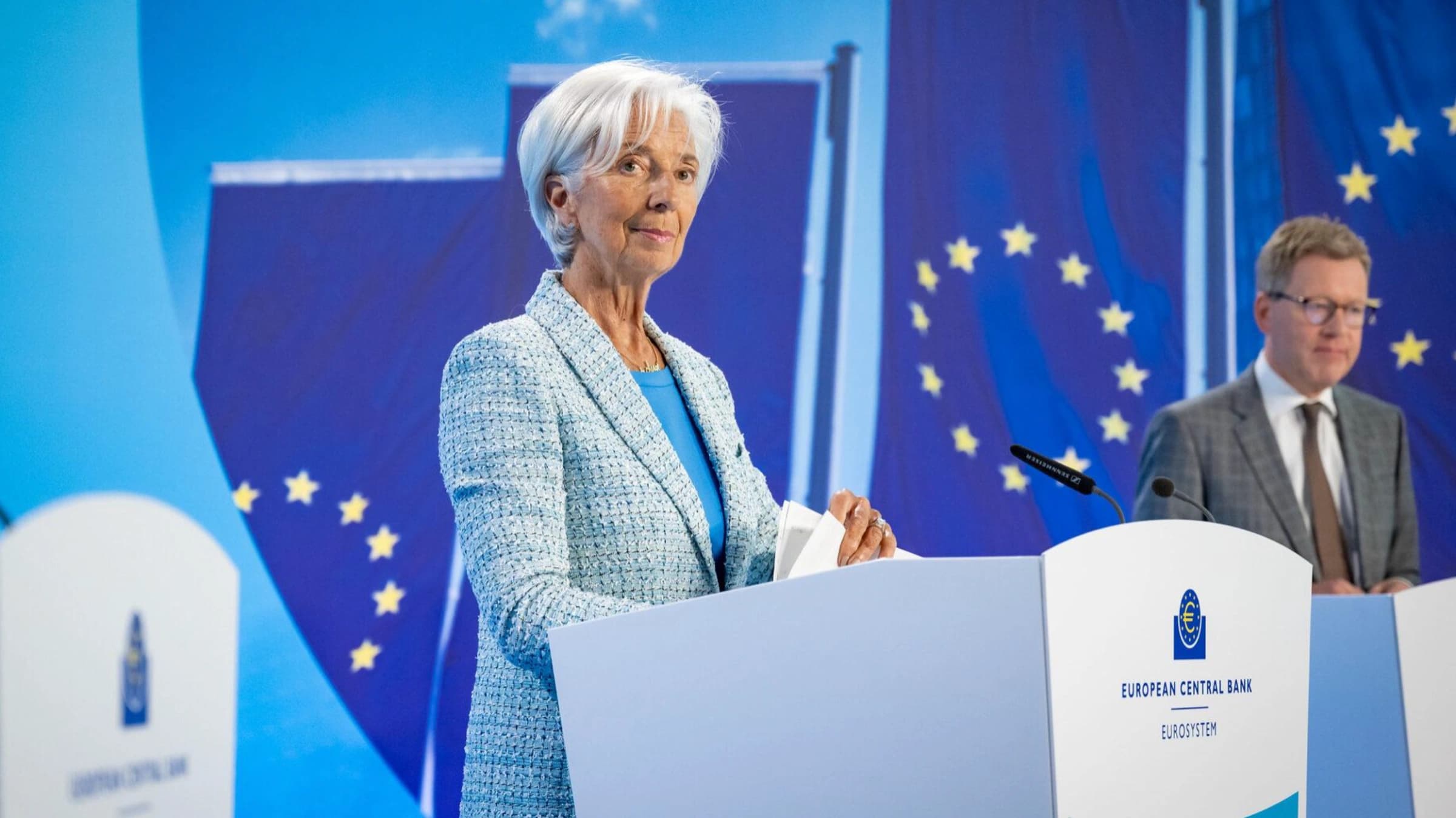
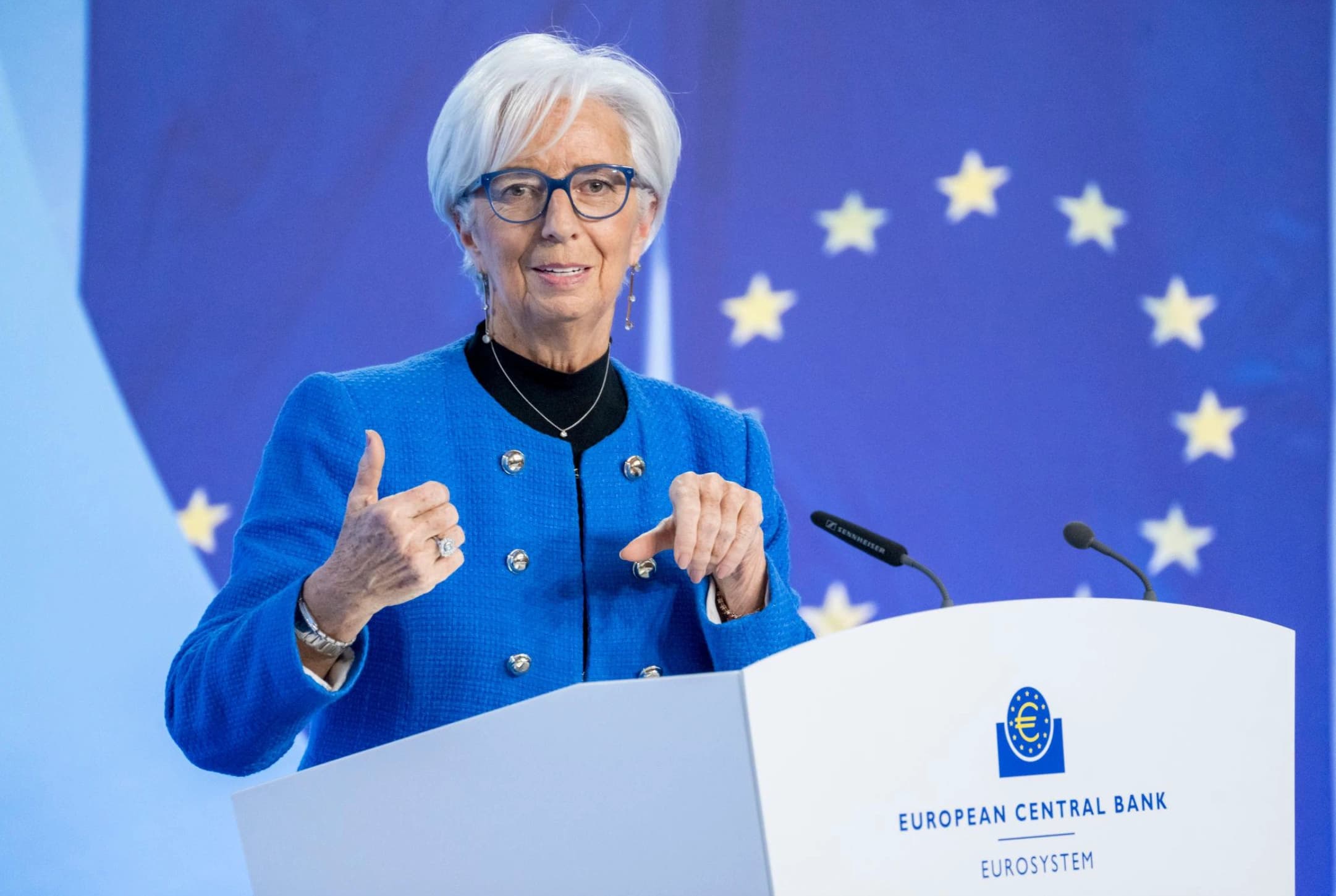
The ECB tail risk is smaller but real. The consensus hold at 2.50% rests on 70 of 73 surveyed economists — a near-unanimity that itself creates fragility. Bundesbank President Nagel has said the deposit rate sits at the upper end of the neutral range and would "not exclude" a move into "mild restrictive territory," tying any such action to energy price developments. Energy prices have been volatile enough in Q4 that Nagel's conditional is not purely hypothetical. ECB President Lagarde speaks today at 4:00 PM ET — before any of next week's decisions — and her language on the neutral rate and the energy price trajectory will be parsed aggressively. Any deviation from the standard "data-dependent, meeting-by-meeting" boilerplate toward something more directional will move EUR/USD before the weekend.
What Traders Watch Next
The dollar index — TVC:DXY — is the cleanest expression of the multi-bank sequencing trade. A Fed hold with hawkish December language, combined with ECB and BoE holds, is broadly dollar-neutral to mildly supportive. Add a BoJ hold and carry trades remain intact, DXY holds its range. The tail scenario — BoJ hike plus Lagarde hawkish tilt — is dollar-negative by 1.5–2% on a two-day move, which is substantial for a reserve currency index.
Gold is the hedge that works across multiple scenarios. A dollar-negative BoJ surprise is mechanically bullish for COMEX:GC1!. A Fed hold that is perceived as dovish — because inflation expectations have softened or Williams' "no urgency" framing dominates — is also gold-supportive. The only scenario that is outright gold-bearish is a Fed hike surprise combined with ECB and BoJ holds, concentrating tightening signal in the dollar. Given that scenario carries 15–25% probability, the asymmetry favors holding gold through next week rather than fading it.
For equity traders, the sequence matters most for rate-sensitive sectors. The 30-year mortgage rate at 7.40% is already pricing a Fed that stays higher for longer; another 25 basis points in December — which FXStreet's preview prices in alongside a March 2027 follow-on hike — means housing and utilities remain under pressure into year-end. Financials are more nuanced: steeper curves benefit net interest margins, but a BoJ hike that triggers yen repatriation could pressure Japanese holdings of U.S. Treasuries and push long yields higher independently of Fed action.
The specific calendar to trade around: Lagarde speaks today at 4:00 PM ET — the last public signal before Sunday's open. BoE Governor Bailey already spoke this morning; his tone will set sterling positioning into Wednesday's decision. The BoJ Outlook Report drops October 30 alongside the rate decision — that document, not the rate decision itself, may be the most important single release of the entire super-week. If the BoJ upgrades its FY2026 and FY2027 CPI projections materially above 2%, a December BoJ hike becomes consensus overnight, and USD/JPY has 300–400 pips of downside to price.
The Weekly Investor
Daily market analysis for active traders. Free.