Central Bank Super Week: Five Decisions in 48 Hours
RBNZ, Bank of Canada, Fed, ECB, and BoJ all decide by Friday. Here's what each decision means for rates, currencies, and global risk assets.
Key Points
- Five G10 central banks — RBNZ, Bank of Canada, Fed, ECB, and BoJ — all announce policy between Wednesday and Friday, with the RBNZ and BoC both expected to hike 25 basis points while the other three hold.
- China's industrial profits surging +14.4% YoY in September versus a +4.2% prior and South Korea's Q3 GDP beating at +1.0% QoQ underpin a global growth backdrop that gives hiking central banks cover to stay aggressive.
- The most important cross-asset read this week is what happens to the dollar when two G10 central banks hike on the same day the Fed holds — a setup that has historically produced sharp moves in NZD and CAD against the greenback.
Five G10 central banks announce policy decisions between 01:00 GMT Wednesday and roughly 03:00 GMT Friday, and the simultaneity is not incidental — it is the most concentrated test of global monetary policy coordination since the synchronized hiking cycle of 2022. Two are expected to raise rates, three to hold, and every single one of them is managing an inflation problem that has not been fully solved.
The Hikers: RBNZ and Bank of Canada
The Reserve Bank of New Zealand is the first mover this week, announcing Wednesday with the market pricing a 25 basis point hike to 3.00% from the current 2.75%. That would be a continuation of the RBNZ's methodical return to neutral — and beyond — as New Zealand's domestic inflation has proved stickier than the central bank projected earlier this year. The NZD has been sensitive to each RBNZ communication, and a 25 basis point delivery with a hawkish statement has the potential to push NZD/USD through the resistance levels it has been testing for the past three weeks. A surprise hold would be the more dramatic market event, but current pricing gives that scenario less than a 15% probability.
The Bank of Canada follows on the same day, with Governor Macklem expected to deliver a 25 basis point hike to 2.50% from 2.25%. What makes this week's BoC decision particularly notable is not the hike itself — it is Macklem's explicit pre-commitment to revising inflation forecasts "significantly higher" due to elevated crude and petroleum prices. That language, delivered publicly before the decision, is the BoC's way of anchoring market expectations without the surprise. August retail sales came in at +1.2%, pointing to solid Q3 consumption, which means Macklem is hiking into a growing economy — the ideal conditions for a central bank that wants to tighten without cracking the expansion. USD/CAD will be the pair to watch at the BoC announcement; a CAD-positive surprise in the statement language could push the pair below recent support levels traders have been defending since late September.
The macro context for both hiking decisions is being reinforced by data released outside North America this morning. China's industrial profits surged +14.4% YoY in September — up from +4.2% in August — with year-to-date profits running +15.5% higher. That is a demand signal for commodities that feeds directly into the inflation calculus in both New Zealand and Canada, two economies with significant commodity exposure. South Korea's Q3 advance GDP print beat hard at +1.0% QoQ versus the +0.7% consensus, adding to a global growth picture that does not currently justify central bank capitulation anywhere in the G10.
The Holders: Fed, ECB, and BoJ
The Federal Reserve holds Wednesday at 3.75–4.00% — a decision so well-telegraphed that the market moved weeks ago and has not looked back. The real content of the Fed's Wednesday slot is in Chair Warsh's 2:30 PM ET press conference, where the language around December's meeting will either confirm or complicate the market's current pricing of at least three additional hikes over the next 12 months. September CPI at +3.7% YoY and the Cleveland Fed's Q4 nowcast at +5.35% annualized mean Warsh cannot afford to sound comfortable, even if he is choosing patience.
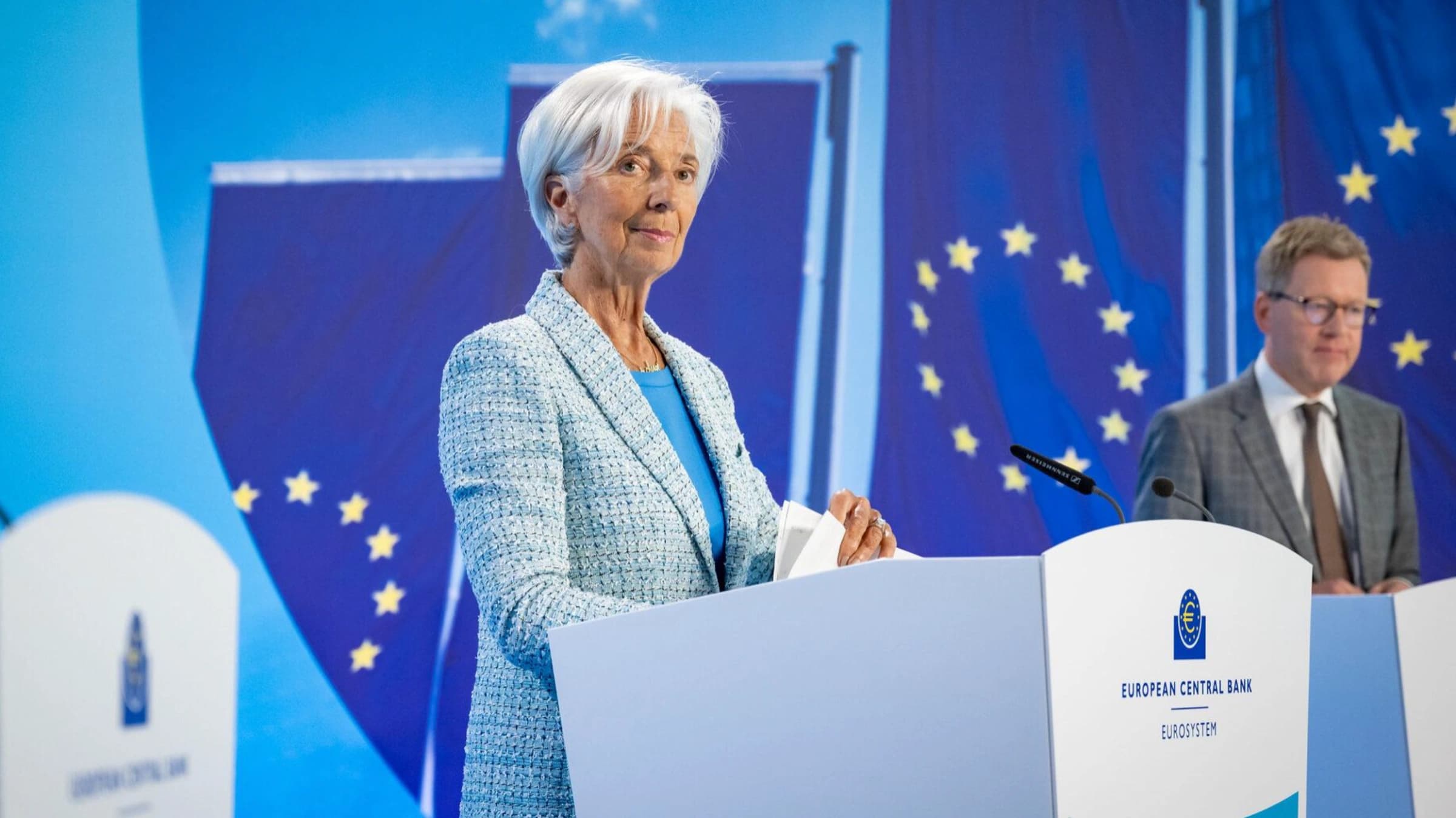
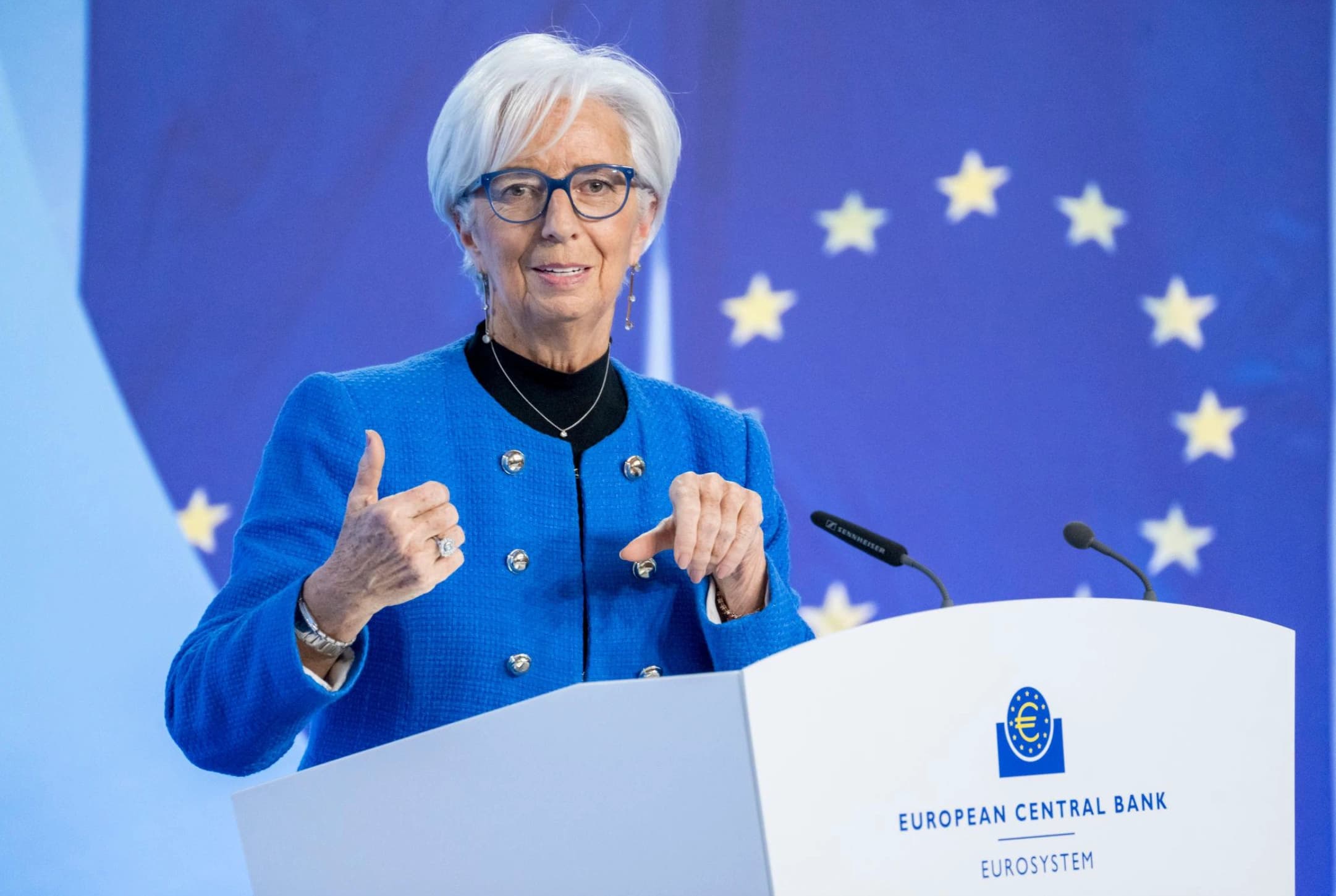
The ECB holds Thursday with 2.50% as its deposit rate and 70 of 73 surveyed economists calling for no change. ECB President Lagarde is speaking today — Tuesday — ahead of Thursday's decision, which means the market will be parsing her remarks for any deviation from the hold consensus before the actual announcement lands. The ECB's October Bank Lending Survey, released today, and September monetary developments data will inform the discussion around credit conditions in the euro area, where transmission of prior hikes has been uneven across member states. The ECB faces its own version of the Fed's messaging problem: inflation in the euro area has been falling, but energy prices are providing an unwelcome floor, and Lagarde must signal that the ECB is not done without triggering a sovereign spread blowout in the periphery.
The Bank of Japan closes the week Friday, holding at 1.25% with no serious expectation of movement in either direction. What the market is watching from Tokyo is not the rate decision but the BoJ's updated inflation forecasts, which are expected to be revised higher given Japan's Services PPI running at +3.7% YoY in September — revised up from an initial 3.5% prior. The BoJ's slow normalization has been one of the defining macro themes of 2026, and any language suggesting the pace of that normalization might accelerate would hit the yen carry trade hard. The current 1.25% rate still represents deeply accommodative policy relative to every other G10 central bank on this week's list, and any signal of urgency from Governor Ueda would reprice cross/yen pairs materially.
What Traders Watch Next
The most underappreciated cross-asset dynamic this week is the simultaneous RBNZ and BoC hikes landing at the same time the Fed holds. In a world where the dollar's direction is partly a function of relative rate differentials, two G10 peers moving to tighten while the Fed stands pat is a short-term headwind for DXY. Currency traders who have been long dollars into the FOMC on the assumption that Warsh goes hawkish need to hedge the scenario where he sounds neutral and the RBNZ and BoC statements read as more aggressively hawkish in tone — that combination compresses the dollar's rate advantage narrative and can produce fast moves in the majors.
The Bank of England is not deciding this week — the base rate sits at 3.75% as of October 26 — but UK CPI at 3.5% in September, up from 3.1% in August, and average wages excluding bonuses at +3.7% YoY mean sterling is being priced in an environment where the next BoE move is still widely expected to be a hike. That adds a sixth central bank to the mental model traders need to be running this week, even without a formal decision.
The forward-looking trade is simple in structure if not in execution: by the time the Bank of Japan closes this week's proceedings early Friday GMT, markets will have a complete picture of where the G10 rate cycle stands heading into Q4. If the RBNZ and BoC hike and sound hawkish, the Fed holds and Warsh signals December is live, the ECB holds but Lagarde leaves the door open, and the BoJ upgrades its inflation forecasts — the aggregate signal is that the global tightening cycle has more runway than current bond market pricing reflects. The next hard date is November's CPI releases globally, but the December 16 FOMC decision is the immediate focal point for U.S. rate strategy, and this week's five decisions are the last major policy inputs before November's data begins to shape that outcome.
The Weekly Investor
Daily market analysis for active traders. Free.