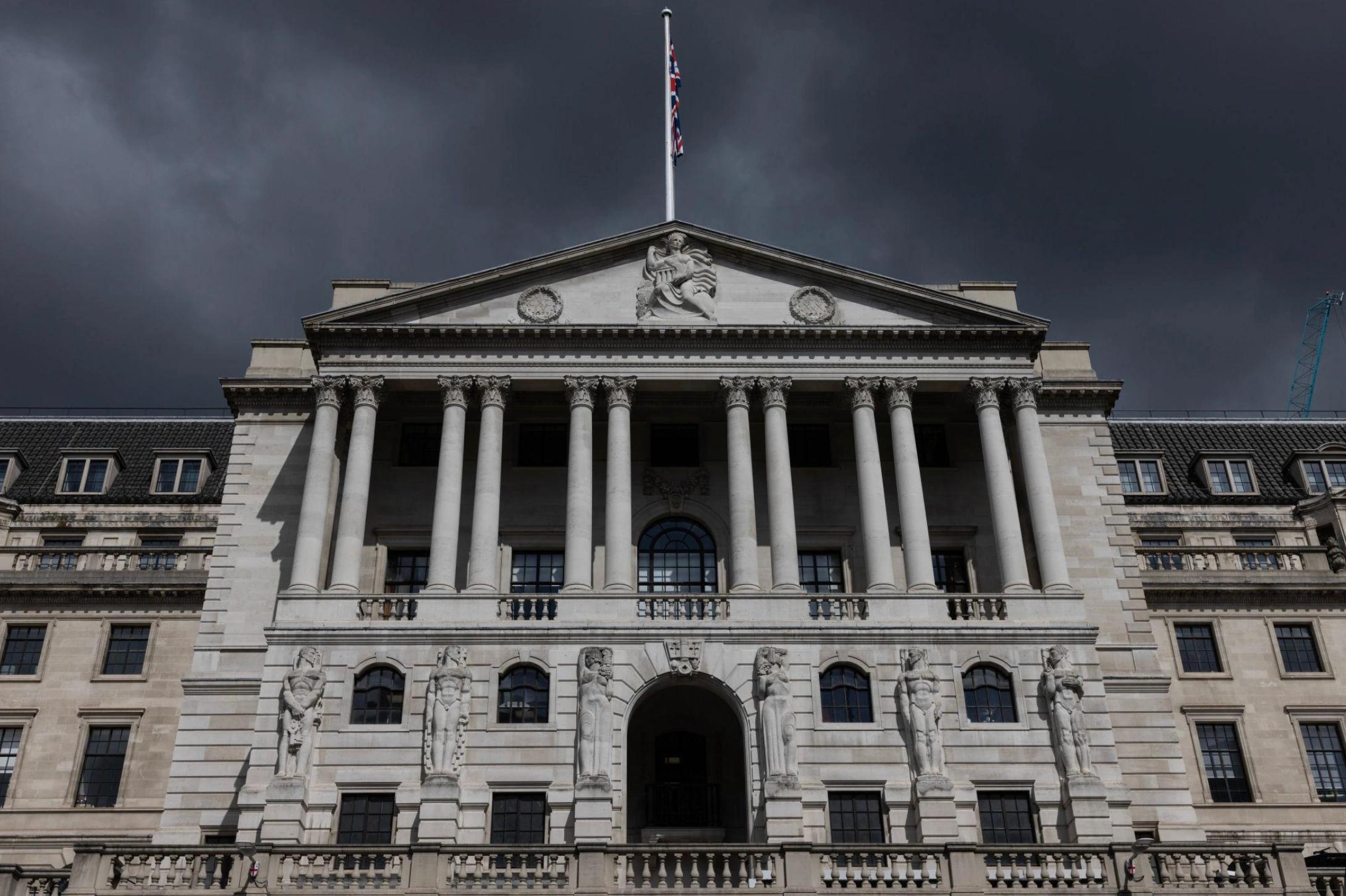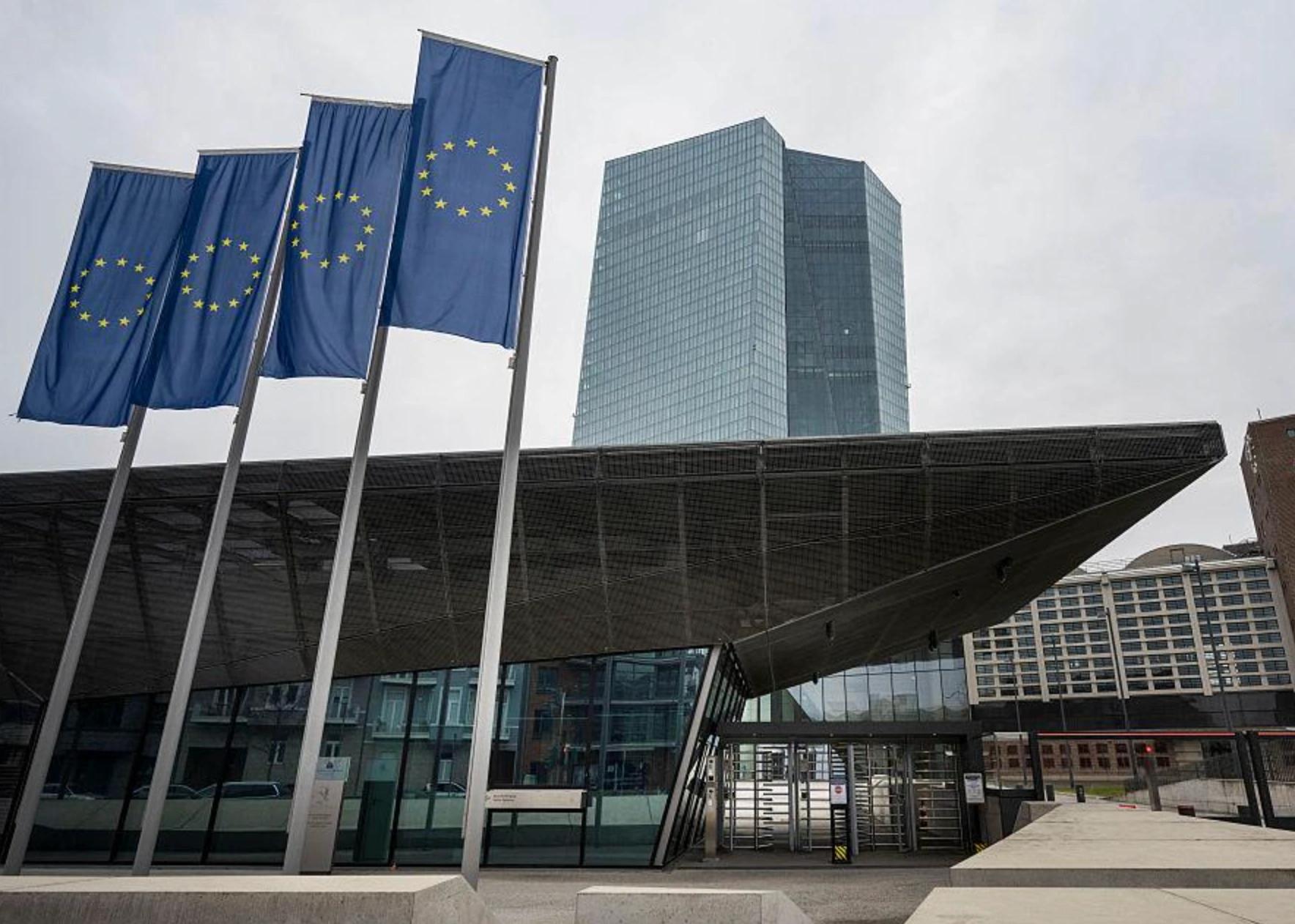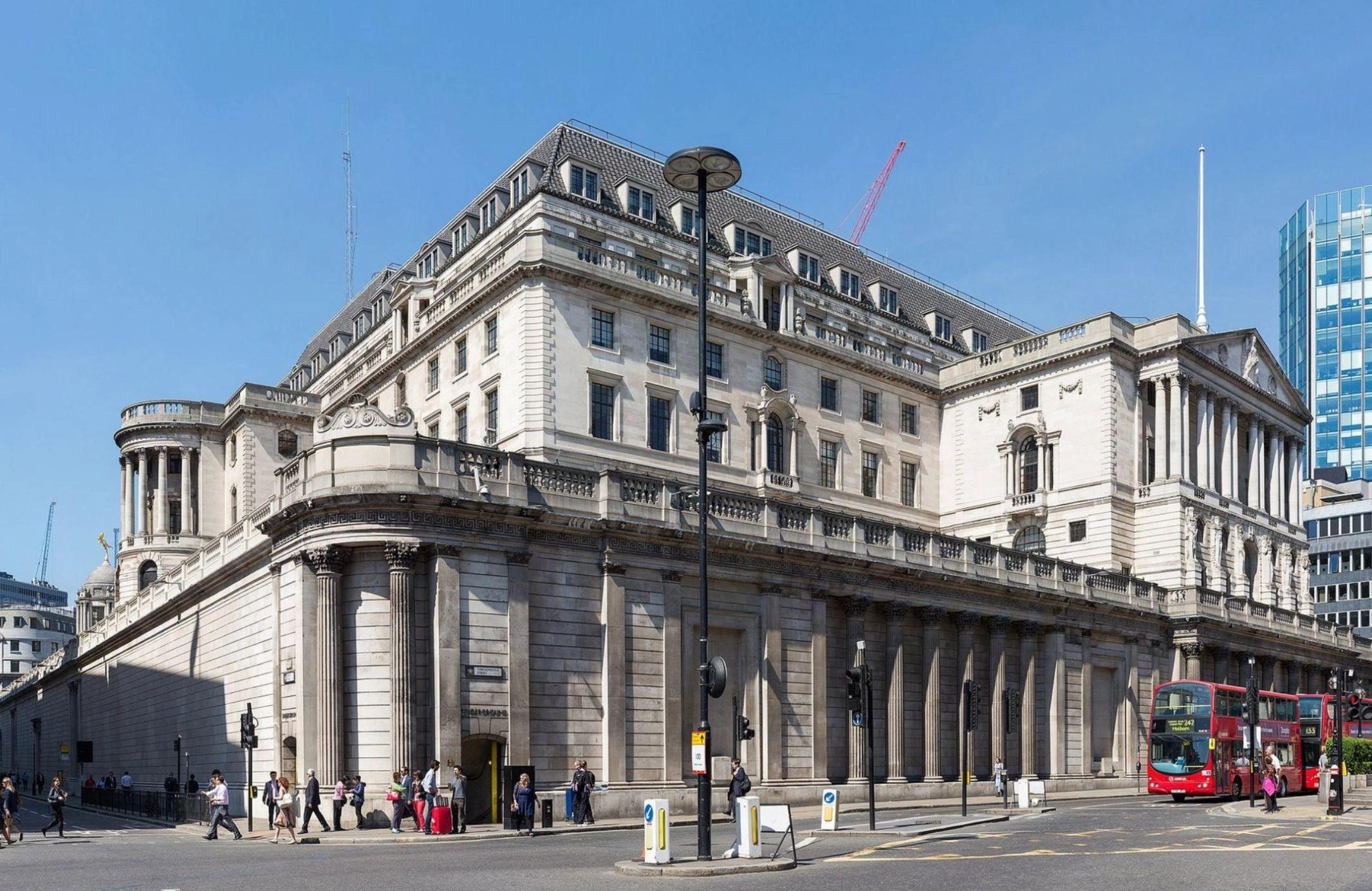
BoE Hikes to 4%, ECB Signals December Move
Bank of England raised rates to 4.00% on November 5 as UK inflation heads to 5% by mid-2027. ECB's Lagarde speaks today with December hike odds rising fast.
Key Points
- The Bank of England raised its benchmark rate by 25 bps to 4.00% on November 5, with sole dissenter Catherine Mann pushing for an immediate 4.25% as UK CPI at 3.5% is expected to accelerate toward 5% by mid-2027.
- ECB policymaker Zigman described the probability of a December rate hike as "relatively high," setting up Christine Lagarde's speech today as a live market event for euro and European fixed income traders.
- The simultaneous hawkish pivots at the BoE, ECB, and Fed mark the first time since early 2023 that all three major Western central banks have been in active tightening mode at the same time.
The Bank of England resumed its hiking cycle six days ago, lifting Bank Rate by 25 basis points to 4.00% on a lopsided 8-to-1 vote, and the lone dissenter wanted 4.25% immediately. Across the Channel, ECB policymaker Zigman called a December rate hike "relatively high" probability on Tuesday, and Christine Lagarde takes the podium today in a speech traders will treat as forward guidance. With U.S. 10-year yields sitting at 5% after Tuesday's hot CPI, the global rate picture has shifted from a question of when central banks stop to a question of how much further they go.
The BoE's Inflation Arithmetic
The Bank of England's November 5 decision was aggressive in its framing even if not in its size. A quarter-point move to 4.00% was widely expected, but the internal dynamics told a more hawkish story. Governor Andrew Bailey and seven colleagues voted for 25 basis points. Catherine Mann voted for 50 basis points and prevailed on no one. Mann's argument — that front-loading tightening is necessary to prevent persistent inflation from becoming embedded in wage and price-setting behavior — is the same logic Waller deployed in Washington this week. The fact that Mann lost the vote does not mean the committee is relaxed about price stability. It means they disagree on the dosing, not the direction.
UK CPI reached 3.5% in September, driven in part by energy prices linked to the ongoing Middle East conflict. The Bank's own forecast puts inflation near 5% by mid-2027, a projection that would have been considered a central bank failure scenario twelve months ago. The BoE's parallel growth forecast offers cold comfort: GDP growth revised up to 1.3% for 2027, but the Bank simultaneously projects unemployment reaching 5.1% by 2028. That combination — rising unemployment alongside an inflation path that peaks near 5% — is a stagflation trajectory in everything but name, and it severely limits the Bank's flexibility. Rate cuts are not on the table when your own forecast puts inflation doubling from here.
The housing sector is delivering the demand-side brake the BoE is counting on, but it is arriving brutally. Pending home sales in September fell 11.3% against a prior reading of minus 4.7%. Housing starts came in at 1,221,000 units, well below the 1,288,000 forecast. For UK households carrying variable-rate mortgages — a significantly larger share of the market than in the U.S. — a Bank Rate at 4.00% is not an abstract number. It is a monthly cash flow event. The transmission mechanism of BoE policy is faster and more direct than the Fed's, which is why the Bank has historically been willing to move in smaller increments. The question at the December 17 meeting is whether the inflation forecast trajectory forces their hand on magnitude.
ECB on the Edge
Christine Lagarde's speech today arrives in a context where the ECB's current deposit facility rate of 2.65% looks increasingly inadequate relative to its inflation problem. Eurozone inflation has remained persistently elevated even as the ECB moved rates from deeply negative territory over the past eighteen months. ECB policymaker Zigman's assessment this week — that a December hike probability is "relatively high" and that it is too early to determine how much additional tightening will be needed — is as close to a pre-commitment as ECB officials typically make outside of formal policy meetings. If Lagarde's remarks today echo that framing, traders in EUR/USD, Bund futures, and European bank equities will treat it as confirmation.
The ECB's position is structurally more complicated than the BoE's or the Fed's. Eurozone growth is fragile, with significant dispersion across member states. Germany's industrial base continues to absorb the cost of the energy transition and the loss of cheap Russian gas, while Southern European economies face debt servicing costs that rise mechanically with every ECB hike. The deposit facility at 2.65% leaves the ECB with less policy room before hitting the growth constraint than either the Fed at 3.75–4.00% or the BoE at 4.00%. Yet if Lagarde concedes that inflation persistence demands another move in December, the market repricing could be sharp: European fixed income has been anchored by the assumption that the ECB is closer to its terminal rate than its peers.
What Traders Watch Next
Three central bank timelines now converge on December. The Fed meets in mid-December with an 85%-plus probability of a hike already priced, the BoE meets December 17 having just raised to 4.00%, and the ECB's December meeting is now live for a potential move with Lagarde speaking today. The last time all three major Western central banks were simultaneously in active tightening mode, global risk assets re-rated sharply lower. That does not mean the same outcome is guaranteed, but the correlation structure between equity volatility and central bank policy synchronization is not favorable for bulls in a world where the 10-year U.S. yield is already at 5%.
For traders with cross-asset exposure, the specific level to watch in European markets is the ECB deposit rate relative to 3.00%. A move to that level would represent a 35 basis point hike from current levels — achievable in one large move or two standard increments — and would likely be framed by Lagarde as bringing real rates to neutral. Any language today that accepts the neutral framing or signals comfort above 3.00% would be a significant hawkish surprise relative to current market positioning. The BoE's December 17 meeting is the next hard date in the global central bank calendar, and by then the Fed's December decision and Friday's U.S. PPI forecast at 6.6% YoY will have set the global tone. November 17–18's cluster of FOMC minutes, UK CPI, and retail data will begin resolving that picture within the week.
The Weekly Investor
Daily market analysis for active traders. Free.