BOE Hikes to 4%, ECB Flags December: Europe Tightens
Bank of England raises to 4.00% with one member voting for 50 bps. ECB's Lagarde signals December hike likely as euro-area inflation hits 4.0%.
Key Points
- The Bank of England raised its benchmark rate 25 basis points to 4.00% in an 8-1 vote, with MPC member Mann dissenting in favor of a 50-basis-point move — a hawkish signal the market did not fully price.
- The BoE's upward revision of its 2027 CPI forecast from 2.1% to 4.0% — nearly doubling its prior projection — reflects the severity of the energy shock and Middle East conflict's inflationary pass-through.
- The BOJ's Governor Ueda speaks at midnight ET tonight ahead of a December 18 meeting where markets already expect a hike to 1.50%, making tonight's remarks a potential market mover for yen pairs.
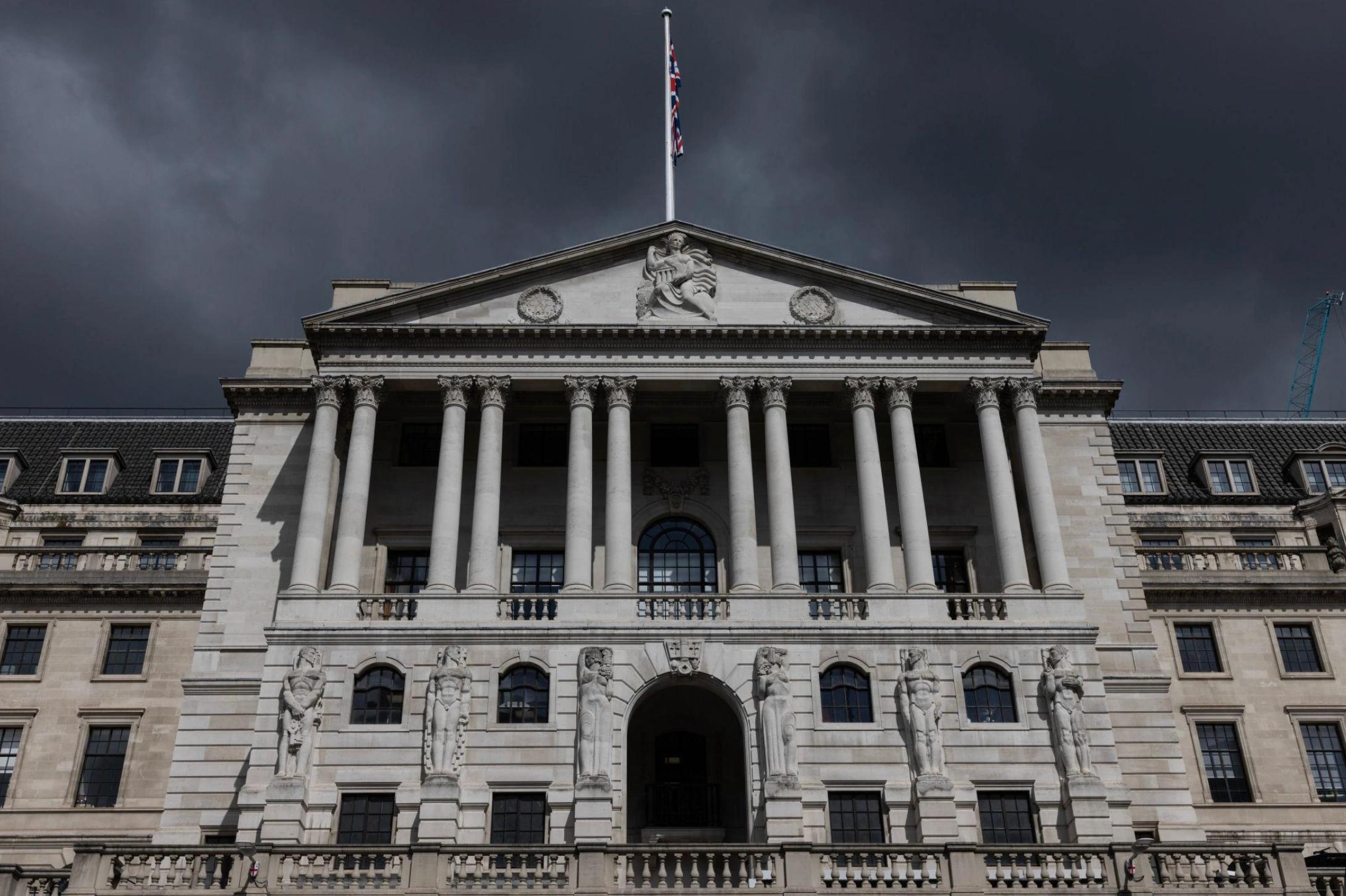
The Bank of England hiked 25 basis points to 4.00% this morning in an 8-1 vote, but it was the one dissenting voice — MPC member Mann, who voted for 50 basis points — that told the real story. The BoE simultaneously revised its 2027 CPI forecast from 2.1% to 4.0%, a near-doubling of its prior projection that reflects not a minor recalibration but a fundamental reassessment of where UK inflation is heading. With the ECB's Lagarde flagging a December hike as "relatively high" probability and the BOJ's December 18 meeting already priced for a move to 1.50%, the global central bank tightening cycle that many assumed was winding down is instead entering a second, synchronized chapter.
The BoE's Numbers Are Alarming
The headline decision was expected. The details beneath it were not. UK CPI sat at 3.5% in September, well above the BoE's 2% target, and the bank now projects it will approach 5% by mid-2027. Services inflation — the stickiest component and the one most closely watched by policymakers — stands at 3.7%. Core CPI is at 2.8%. The BoE raised its full-year 2026 CPI projection from 3.2% to 3.8%, meaning inflation isn't expected to fall toward target within the forecast horizon; it's expected to rise further away from it. The primary driver the bank cited: inflationary pressures from the Middle East conflict and rising energy prices — the same external shock rattling every major central bank from Frankfurt to Tokyo.
Mann's dissent for 50 basis points deserves more attention than it typically receives in a split vote. When a single MPC member breaks from consensus to demand a larger move, it signals that at least one policymaker believes the committee is already behind the curve — that 25-basis-point increments are insufficient to prevent inflation expectations from becoming unanchored. The BoE officially stated there is "limited evidence so far of second-round effects," but the very structure of that phrasing — "so far" — acknowledges the risk is live. If wage data or business pricing surveys over the next six weeks show any acceleration, the December meeting becomes a genuine 50-basis-point debate rather than a 25-or-hold binary.
For sterling and gilt traders, the message from this morning is unambiguous: the BoE is not done, and the terminal rate for this cycle has just been revised higher by implication. Future decisions will remain meeting-by-meeting, the bank said, with particular focus on wage growth, business pricing behavior, and economic slack. That framework gives the committee maximum flexibility — but it also means every data release between now and the December meeting is a live market event for GBP pairs and UK government bonds.
Lagarde's Warning and the ECB's Structural Dilemma
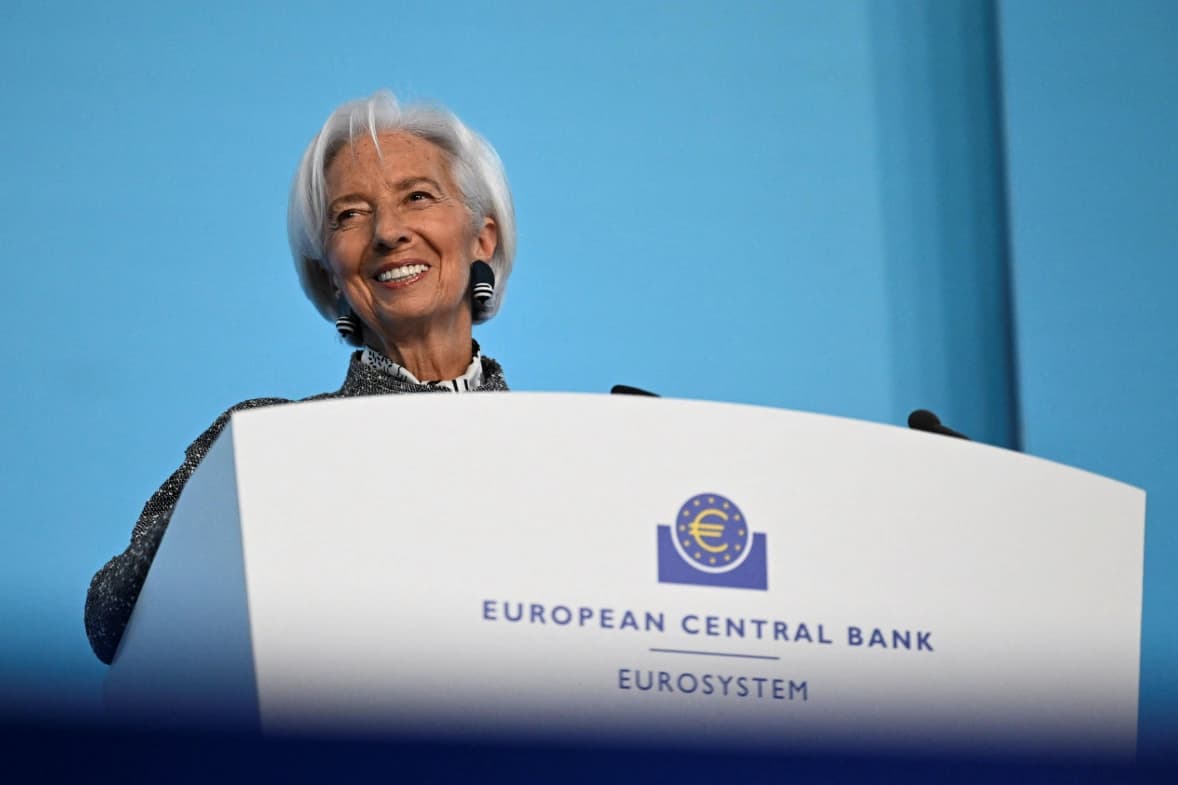
ECB President Lagarde's remarks today cut to the core of why central banking in 2026 is so extraordinarily difficult: "The current situation is made hard by energy shock and AI pulling in the opposite direction; energy costs are the main driver of the too-high inflation." That framing — energy pushing prices up while AI-driven productivity potentially pushes them down — describes a policy environment where the standard monetary transmission mechanism is working against itself. Raising rates cools domestic demand but does nothing to address a supply-driven energy shock; it may even aggravate it by slowing the investment in energy infrastructure needed to resolve the shortage.
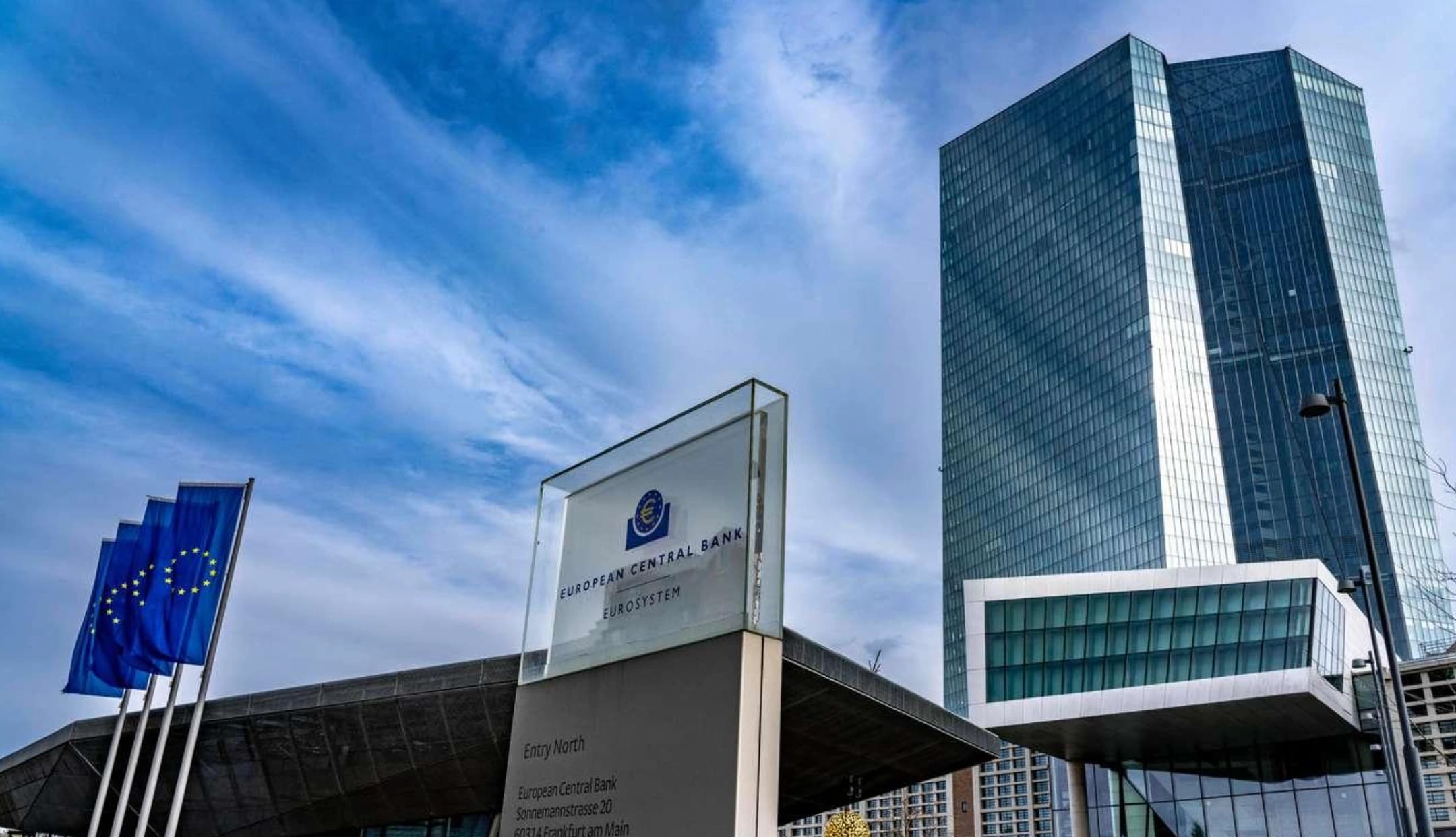
Euro-area HICP reached 4.0% in October's flash estimate, up from 3.8% in September. Energy inflation within the bloc spiked to 18.8% — a figure that makes the ECB's 2% target look almost academic at this stage. The ECB deposit rate currently sits at 2.50% following October 29's hold decision. ECB policymaker Zigman described the probability of a December hike as "relatively high." If that move materializes, the deposit rate would rise to 2.75% — still accommodative in real terms given an inflation rate of 4.0%, which means the ECB would still have significant ground to cover even after December.
The ECB's September GDP growth projections — 0.9% for 2026, 1.4% for 2027, 1.5% for 2028 — are already looking optimistic given the energy shock's drag on the manufacturing-heavy German and Italian economies. The euro-area faces a stagflationary squeeze: rising prices that demand tighter policy, stagnant growth that argues against it. Lagarde's AI comment was more than rhetorical color; it was an acknowledgment that the ECB is navigating between two structural forces that have no historical precedent operating simultaneously at this scale. For EUR/USD traders, the net effect is a currency pair caught between a hawkish ECB and a Fed whose December intentions are now in genuine doubt.
The BOJ's Midnight Signal and What It Means for Yen Crosses
The Bank of Japan held at 1.25% at its October 30 meeting — no surprise — but board member Hajime Takata's dissent was notable. Takata argued inflation had reached the BOJ's target and "warranted faster hikes toward the neutral rate." The BOJ maintained its FY2026 inflation forecast at 2.5% while nudging its growth projection up to 0.7% from 0.6%. Neither revision is dramatic, but together they reflect a central bank that is running out of reasons to stay as accommodative as its peers. Markets are already pricing a move to 1.50% at the December 18 meeting — a 25-basis-point hike that would mark Japan's continued, cautious exit from the decade-plus of zero-rate policy.
Governor Ueda speaks tonight at midnight ET. That timing — well after U.S. equity markets close but while Asian markets are active — means any hawkish forward guidance will hit yen crosses, Japanese government bonds, and Nikkei futures in real time. The yen has been under persistent depreciation pressure all year as the interest rate differential between Japan and the U.S. remained wide; a Ueda signal that December is a live meeting would begin to close that differential in markets' minds and could trigger a sharp short squeeze in JPY. The Czech CNB's 25-basis-point hike to 4.00% today, though a smaller market, further reinforces that the global tightening impulse extends well beyond the G3 central banks.
The convergence of these moves — BOE at 4.00% with a 50-bps dissent, ECB signaling December, BOJ pricing a December hike, CNB already moving — creates a dollar index environment where the Federal Reserve's hesitation looks increasingly anomalous. The DXY has been held aloft by the Fed's hawkish posture, but if today's payrolls data weakens December hike odds further, the dollar faces selling pressure from multiple directions simultaneously: a firming pound, a euro getting hawkish support from Lagarde, and a yen beginning to price BOJ normalization. The specific level to watch on DXY is 104.50 — a break below there would confirm the dollar's safe-haven and rate-differential bid is unwinding, and the mortgage rates already drifting to September lows suggest that domestic rate expectations are already moving in that direction. BOJ Governor Ueda's midnight remarks and the November 10 U.S. CPI release are the two catalysts that will confirm or deny whether that dollar unwind has legs into year-end.
The Weekly Investor
Daily market analysis for active traders. Free.