Vertiv Explodes 12% After 61% Revenue Surge
Vertiv Q3 revenue hit $4.31B, up 61% YoY, crushing estimates. FY2026 EPS guidance raised to $7.15. Here's what the numbers mean for traders.
Key Points
- Vertiv Q3 net sales of $4.313 billion surged 61% year-over-year, beating the $3.76B consensus by roughly $550 million.
- AI-driven data center buildout is translating directly into accelerating hardware demand, with Americas organic growth running at 66% and adjusted operating margin expanding 290 basis points to 25.2%.
- Traders should watch the $7.15 FY2026 EPS guidance figure as the new floor — any upward revision on the Q4 call becomes the next catalyst.
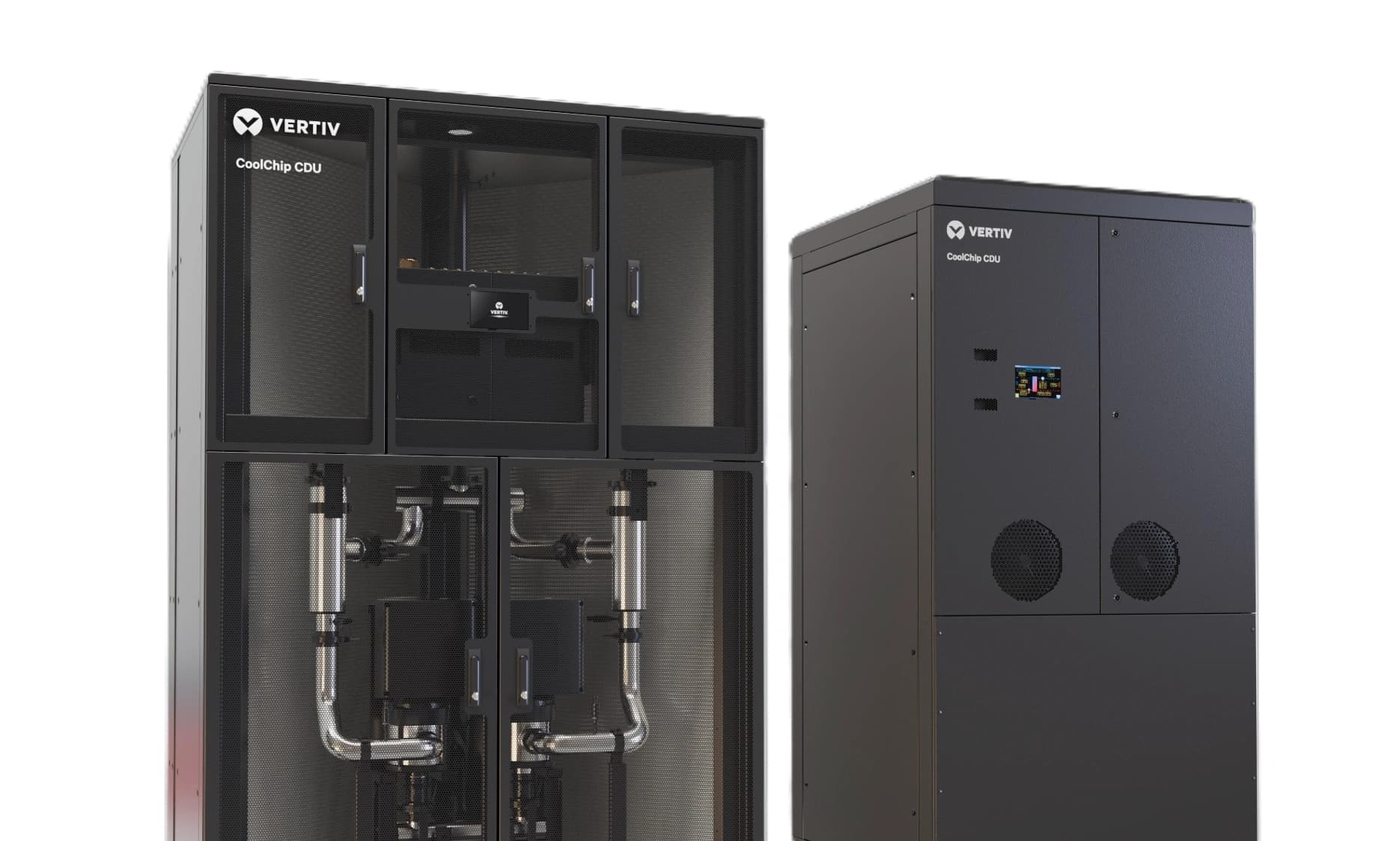
Vertiv just delivered the most emphatic proof yet that the AI infrastructure buildout is not slowing. Q3 net sales came in at $4.313 billion — up 61% year-over-year and roughly $550 million above consensus — and management followed it with a full-year EPS guidance raise to $7.15, a figure that implies 70% growth versus FY2025. The stock jumped 12% on volume of 8.44 million shares, and the move looks justified on the numbers alone.
The Beat Was Broad, Not a One-Region Fluke
The first thing to check on any blowout quarter is whether the growth is concentrated in a single geography that might not repeat. In Vertiv's case, it wasn't. Americas net sales grew 75% year-over-year, with 66% of that on an organic basis — meaning acquisitions explain only a fraction of the surge. APAC delivered 50% growth, 48% organic. Even EMEA, historically the softer leg for Vertiv's business, posted 23% growth with 19% coming organically. When every region beats and organic growth is the dominant driver, that's a structural demand signal, not a channel-stuffing story.
Operating profit of $984 million was up 90% year-over-year, outrunning even the already-impressive revenue growth rate. That's the leverage story: as Vertiv scales production on thermal management and power distribution equipment — the physical backbone of hyperscale AI clusters — fixed cost absorption is widening margins faster than the top line. Adjusted operating margin came in at 25.2%, up 290 basis points from Q3 2025. For a company that was still in margin-recovery mode two years ago, that trajectory is remarkable. The original bull thesis was that Vertiv would eventually monetize its installed base and pricing power once AI capex accelerated. Q3 2026 is that thesis executing in real time.
The Guidance Raise Changes the Valuation Math
The full-year 2026 revenue guide now sits at $14.65 billion, implying roughly 38% organic growth at the midpoint. That's not a guidance raise — it's a guidance reset. Management lifted the top-line outlook by $650 million, and the EPS guidance of $7.15 is where traders need to focus. At Tuesday's close, before the earnings print, VRT was trading near $120. After today's 12% move, the stock is approaching $135. At $135 with $7.15 in guided EPS, you're paying roughly 18.9x forward earnings for a company growing revenue at 38% organically and expanding margins at nearly 300 basis points per year. That multiple looks defensible, and it creates a straightforward framework: the stock de-rates only if management's demand visibility turns out to be wrong.
The $650 million guidance raise is also significant because it was paired with a comment on capacity investments. Vertiv is spending to meet demand it says it can see clearly — which is the language of backlog and take-or-pay contracts, not optimistic forecasting. According to the company's Q3 8-K filing published on SEC.gov, the guidance is supported by strong order visibility across the Americas and APAC corridors, where hyperscaler capex commitments are extending into 2027. That multi-year commitment structure is the same dynamic that has lifted peer Micron — recently upgraded to Strong Buy by Seeking Alpha analyst Ryan Canady on exactly this kind of contract visibility — and it's increasingly the differentiating factor between AI infrastructure names that deserve premium multiples and those that don't.
What This Means for the AI Infrastructure Trade
Vertiv's quarter doesn't exist in a vacuum. It lands on the same day SK Hynix reported Q3 revenue of KRW 99.68 trillion, up 25.67% sequentially from Q2, with shares up approximately 7%. The day before, Dell surged 7.5% and Super Micro climbed 7.3% on the S&P 500 leaderboard. The pattern is consistent: every company in the physical stack of AI infrastructure — power, cooling, memory, servers — is seeing demand that is running ahead of even the most aggressive sell-side models. Vertiv is not an outlier. It is the clearest confirmation yet.
The critical question for traders rotating into or adding to VRT is margin durability. The 25.2% adjusted operating margin is the highest in recent company history. Skeptics will argue that hyperscalers eventually use procurement leverage to compress vendor margins, particularly as Vertiv competitors including Eaton and Schneider Electric accelerate their own capacity builds. That risk is real, but Vertiv's 290 basis point expansion this quarter happened while capacity investment was increasing — suggesting the pricing environment has not yet deteriorated. Margin compression, if it comes, is a 2027 or 2028 story.
Broader market context matters too. The Nasdaq-100 gained 1.3% on Tuesday and the AI infrastructure complex — Broadcom, upgraded to Buy at D.A. Davidson today on improved AI sentiment, and Coherent, up 6.5% yesterday — is clearly in a momentum phase. That doesn't mean VRT can't be trimmed after a 12% single-session gain, but it does mean the macro backdrop is reinforcing, not fighting, the fundamental story.
What Traders Watch Next
The next hard catalyst for VRT is the Q4 2026 earnings call, which will either confirm or begin to erode the demand visibility argument. Watch specifically for any language around order cancellations or delivery timeline extensions — those would be the first signs that hyperscaler AI capex is being deferred. For now, there are none. The Q3 print showed the opposite: demand running ahead of capacity.
In the near term, the $135 level — roughly where VRT is trading post-earnings — acts as the new reference point. A close above $140 on strong volume would signal institutional accumulation and extend the breakout. A fade back toward $125 on below-average volume would suggest profit-taking from holders who entered below $90 earlier this year, not fundamental deterioration. The FY2026 EPS guide of $7.15 is the anchor. As long as that number holds — and after today's quarter, there is no evidence it won't — the stock has a credible path to $150 before year-end, a level that would still represent less than 21x current-year earnings for one of the fastest-growing large-cap industrials in the market. Full segment breakdowns are available via GuruFocus's VRT earnings analysis. The Q4 report, expected in late January 2027, is the date every VRT holder needs circled.
The Weekly Investor
Daily market analysis for active traders. Free.