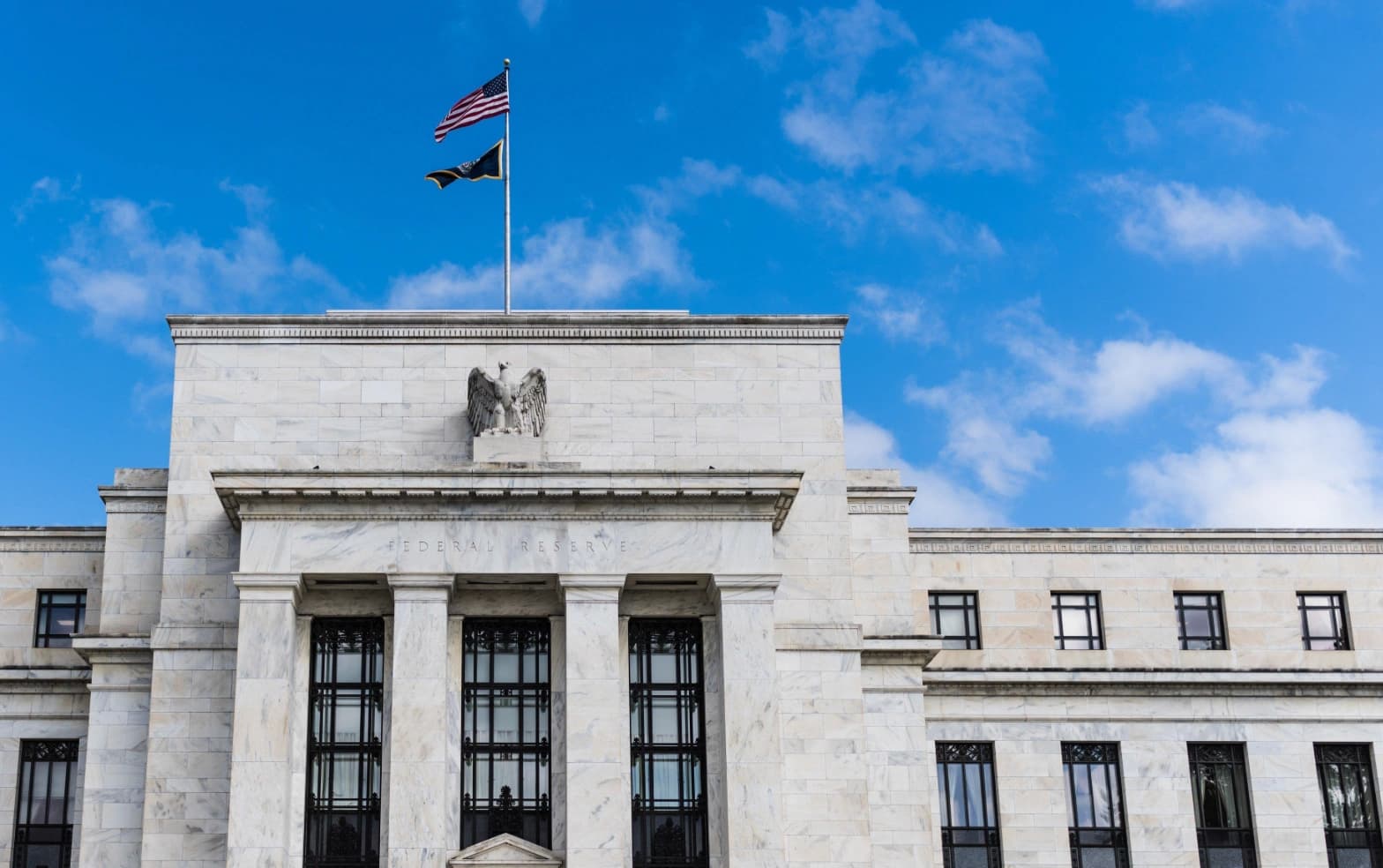
US Economy at Full Speed — But the Fed's Finger Is on the Trigger
Q3 GDP hit 3.4%, ISM Manufacturing rose to 55.5, and two Fed dissenters want hikes now. Today's JOLTS and ISM Services data will set the December tone.
Key Points
- Q3 GDP expanded at 3.4% annualized — the fastest pace in four quarters — driven by a 12.7% surge in Business Fixed Investment and 3.8% PCE growth, with Atlanta Fed GDPNow now tracking Q4 at 3.7%.
- Two FOMC members dissented at the October 28 meeting in favor of an immediate hike, and Chair Warsh has stripped all forward guidance from the statement, making December's decision genuinely live.
- Today's JOLTS print at 10:00 AM ET and ISM Services at 3:00 PM ET are the two data points most likely to move the December rate pricing — watch for JOLTS below 7.0M or ISM Services below 54 as the bearish triggers.
The US economy is accelerating into the Federal Reserve's deliberations at exactly the wrong time for anyone hoping for a patient central bank. Real GDP grew 3.4% annualized in Q3 — the hottest quarter in a year — and the Atlanta Fed's GDPNow model is already tracking Q4 at 3.7%. With two FOMC dissenters already on record wanting to hike, today's JOLTS and ISM Services releases will either validate the hawks or give the holds their best argument yet.
The Expansion That Won't Slow Down
The Q3 GDP print, released October 29, was not just strong — it was structurally strong in the ways that matter most to policymakers. Business Fixed Investment surged 12.7% annualized, contributing 1.8 percentage points to the headline. That's not inventory-building or government spending padding the number — that's private capital formation at a pace that signals real confidence in the demand environment. Consumer spending grew 3.8%, adding 2.5 percentage points. Combined, those two components alone delivered 4.3 points of growth against a 3.4% headline, meaning the rest of the economy was a modest drag — not a fundamental problem.
Manufacturing momentum is confirming the GDP story from a different angle. The ISM Manufacturing PMI rose to 55.5 in October from 54.5 in September, marking the 15th consecutive month of expansion in that sector. S&P Global's final Manufacturing PMI came in at 54.9 for October, slightly below the 56.0 estimate but still firmly in expansion. Neither reading suggests the industrial base is softening in a way that would give the Fed cover to hold much longer. The combination of strong capex, healthy consumer spending, and sustained manufacturing expansion is precisely the macro backdrop in which a central bank running 67 consecutive months of above-target inflation cannot credibly argue for patience.
The Fed's Increasingly Uncomfortable Position
The FOMC voted 10–2 to hold at 3.75%–4.00% on October 28, but that vote was not a clean hold. Lisa D. Cook and Beth M. Hammack both dissented in favor of an immediate 25-basis-point hike. Two dissenters on a ten-person voting committee is not a fringe view — it's a significant policy signal, particularly when the statement simultaneously described economic activity as "expanding at a strong pace," domestic spending as "resilient," and inflation as "elevated." Chair Kevin Warsh has removed forward-looking guidance from FOMC statements and press conferences since taking the chair on May 22, which means markets cannot rely on traditional signaling to calibrate December expectations. Every data point between now and December 8–9 carries outsized weight.
The current 30-year mortgage rate of 7.118% makes clear the real-economy consequences of the Fed's current stance. On a $300,000 loan, that rate generates approximately $427,104 in total interest over the life of the loan — a level that is visibly suppressing housing activity even as the broader economy accelerates. The Fed's bind is that its current policy rate of 3.75%–4.00% may be insufficiently restrictive against a 3.4%–3.7% real growth backdrop, but moving too aggressively risks breaking a housing sector that is already absorbing significant stress. Warsh has indicated through his statement language that the committee will not move until data compels it — and today's data may begin making that case.
What Traders Watch Next
The sequencing of today's US data releases matters. JOLTS job openings for September, due at 10:00 AM ET, are forecast at 7.164 million, up from 7.079 million in August. The JOLTS series is notoriously revision-prone — the prior reading has been revised in the same direction as the subsequent month's print seven of the last ten cycles — so the headline is less important than what it does to the Fed's labor market narrative. A reading above 7.3 million would signal that demand for workers remains robust despite five months of rates above 3.75%, adding fuel to the December hike case. A miss below 7.0 million hands the doves their best argument: that the labor market is cooling fast enough to warrant patience.
ADP private payrolls for October, due at 1:15 PM ET, are expected at 65,000 — a material step down from September's 90,000. ADP has tracked within 25,000 of NFP only about half the time over the past two years, limiting its predictive value, but a print below 50,000 would immediately reprice Friday's nonfarm payrolls expectations lower and take pressure off the December hike thesis. The S&P Global Services PMI final and ISM Services PMI, both due in the afternoon window, round out the picture. ISM Services is expected at 54.8 against a prior of 54.9 — essentially flat. Any reading at or below 54.0 would represent the first meaningful deceleration in the services sector since August, which matters because services inflation has been the stickiest component of the Fed's core PCE problem throughout 2026.
The number to watch most closely is the ISM Services Employment sub-index, currently expected around 50 against a prior of 50.1. Services employment at the breakeven line, combined with a weak ADP print and JOLTS openings approaching 7.0 million, would give the FOMC holds — the eight members who voted to stay put on October 28 — a defensible data set heading into December. Conversely, a sweep of beats across JOLTS, ADP, and ISM Services puts Friday's nonfarm payrolls on pace to deliver the kind of upside surprise that makes a December 25bp hike to 4.00%–4.25% the base case for the market by end of week. The 10-year Treasury yield is the instrument to watch — a move above 4.60% on strong data today would be the first confirmation that December is live.
The Weekly Investor
Daily market analysis for active traders. Free.