NVDA Loses $225B as Huang Scandal Hits Before Key Print
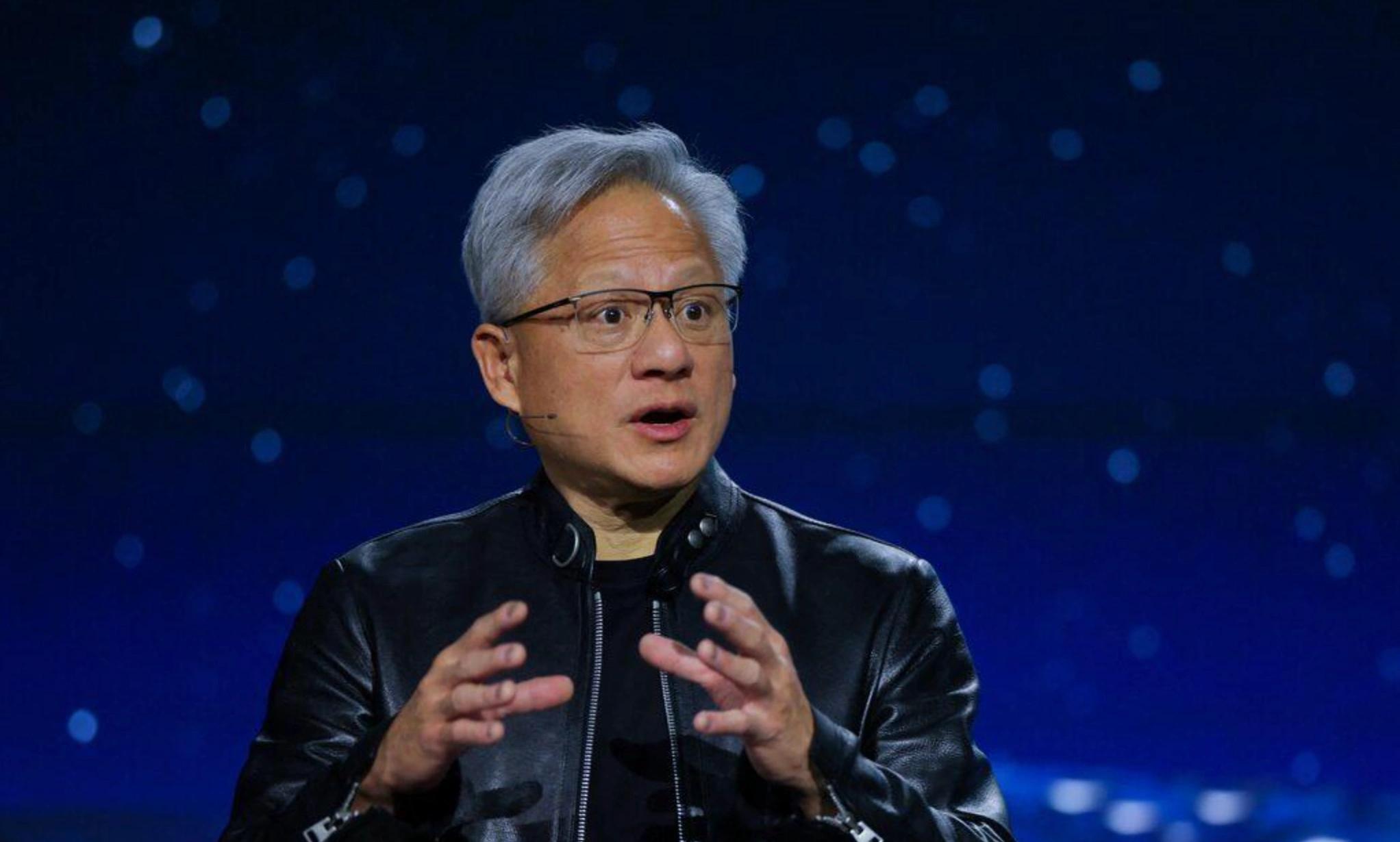
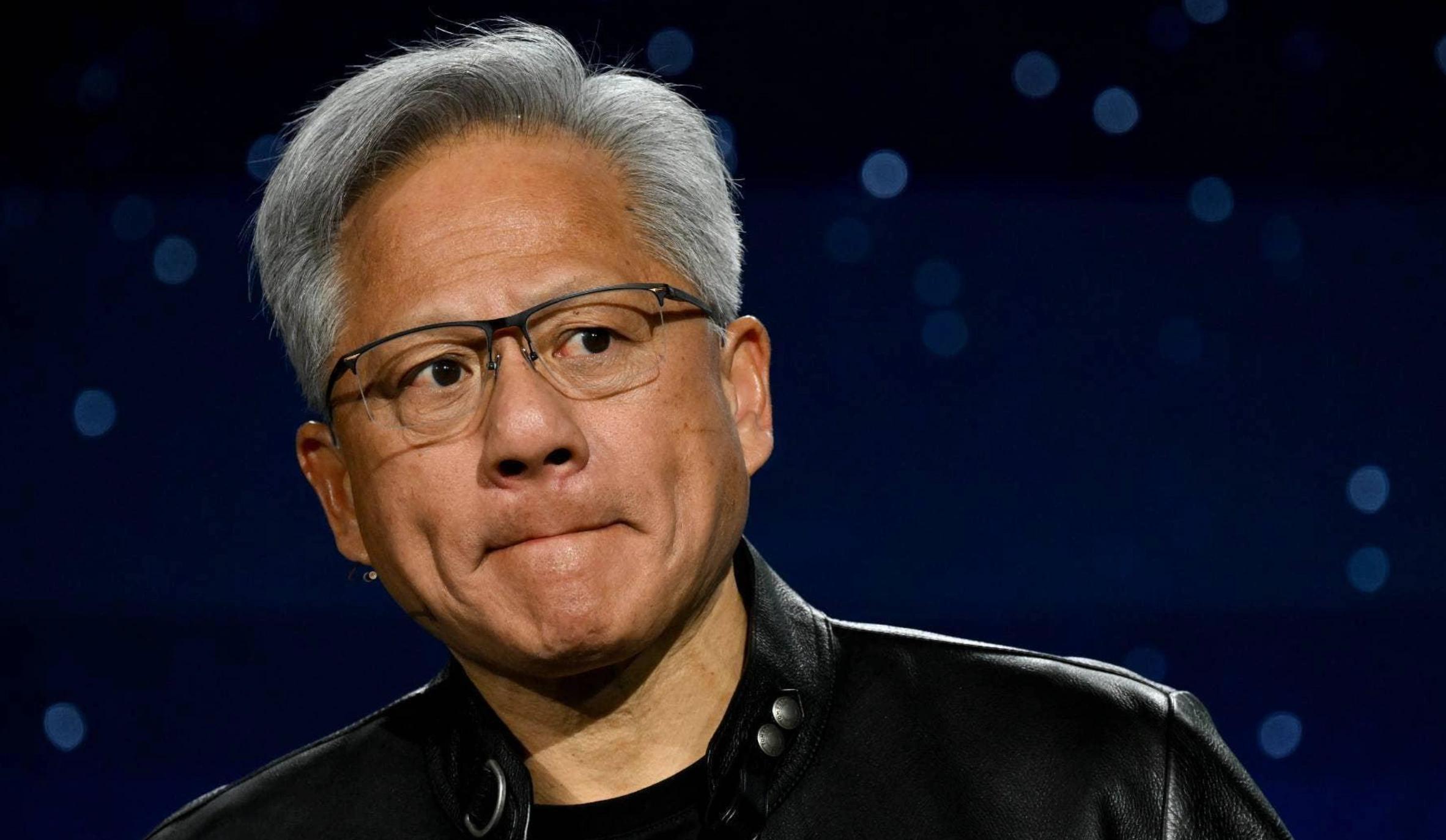
Nvidia shed $225 billion in market cap premarket as Jensen Huang's spy-linked affair triggers board probe — nine days before Q3 earnings.
Key Points
- Nvidia dropped as much as 5% premarket Monday, wiping $225 billion in market cap after CEO Jensen Huang publicly admitted an affair with a woman flagged by U.S. intelligence as a Chinese spy.
- The board has launched an independent probe, Congress has an active chip-export inquiry, and the DOJ is separately investigating a $20B Groq arrangement — three simultaneous institutional threats converging on a single stock.
- With Nvidia's Q3 earnings on November 17, every piece of news this week — CoreWeave Tuesday, Cisco Wednesday, Anthropic's roadshow — now reads as a stress test for the AI trade's most critical name.
Nvidia shed $225 billion in market cap in premarket trading Monday after CEO Jensen Huang admitted an extramarital affair with a woman reportedly flagged by U.S. intelligence as a Chinese spy, sending shares as low as $180 during after-hours Sunday and holding down roughly 4.6% by Monday morning. The timing could scarcely be worse: Nvidia reports Q3 earnings on November 17, nine trading days from now, in what was already the most consequential single print for AI-infrastructure sentiment since the company's May 2024 guidance shock.
The Scandal's Structural Damage
The board's statement — that it has "no reason to believe" national security or company secrets were compromised — is calibrated language, not a clean bill of health. An independent probe is active. That distinction matters for institutional holders who run compliance screens on executive-level security risks. The board has not said the probe is concluded. It has not said Huang is cleared. It has said the investigation is ongoing, which means every headline between now and November 17 carries the potential to accelerate or arrest the bleed.
What makes this more than a reputational sideshow is the regulatory stack already pressing on Nvidia before Sunday's disclosure. Congressional Democrats launched a formal inquiry into Nvidia's H100 and Blackwell-series chip exports after a New York Times investigation found H200 chips were approved for Chinese firms with empty registered offices and ties to blacklisted entities. Senator John Cornyn has separately called for congressional oversight. The desk's risk read is direct: international data center revenue represents 25% of Nvidia's data center segment, and that's the number that could move on a legislative headline. Add the DOJ antitrust subpoenas issued around Nvidia's $20 billion arrangement with AI-inference startup Groq — where Nvidia licensed the startup's technology and absorbed its leadership without triggering a merger filing — and you have three simultaneous institutional threats on a stock trading at a valuation that prices in operational perfection.
Trump's public backing of Huang on Sunday — stating the CEO should remain in his role and floating the idea of bringing him on an upcoming Asia trip — provided a brief sentiment floor, but did nothing to close the congressional file or the DOJ investigation. China's state-run Global Times issued its own denial of any Beijing connection and warned the controversy could damage technology and trade relations, which is a notable escalation of the geopolitical framing regardless of its factual weight.
The Money Flow Tells the Story
Monday's intraday tape is not ambiguous: AMD surged 10.59%, Intel climbed 5.38%, and NVDA was down 2.43% — a textbook rotation out of the dominant player into its nearest rivals. That is not a coincidence. When the market's highest-conviction AI trade develops an idiosyncratic headline risk nine days before earnings, risk-managed funds don't go flat on semiconductors; they rotate into the next-best expression of the same theme with less event risk on the calendar.
Asian chip stocks staged a violent recovery Monday off last week's lows, with Taiwan's Weighted Index surging as much as 6.7% after the TAIEX fell 12% last week and foreign sellers dumped $16 billion in five sessions. TSMC gained over 6%, Hon Hai spiked over 8%, and SK Hynix added 4.77%. The Asia reversal is relevant context: even with NVDA specifically under pressure from a CEO-level scandal and regulatory accumulation, the broader AI infrastructure trade is not unwinding — it's repricing around a single-name risk.
Morgan Stanley's semiconductor team moved to contain the damage in a note released Monday, calling the recent sell-off "excessive," maintaining an "Attractive" sector rating, and keeping NVDA as top pick. The bank named Broadcom as a parallel preference and flagged Micron and SanDisk as "play offense" names — the clearest possible signal of where MS wants clients positioned if NVDA's noise extends through earnings. Meanwhile, a trader on Hyperliquid opened a 10x leveraged short on 30,000 NVDA shares, a $5.44 million notional position. That is not a hedge. That is a directional bet that the board probe generates additional damaging disclosures before November 17.
What the November 17 Print Now Requires
The earnings setup for November 17 has changed in one specific way: the bar for a positive reaction has risen. Prior to Sunday, Nvidia needed to deliver data center revenue that validated the AI infrastructure capex cycle and provided forward guidance robust enough to justify a multiple that sits above the market's historical range for semiconductor companies. That requirement still holds. What's new is that Huang now walks into the print carrying a board investigation, an active congressional inquiry, a DOJ antitrust subpoena, and a geopolitical framing that China's state media has explicitly weaponized.
Analysts watching the AI chip space are treating TSMC's monthly sales update on Tuesday as the first real datapoint of the week — TSMC reported a 41% revenue rise last quarter and projected a 58% jump for the current quarter. If Tuesday's sales data confirms that trajectory, it supports the thesis that AI infrastructure demand is structurally intact and that the NVDA sell-off is executive-level noise rather than a demand signal. TSMC is also reportedly evaluating entry into advanced memory chip manufacturing, a move that would address the severe memory shortage driving prices higher across Nvidia's and Apple's supply chains. That development, if confirmed, has multi-quarter implications for the entire stack.
The critical level to watch on NVDA is $180 — the low hit during Sunday's after-hours session. A close below that number before the November 17 print would signal that institutional selling has moved beyond headline-driven trimming into structural repositioning, and the earnings catalyst would need to be exceptional to reverse the momentum. The Morgan Stanley defense note is a floor of sorts, but sell-side conviction has limited traction when a board probe is unresolved and three separate regulatory processes are active simultaneously. The next scheduled data point with the most direct read-through is CoreWeave's Q3 print Tuesday after the close — a hyperscaler built almost entirely on Nvidia's GPU stack. If CoreWeave's numbers disappoint, the rotation that sent AMD up 10.59% Monday will accelerate.
The Weekly Investor
Daily market analysis for active traders. Free.