META Capex Shock Torches Chip Stocks — Buying Opp?
META's $135–$145B capex guidance crushed chip stocks 4–12%. Is Wednesday's SOX rout a setup for next week's hyperscaler beats?
Key Points
- META's raised capex guidance of $135–$145 billion for 2026 triggered a sector-wide semiconductor rout, with the Philadelphia Semiconductor Index losing nearly 7% on October 22.
- Markets punished the cost side of the AI trade even as META's revenue surged 26.1% to $64.6 billion and Q4 guidance midpoint of $74.5 billion topped consensus — the disconnect between demand validation and margin fear is the driving tension.
- Traders should watch Alphabet, Microsoft, and Amazon earnings next week for confirmation that hyperscaler AI demand justifies the capex load; NVDA's $213.44 pre-market stabilization Friday is the first tell.
META beat Wall Street on every revenue line that mattered — $64.6 billion in Q3 revenue, 26.1% growth, Q4 guidance midpoint of $74.5 billion against a consensus of $73.73 billion — and the stock still cratered more than 8%. The culprit: a capex guidance raise to $135–$145 billion for 2026 that landed like a grenade in a semiconductor sector already nervous about AI's return on investment. By Wednesday's close, the chip complex had absorbed one of its ugliest single-session prints of the year.
The Damage Across the Sector
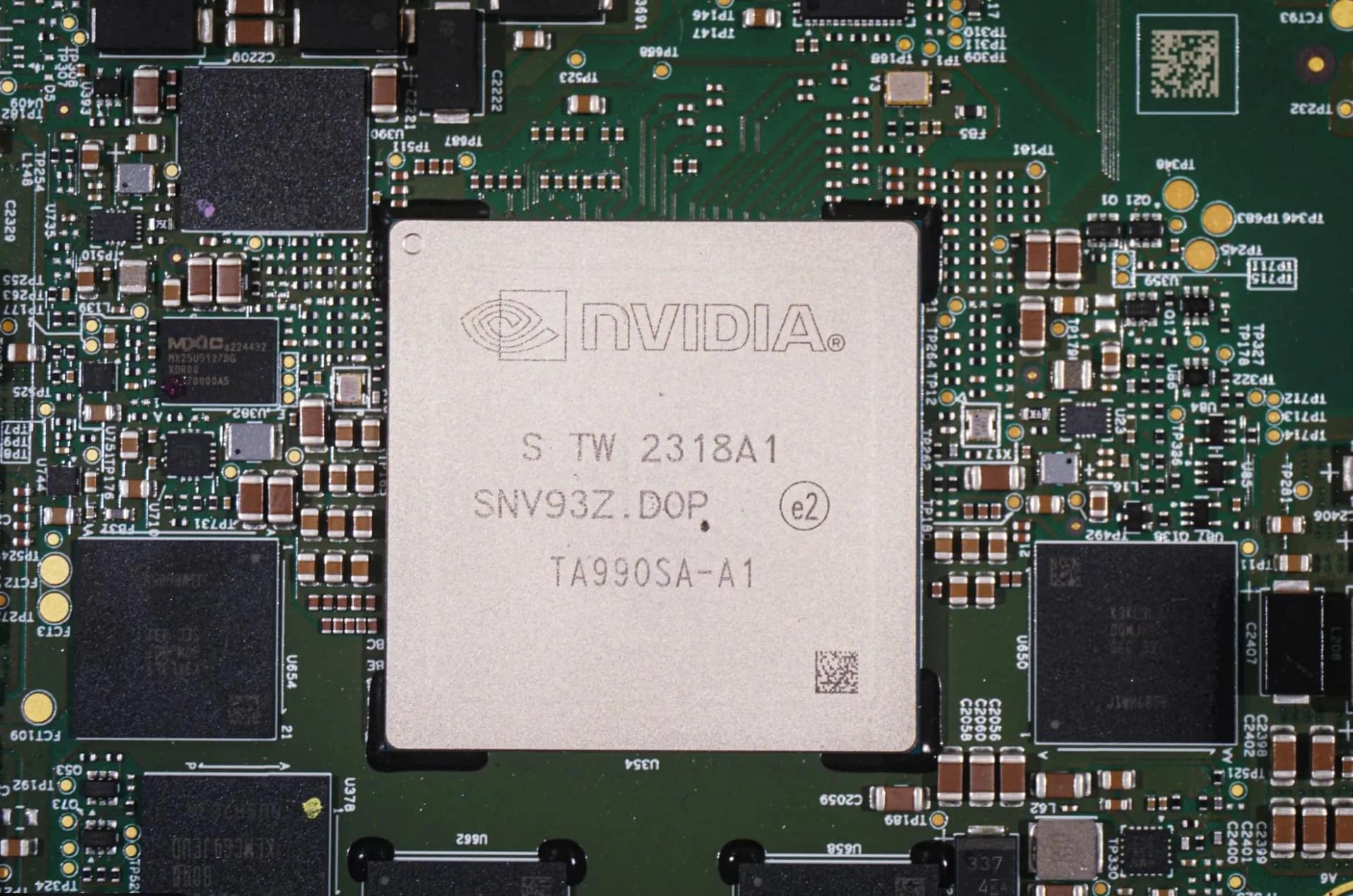
The numbers from October 22 are not subtle. NVDA closed at $212.21, down 4.40%, putting it 12.80% below its 52-week high of $243.37. Broadcom fell 4.3%. Marvell dropped 8.7%. Intel slid 8.0%. TSMC shed 4.5%. Lam Research and KLA fell between 4.4% and 11.8% at various points in the session. The Philadelphia Semiconductor Index and the SOXX ETF — the two broadest gauges of chip sector health — both closed down nearly 7%. In dollar terms, that is a wipeout that typically requires either a macro shock or a genuine demand revision. Neither happened Wednesday. What happened instead is that the market stared at a $140 billion midpoint capex number and decided it needed more proof before writing that check.
The fear is structural, not irrational. AI infrastructure buildouts of this scale compress near-term free cash flow, shift capital away from buybacks, and raise legitimate questions about the timeline to monetization. If META — which has the most direct consumer AI distribution channel of any company alive — is spending at this rate and investors are still skeptical, the burden of proof on Alphabet, Microsoft, and Amazon next week just became considerably heavier. Each of those hyperscalers will now face pointed analyst questions about capex trajectory, payback periods, and whether the GPU orders flowing into TSMC's constrained fab lines are generating revenue fast enough to justify the investment.
The Demand Signal Hidden in the Noise
Here is the part of the story that Wednesday's price action obscured: the capex is going somewhere, and the companies receiving it are telling a very different story. Jensen Huang, speaking on a podcast this week separate from any earnings event, said Nvidia is receiving AI chip orders "almost daily" and that the company keeps increasing supply only to watch order books climb higher. That is not the language of a demand plateau. TSMC North America President Sajiv Dalal separately disclosed he fields at least 10 calls per day from customers fighting over wafer capacity, and Mizuho analyst Jordan Klein now estimates TSMC could push capacity 10–20% beyond prior targets — potentially reaching 120,000 wafers per month by year-end. TSMC's Q3 revenue already hit $46.7 billion, and the stock has gained nearly 40% in 2026 entering this week.
The tension the market is working through is not whether demand is real. Jensen Huang's order book commentary and Dalal's phone log both confirm it is. The tension is whether the AI buildout has become so capital-intensive that even the companies best positioned to benefit — the chip suppliers — face a valuation compression simply because their customers are finally being transparent about what the infrastructure tab looks like. META's Q3 earnings call was the first major hyperscaler to put a 2026 capex number on the table at this scale. It set the psychological anchor for every call that follows.
What Traders Watch Next
The immediate pivot point is Friday's pre-market behavior. NVDA was trading at $213.44 in pre-market Friday morning — up $1.23, or 0.58% — which is thin but meaningful stabilization after a 4.4% body blow. If NVDA holds above $210 through Friday's close, it establishes the first technical floor and gives traders a base from which to build a thesis into next week's hyperscaler reports. A break below $210 toward the $205 area would signal that the sector repricing has further to run before buyers step in with conviction.
The more consequential read comes next week. Alphabet, Microsoft, and Amazon are all scheduled to report, and the AI capex narrative META ignited will dominate every single one of those calls. Specifically: if Microsoft guides 2027 AI infrastructure spend above $60 billion and pairs it with accelerating Azure AI revenue growth, the market will likely reinterpret META's capex not as reckless spending but as the cost of competing at the frontier — bullish for chip suppliers who serve all of them. If any of the three hyperscalers shows signs of capex discipline without a corresponding demand signal, the SOX could retest the 7% rout and then some.
There is also one specific casualty worth noting as a sentiment gauge: SK Hynix shelved its planned $150 billion Solidigm IPO this week, citing the AI chip-stock rout directly. IPO shelving is a real-time fear indicator. The fact that a $150 billion offering got pulled in the same week that Jensen Huang is talking about daily order flows and TSMC is running at capacity tells you exactly how bifurcated this market's risk perception has become. The infrastructure demand is genuine; the willingness to price that demand into forward multiples, at least this week, is not. Traders who believe in the former and can tolerate the volatility of the latter should have Alphabet's earnings date — and NVDA's $210 support — circled in red.
The Weekly Investor
Daily market analysis for active traders. Free.