Chip Stocks Bounce, But Wednesday Is What Counts
Semiconductor stocks rebound in premarket after a brutal week, but Meta and Tesla earnings Wednesday will determine if the AI trade holds.
Key Points
- The Philadelphia Semiconductor Index suffered its longest losing streak since 2008 last week, with NVDA down 5%, AMD and INTC each down roughly 10%, and AVGO off 7%.
- Today's premarket bounce is positioning noise — Wednesday's Meta ($5.94 consensus EPS) and Tesla (-14.5% expected earnings) reports are the real stress test for AI infrastructure spending convictions.
- Watch for Jensen Huang's GTC Berlin keynote Tuesday at the Tempodrom, where approximately $2 billion in European AI deals are expected to be announced — a potential intraday catalyst for NVDA.
Nvidia, Broadcom, AMD, and Intel are all climbing in premarket trading Monday, but every experienced trader knows what a dead-cat looks like at 8 a.m. The semiconductor sector just logged its longest losing streak since 2008, with the iShares Semiconductor ETF SOXX shedding more than 7% in five sessions. The bounce is real — Nasdaq 100 futures are up 1.3% — but conviction is thin, and nothing gets resolved until Wednesday night, when Meta and Tesla report back-to-back in the most consequential dual print of October.
The Damage Underneath the Bounce
Strip away the premarket green and what you have is a sector that just handed back months of gains in under a week. AMD and Intel each fell approximately 10% over the five-day period ending Friday; Broadcom lost 7%; Nvidia, the index's anchor, gave up 5% despite being the most widely held AI name on the street. The SOXX ETF's decline of more than 7% carries historical weight — the last time the index logged a losing streak of this duration, Lehman Brothers was still a going concern.
The proximate cause was a macro de-risking trade, not a fundamental deterioration. TSMC reported Q3 revenue that grew 50.9% year-over-year, with EPS of $4.60 beating the $4.46 consensus. Gross margin came in at 66.4%, squarely within the 65%–67% guidance band. Needham lifted its price target to $560; Barclays moved to $670. None of it mattered. The stock declined on earnings day, which is the most important signal of the week: when a company beats by every measurable metric and the stock goes down, you are not in a fundamentals market. You are in a sentiment market, and sentiment requires a catalyst to reset.
The structural picture beneath the sell-off is more nuanced. TSMC's gross margin compressed 130 basis points sequentially, and management attributed that directly to the steep production ramp of 2-nanometer chips. At $64 billion in capex this year, TSMC is betting enormous sums that demand catches up to supply — and for now, demand is not the problem. Nvidia, Apple, AMD, and Broadcom are locked in what TSMC's own supply chain contacts describe as an "extremely fierce" battle for factory allocation. That capacity crunch is a double-edged story: bullish for pricing power, bearish for anyone trying to scale AI deployment faster than TSMC's fab lines allow.
Wednesday's Binary Event
Monday is a positioning day. There are no major after-close reports, and the 1.3% Nasdaq futures lift gives traders a narrow window to reload before Wednesday's slate arrives. The paired Meta and Tesla prints represent something more specific than two quarterly reports — they have become the market's de facto referendum on whether AI spending can sustain the valuations currently embedded in the Nasdaq.
Meta enters Wednesday with strong consensus tailwinds. Analysts are broadly bullish following the September 8 launch of Muse, the company's AI agent, and the consensus EPS estimate sits at $5.94. Meta and Tesla together form the most closely watched single earnings session of the month, given how both stocks have morphed into proxies for AI infrastructure spending and automation ambitions. A Meta beat with strong guidance would likely deliver an immediate read-through to every company sitting on large AI capex commitments — Microsoft, Alphabet, Amazon — all of which report the following week.
Tesla is the harder read. Last quarter produced weaker-than-expected earnings with margins under pressure and cash flow turning negative. This quarter, analysts are forecasting a 14.5% drop in earnings alongside a roughly 1% revenue decline year-over-year. The bull case rests entirely on forward guidance: any credible update on Full Self-Driving monetization, the Robotaxi rollout timeline, or Optimus production scale could override a weak headline number. The bear case is that negative cash flow compounds into a liquidity conversation at the worst possible moment, when the broader market is already interrogating AI's return on invested capital. Lam Research at $2.18 EPS and Texas Instruments at $2.42 EPS round out the Wednesday card — both will speak directly to the health of the semiconductor equipment cycle, and LRCX in particular is a critical read on whether TSMC's $64 billion capex commitment is filtering through to actual equipment orders.
What Traders Watch Next
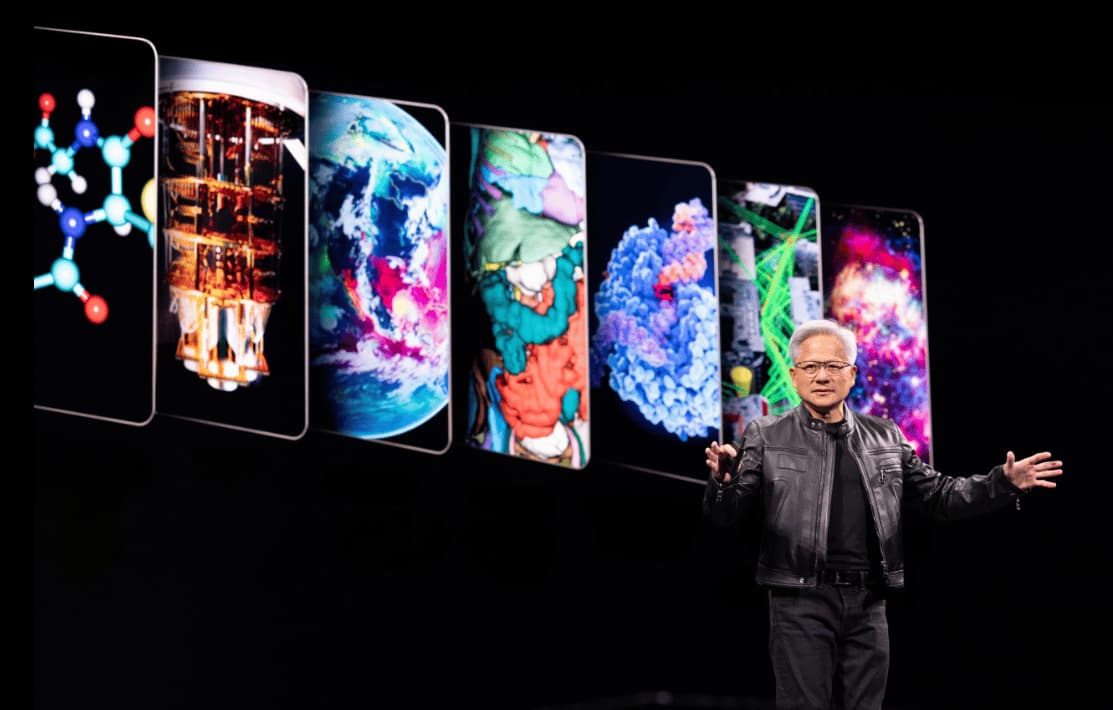
The most underappreciated catalyst this week arrives not from an earnings release but from Berlin. Jensen Huang takes the stage at the Tempodrom on Tuesday, October 21, for the GTC Berlin keynote — one day away. NVIDIA's GPU Technology Conference runs October 20–22, featuring more than 100 sessions covering agentic AI, physical AI, robotics, and sovereign-compute infrastructure. At a Paris event on October 13, Huang signaled that NVIDIA would announce approximately $2 billion in new European AI investments within the week. That number, if confirmed with named counterparties and deployment timelines, is a live intraday catalyst for NVDA — and by extension for the entire premarket bounce that traders are currently pricing as though it might evaporate.
Watch also for any specifics on the Vera Rubin platform, NVIDIA's next-generation compute architecture. The market knows Blackwell exists; what it needs is evidence of the deployment cadence and the revenue bridge between current Hopper demand and the Vera Rubin cycle. Any concrete timeline on that transition would materially strengthen the bull case for analysts who currently show 51.4% consensus upside in Nvidia shares. Broadcom carries the highest consensus upside of any major chip name at approximately 58%, with its own report not due until December — meaning it remains a pure read on sector sentiment until then.
The Intel foundry angle is worth tracking as a longer-duration trade. With TSMC's lines fully contested, customers hunting for alternative manufacturing sources represent a structural opportunity for Intel's foundry arm — and Intel's own October 29 earnings call, where Wall Street expects adjusted EPS of $0.40 on $16.50 billion in revenue, will offer the first hard look at whether that opportunity is converting into bookings. The Musk-TSMC "Terafab" standoff in Texas — where TSMC's CEO has insisted the fab must be TSMC-run while Musk publicly insists otherwise — remains unresolved and represents a wild card for both companies' capital allocation narratives heading into year-end.
For traders holding chip exposure through Wednesday, the Nasdaq 100's ability to hold above Friday's close after Meta and Tesla report is the line that matters. A confirmed hold suggests the de-risking was technical, not fundamental. A failure below Friday's levels after two in-line or better prints would signal something more durable — and force a reassessment of AI infrastructure multiples ahead of the Microsoft and Alphabet reports on October 28.
The Weekly Investor
Daily market analysis for active traders. Free.