India CPI Spikes to 5.54% on Food Surge
India's September CPI hit 5.54% as food inflation surged to 7.74%. What it means for the RBI, Asian EM policy, and commodity traders watching this week.
Key Points
- India's September CPI accelerated to 5.54% YoY — up sharply from August — driven by food inflation that exploded to 7.74% from 5.97% in a single month.
- The surge puts renewed pressure on the Reserve Bank of India to hold rates at restrictive levels longer than markets had priced, complicating the broader EM rate-cut narrative across Asia.
- With the IMF releasing its World Economic Outlook Tuesday in Bangkok, India's inflation data lands as a live case study in why food and energy price volatility is keeping central banks across the developing world in a defensive crouch.
India just delivered the week's most jarring inflation print. September CPI accelerated to 5.54% year-over-year, per MOSPI data released today, with food inflation spiking to 7.74% from 5.97% in August — a 177 basis point jump in a single month. For a central bank that has been fielding growing pressure to begin an easing cycle, the Reserve Bank of India now has a hard number standing directly in the way.
The Food Price Problem Has No Easy Fix
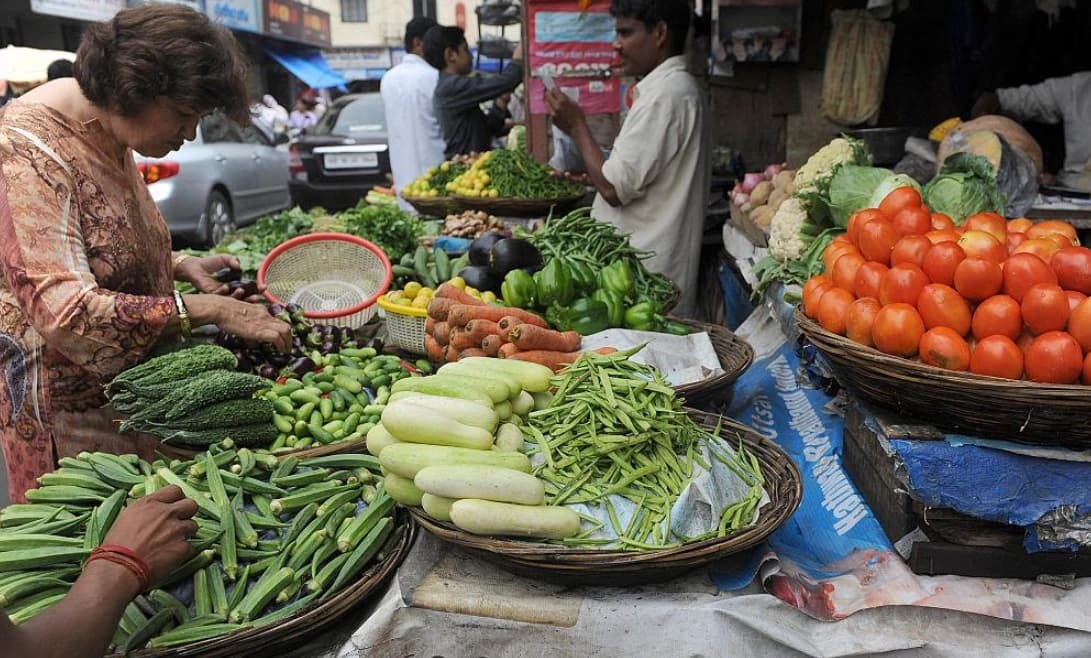
The 7.74% food inflation reading is not a rounding-error overshoot — it is a structural signal that warrants attention beyond India's borders. Vegetable and cereal prices have been the primary drivers, amplified by an uneven monsoon season that disrupted domestic agricultural output across key producing states. The pass-through from farm-gate to retail has been faster than seasonal norms would predict, and that acceleration suggests supply chain bottlenecks are compounding weather-related shortfalls rather than buffering them. Food constitutes roughly 46% of India's CPI basket, which is why a single-month swing of this magnitude moves the headline number so aggressively — a feature of the index that gives the RBI limited ability to look through food shocks the way developed-market central banks can invoke the core-versus-headline distinction.
The Reserve Bank of India's current policy rate sits in restrictive territory, having been held steady through 2026 as the central bank monitored inflation's trajectory toward its 4% target — a target that September's print now places at uncomfortable distance. The debate within the MPC had been shifting toward a cautious easing posture, with growth holding reasonably firm and core inflation appearing better contained than headline. That calculus is now complicated. A 5.54% headline print — 154 basis points above target — does not give Governor Das the political or analytical cover to signal cuts at the next meeting, regardless of what core dynamics look like underneath. The RBI's credibility on the 4% target is the asset at stake, and today's data puts it under fresh scrutiny.
The EM Rate-Cut Narrative Takes a Hit
India's print arrives at a precise moment of maximum sensitivity for the emerging market monetary policy story. Across Asia and the broader developing world, a consensus had been building through mid-2026 that the EM rate-cut cycle was approaching — that the Fed's September hike was a one-off risk-management move rather than the start of a new tightening phase, and that EM central banks would soon have room to ease. Today's MOSPI data is a direct challenge to that consensus. If India — one of the world's fastest-growing major economies, with a central bank that has been among the more disciplined on inflation management — cannot bring food prices to heel, the broader EM disinflation story deserves harder scrutiny.
The geopolitical context matters here. The Iran conflict has pushed global energy prices higher, and higher energy costs feed into fertilizer prices, transportation costs, and ultimately food production expenses across the developing world. India is not an isolated case; Indonesia, the Philippines, and parts of sub-Saharan Africa are facing similar food price pressures for related reasons. What makes India's number important is its size — 1.4 billion people, the world's most populous nation, a top-five global economy — and its role as a bellwether for EM inflation dynamics. When India's food inflation jumps 177 basis points in one month, it tells you that the disinflation assumptions embedded in EM asset pricing may be running ahead of reality on the ground. The New Zealand dollar, Indonesian rupiah, and Indian rupee all carry some of that repricing risk.
What Traders Watch Next
The timing of today's India CPI release — hitting on the first day of the IMF and World Bank Annual Meetings in Bangkok, which run through Saturday — is not incidental to how markets will process it. The IMF releases its World Economic Outlook on Tuesday, and today's Indian data lands as exhibit A in the argument that food and energy price volatility remains a live threat to global price stability, not a fading post-pandemic artifact. G20 finance ministers and central bank governors convene on the sidelines Thursday, the same day Fed Chair Warsh speaks in Bangkok alongside IMF Managing Director Georgieva. The WEO's treatment of EM inflation trajectories and its global growth forecasts will frame the week's macro narrative at the institutional level — and India's 5.54% will almost certainly feature in the discussion.
For traders with exposure to Indian equities via the Nifty 50 or through EM-focused funds, the immediate implication is a harder rate environment for longer. Rate-sensitive sectors — real estate, NBFCs, consumer discretionary — face the most direct headwind if the RBI is forced to maintain or extend its hold. Defensively, the data reinforces positions in commodity-linked names and agricultural supply chain companies that benefit from elevated food prices at the producer level. The rupee's reaction warrants monitoring; persistent inflation differentials between India and major trade partners tend to exert depreciation pressure over time, and a central bank constrained from cutting while the domestic economy still needs support is a textbook setup for currency vulnerability. The specific data point to track next: India's October CPI, due in mid-November, will confirm whether September's food spike was a one-month aberration driven by seasonal supply disruption or the start of a more durable re-acceleration. The RBI's next MPC meeting date will determine how much runway markets have to price that uncertainty.
The Weekly Investor
Daily market analysis for active traders. Free.