
BoJ December Hike 80% Priced; China PMI Splits Market
Bank of Japan signals December hike at 80% odds while China's NBS PMI crashes to 49.3 — a fault line for AUD, yuan, and industrial metals traders.
Key Points
- The Bank of Japan held at 1.25% in an 8–1 vote but raised its FY2027 core CPI forecast to 2.6%, with markets now pricing an 80% probability of a December hike.
- China's NBS official manufacturing PMI crashed to 49.3 in October from 50.1 — below consensus of 50.0 — while the private RatingDog PMI held at 52.0, a large-cap/small-cap divergence that is a live fault line for commodity currencies and industrial metals.
- Watch Thursday's Bank of England decision and the Eurozone HCOB Manufacturing PMI final printing today at 09:00 GMT (consensus 52.4) for confirmation of whether global manufacturing is stabilizing or rolling over.
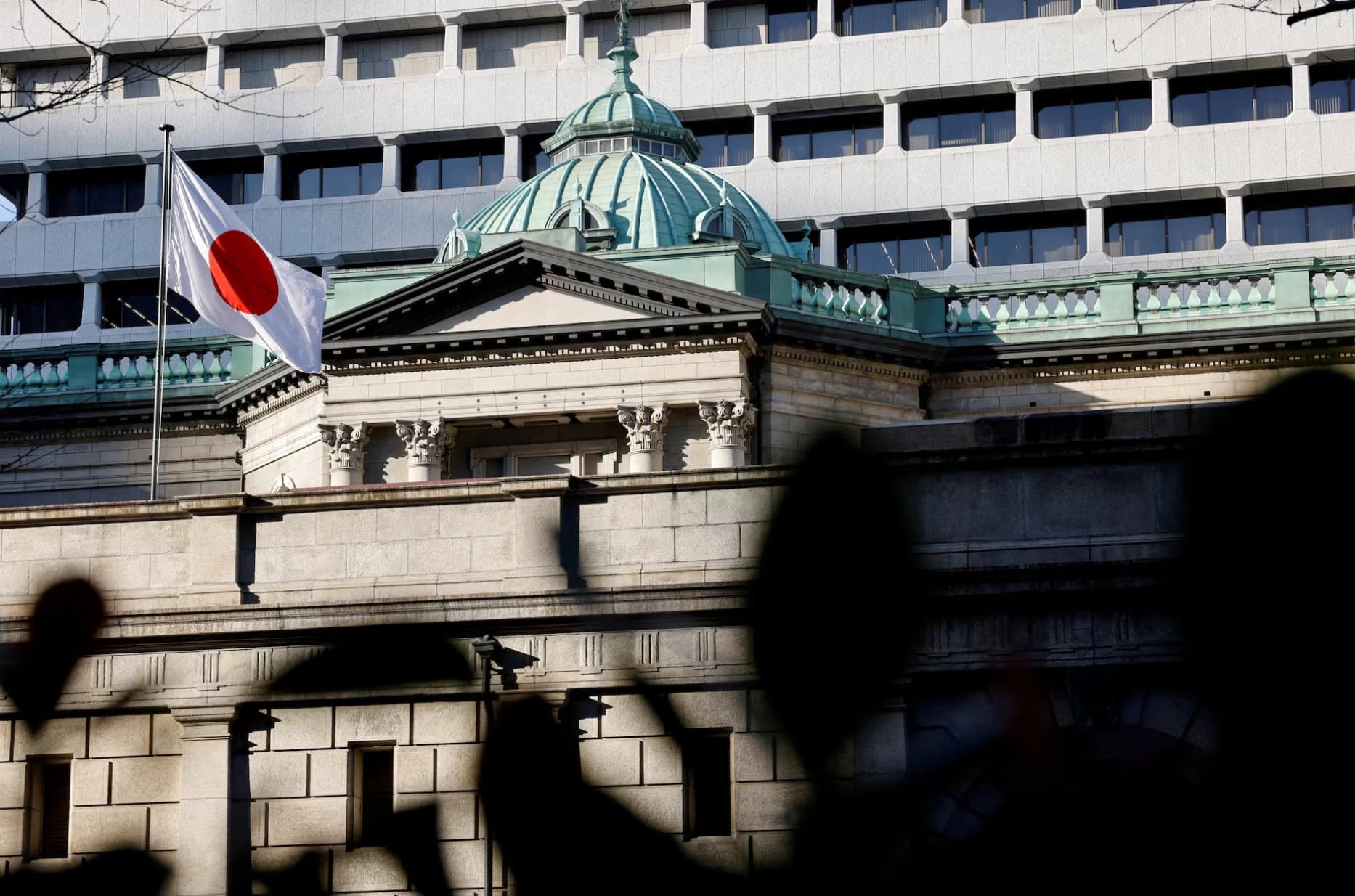
Three central banks moved last week, and the most important signal didn't come from the one that hiked. The Bank of Japan held at 1.25% in an 8–1 vote on October 30, but its policy statement — flagging that underlying inflation is now consistent with its 2% target and revising FY2027 core CPI forecasts up to 2.6% — sent a clearer December message than a hike would have. Markets read it immediately: the probability of a BoJ rate move in December now sits at roughly 80%. Meanwhile, China's official manufacturing PMI fell to 49.3 in October, printing in contraction for the first time since June and setting up a sharp divergence with private-sector data that traders in AUD, yuan, and base metals cannot afford to misread.
The BoJ's Deliberate Signal
The Bank of Japan has spent the better part of 2026 engineering one of the most carefully telegraphed tightening cycles in modern central bank history, and the October 30 meeting was another chapter in that playbook. The 8–1 vote to hold looks dovish on the surface. It isn't. Board member Takata dissented explicitly in favor of a hike — a dissent that, in BoJ culture, is functionally a public declaration that the institution's own internal hawkish bloc is impatient. The BoJ doesn't produce dissenters casually.
The policy statement did the heavier lifting. The bank said underlying inflation is now "consistent with its 2% target" — language that represents a meaningful upgrade from prior communications that described inflation as merely "on track." Raising the FY2027 core CPI forecast to 2.6% while simultaneously announcing plans to more than double ETF sales signals that the BoJ is actively engineering tighter financial conditions before it formally hikes. That's sequencing, not hesitation. The December meeting — currently the dominant market expectation — would bring the policy rate to 1.50% if the hike materializes, and at 80% probability, the yen carry trade faces a compounding unwind risk that has broader cross-asset implications far outside Japan.
For currency traders, the setup is asymmetric. If December delivers the widely expected 25bp hike, much of the yen appreciation is already priced. The real volatility event is a hold with a more aggressive 2027 forward path — that scenario would catch the market's long-yen positioning off-guard and trigger rapid USD/JPY repricing. Traders holding yen longs into December need to be precise about whether they're expressing a hike view or a policy-path view, because those two trades resolve very differently.
China's PMI Fault Line
The China data is where the real money is made or lost this week for commodity-linked traders. The NBS official manufacturing PMI collapsing to 49.3 in October — from 50.1 in September and well below the 50.0 consensus — is the headline number, but the internals are more alarming. New export orders fell to 48.7, a sub-50 reading that indicates Chinese manufacturers are seeing declining foreign demand even as domestic policymakers roll out stimulus. That's a structural problem, not a seasonal blip.
The divergence with the private RatingDog (S&P Global) PMI, which printed 52.0 versus 52.1 prior and showed output growing at its fastest pace since April, is the critical fault line. NBS surveys large state-owned enterprises. RatingDog samples smaller private-sector manufacturers. The spread between those two readings — 49.3 versus 52.0 — tells you that China's large industrial complex is contracting while its nimbler private sector is still expanding. For commodity traders, this distinction is everything. Iron ore and coal demand correlates more tightly with state-sector output; copper and specialty metals track private-sector industrial activity more closely. A 49.3 NBS print with export orders in contraction is bearish for Australia's bulk commodity exports and puts direct pressure on AUD/USD, which has been skating on thin ice above key support.
The yuan managed a relatively muted reaction to the NBS miss because currency traders are accustomed to the PBOC's fixing mechanism absorbing short-term shocks. But persistent sub-50 NBS readings into Q4 would challenge even the PBOC's bandwidth for managed stability. Watch whether November's NBS PMI — due at the end of the month — shows sequential deterioration or stabilization. If export orders stay below 49 through November, the AUD carry trade faces compounding headwinds from both the China demand story and the BoJ-driven unwind of yen funding.
The Week's Other Central Bank Catalyst
Thursday's Bank of England decision at 12:00 UK time is the next major scheduled event for global macro traders. The BoE's Bank Rate stands at 3.75%, and the MPC's September vote was already a 6–3 split — three members voted for 4.00%. That's the same internal configuration the BoJ displayed before it began hiking: a visible hawkish minority waiting for data permission to move the majority. UK services inflation has remained sticky, and with the U.S. running hot simultaneously, the global reflationary narrative that the BoE's dovish members had been counting on has not materialized.
A 6–3 hold on Thursday would be interpreted as status quo and likely be a non-event for sterling. A shift to 5–4 — with one more member flipping to the hiking camp — would be a material sterling positive and would force a rapid repricing of BoE terminal rate expectations. A 7–2 or 8–1 split toward holding, on the other hand, would signal that UK growth concerns are winning the internal debate, and cable would sell off sharply. The asymmetry here favors watching the vote count over the rate decision itself.
Today's Eurozone HCOB Manufacturing PMI final for October, printing at 09:00 GMT with a consensus of 52.4 against a September final of 52.9, adds one more data point to the global manufacturing picture. A print below 52.0 would confirm that European industrial activity is deceleration, keeping the ECB — currently on hold at a 2.50% deposit rate with its next decision on December 17 — firmly in wait-and-see mode. The ECB's problem is the mirror image of the Fed's: European growth is the constraint, not inflation. If Eurozone manufacturing disappoints today and China's export orders remain weak, the global stagflation-light narrative that has been percolating since September gets a fresh injection of credibility — and that is a direct headwind for risk assets that have been pricing a synchronized global soft landing as their base case. Thursday's BoE vote count at 12:00 UK time is the specific event that will either validate or fracture that assumption before Friday's U.S. payrolls arrive.
The Weekly Investor
Daily market analysis for active traders. Free.