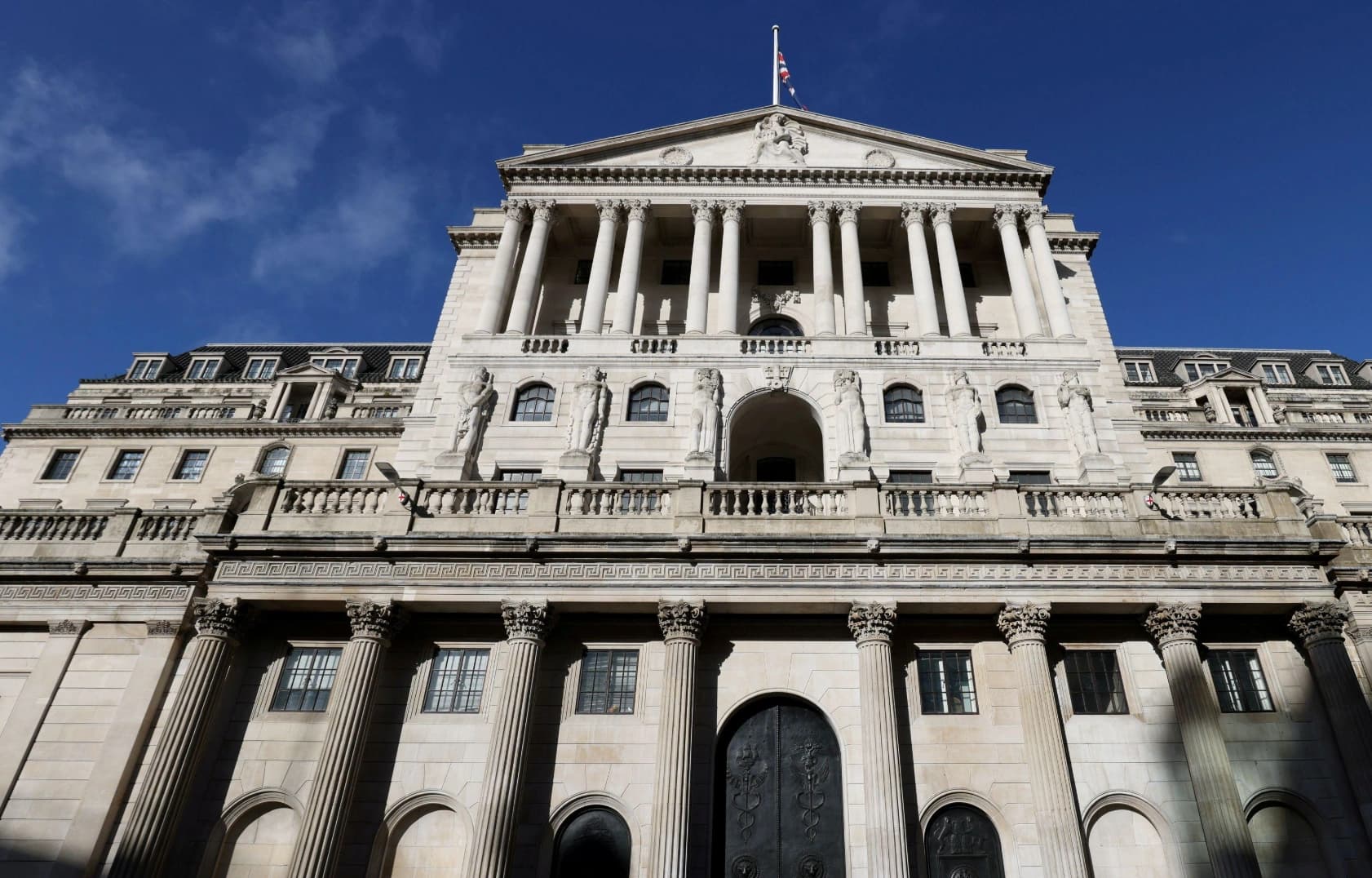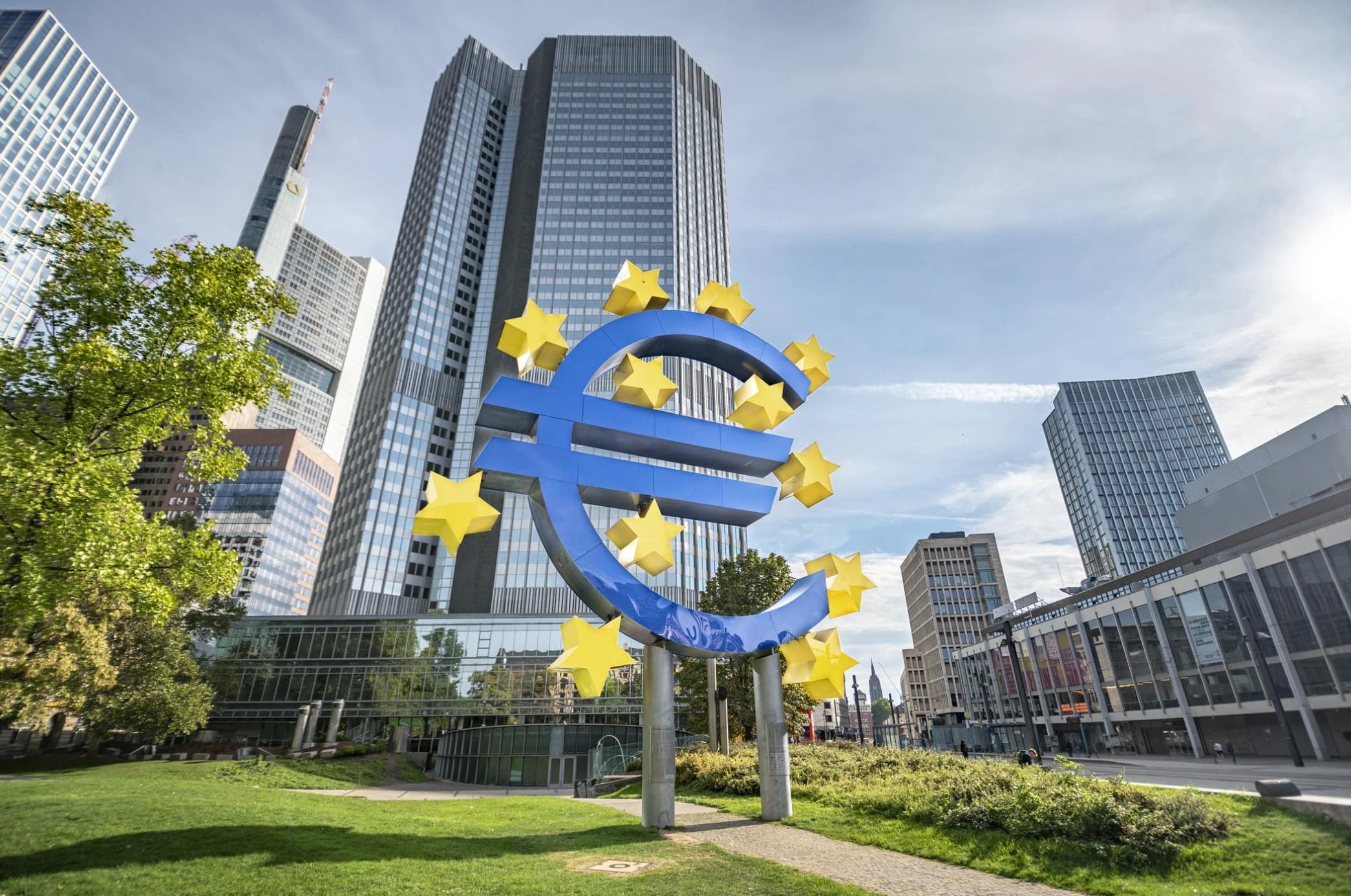
BoJ Eyes December Hike as ECB Freezes on Energy Shock
The Bank of Japan signals a December hike with 80% swap odds as the ECB holds at 2.50% and warns energy prices pose rising inflation risks.
Key Points
- The Bank of Japan held at 1.25% today with an 8-1 vote but announced an accelerated balance sheet reduction and faces 80% market-implied odds of a December 18 hike to 1.50%.
- The ECB kept its deposit rate at 2.50% Thursday while warning that the energy shock's increased magnitude and duration will drive inflation higher and growth lower — a stagflationary signal that forecloses near-term cuts.
- USD/JPY is the key cross to trade: the BoJ's accelerating normalization path collides with the Fed's possible December cut, a divergence that has driven the yuan to a four-year high and is repricing duration assets globally.
The Bank of Japan said today that its 2% inflation target has been met, announced plans to accelerate balance sheet reduction, and held its policy rate at 1.25% — while swap markets immediately priced an 80% probability of a hike to 1.50% at the December 18 meeting. Twelve hours earlier, the European Central Bank held its deposit rate at 2.50% and warned that a worsening energy shock poses direct upside inflation risk. Two of the world's three largest central banks are moving toward tighter policy simultaneously, and the dollar is caught in the middle.
The BoJ's Moment of Confidence
Today's Bank of Japan statement is the most consequential the institution has issued in years — not because of what it did, but because of what it confirmed. The BoJ's explicit declaration that its 2% inflation target "has been reached" removes the last structural justification for emergency-era accommodation. The rate has moved from 0.75% in June to 1.00%, then to 1.25% at the September 18 meeting. The next step, December 18, is now priced at 80% odds of another 25-basis-point move to 1.50%.
The 8-1 vote to hold today was not dovish. The sole dissent came from board member Hajime Takata, who voted for an immediate hike to 1.50% — meaning the only internal disagreement was about the pace of tightening, not the direction. That is a meaningfully different internal dynamic than, say, the ECB, where the debate centers on whether to hold or ease. The BoJ's debate is hold now versus hike now. That distinction should be structurally bullish for the yen, particularly as the Fed flirts with December easing.
Reports circulating this morning suggest the BoJ may also slightly raise its fiscal year 2027 inflation forecast, which would add a forward-looking hawkish dimension to a statement that is already hawkish on current conditions. The accelerated balance sheet reduction plan is the mechanism traders have overlooked: the BoJ has been a consistent buyer of Japanese government bonds for more than a decade, and reducing that footprint at an accelerated rate will push JGB yields higher, compress the U.S.-Japan yield differential, and put persistent upward pressure on the yen. For USD/JPY, this is structural, not tactical.
The broader context is what makes today's BoJ decision trade-worthy beyond a Japan desk note. The yuan is at a four-year high versus the dollar, with USD/CNH at 6.6543 — sitting 0.89% below the PBOC's 6.7138 fixing. That yen and yuan strength against the dollar is occurring simultaneously with the dollar holding relatively firm against European currencies, suggesting the move is specifically about Asia-Pacific monetary policy divergence and not a broad dollar collapse. If the BoJ hikes in December while the Fed cuts, USD/JPY faces a double-barreled compression trade.
The ECB's Stagflation Trap
The ECB's Thursday decision to hold the deposit rate at 2.50% was unanimous but uncomfortable. President Christine Lagarde's explicit statement that the ECB is "not pre-committing to a particular rate path" was the headline, but the more important signal was embedded in the economic assessment: the Governing Council acknowledged that energy prices have continued rising, posing upside risks to the inflation outlook, and that the increased "magnitude and duration" of the energy shock is likely to drive inflation higher while lowering growth. That is a stagflationary framing, not a soft-landing framing.
Diesel in the U.S. is running $6.33 per gallon — up $2.65 year-over-year. Europe's energy exposure is structurally deeper than America's, with a greater share of electricity generation and industrial production tied to natural gas prices that track global energy markets. If the Iran war continues to suppress supply, the ECB's own forecast — that energy will drive inflation higher — argues against any rate cut in 2026. It may, perversely, argue for a hike, though Lagarde's language deliberately avoids telegraphing that outcome.
The ECB's position as of this morning is effectively a symmetric hold: they cannot cut because energy-driven inflation is accelerating, and they are reluctant to hike because the same energy shock is suppressing growth. That paralysis has a shelf life. If energy prices remain at current levels through November and December, the Governing Council's December meeting will force a binary choice between tolerating above-target inflation and accepting the growth cost of additional tightening. Lagarde's "no pre-commitment" language is not confidence — it is time-buying.
The Bank of Korea's unanimous hold at 3.00% Thursday reinforced the Asia-Pacific pattern of central banks pausing to assess the cumulative impact of recent hikes before deciding on next moves. The BoK cited Middle East uncertainty and global policy dynamics — the same variables driving every other central bank's deliberations right now. The Bank of England adds another layer: a November hike there is now considered near-certain by market participants, with further tightening in 2027 also priced with rising probability. The synchronized global pause that defined September is fracturing in real time.
What Traders Watch Next
The trade this weekend is positioning around the BoJ-Fed divergence before December 18. USD/JPY is the expression of that divergence, and the current level needs to be evaluated against two December outcomes that are both separately priced at roughly 80% probability: a BoJ hike and a Fed cut. If both occur simultaneously, the directional pressure on USD/JPY is unambiguous. The risk to that trade is a hot U.S. ECI print today — due at 8:30 AM ET — that compresses December Fed cut odds and gives the dollar a temporary reprieve.
The ECB's next meeting is December 11, one week before the BoJ's December 18 decision. If energy prices have not meaningfully retreated by then, Lagarde will be speaking to a Governing Council that is being pushed toward a hike it does not want to make. Watch the ECB sources reporting that typically appears 10 days before each meeting — that is where the real signal will emerge, not in Lagarde's deliberately vague public statements.
The Bank of England's November meeting is the most immediately actionable near-term catalyst for European rates. A confirmed hike there would add to the global tightening impulse and further complicate the ECB's "hold and wait" posture. For traders positioned in European rate products, the convergence of rising energy costs, BoE hawkishness, and the ECB's stagflation framing argues for steepening rather than flattening positioning — with December 11 as the next hard deadline on the calendar. The specific level: if December Fed cut odds hold above 75% into next week while BoJ December hike odds hold above 75%, USD/JPY breaking below its current technical support becomes the defining macro trade of November.
The Weekly Investor
Daily market analysis for active traders. Free.