Anthropic's $1.4T IPO: The Numbers Behind ANT
Anthropic launches its Nasdaq roadshow at a $1.4 trillion valuation with $26 billion in strategic backing — but $900 billion in infrastructure commitments demands scrutiny.
Key Points
- Anthropic launched its Nasdaq IPO roadshow under the ticker ANT at a $70–$78 per share range implying a roughly $1.4 trillion valuation, with $26 billion in committed strategic purchases from Google, Nvidia, AMD, Micron, Broadcom, Microsoft, and TSMC Partners.
- The $26 billion in strategic investor commitments represents less than 3% of Anthropic's $900.9 billion in outstanding computing and infrastructure obligations — a leverage ratio that will define the dilution conversation for public market allocators.
- Traders should track whether demand pushes the final pricing above the $78 ceiling and toward the $1.5 trillion figure circulating today, and watch the lock-up structure on the seven strategic investors whose commitments function simultaneously as supply contracts and equity stakes.
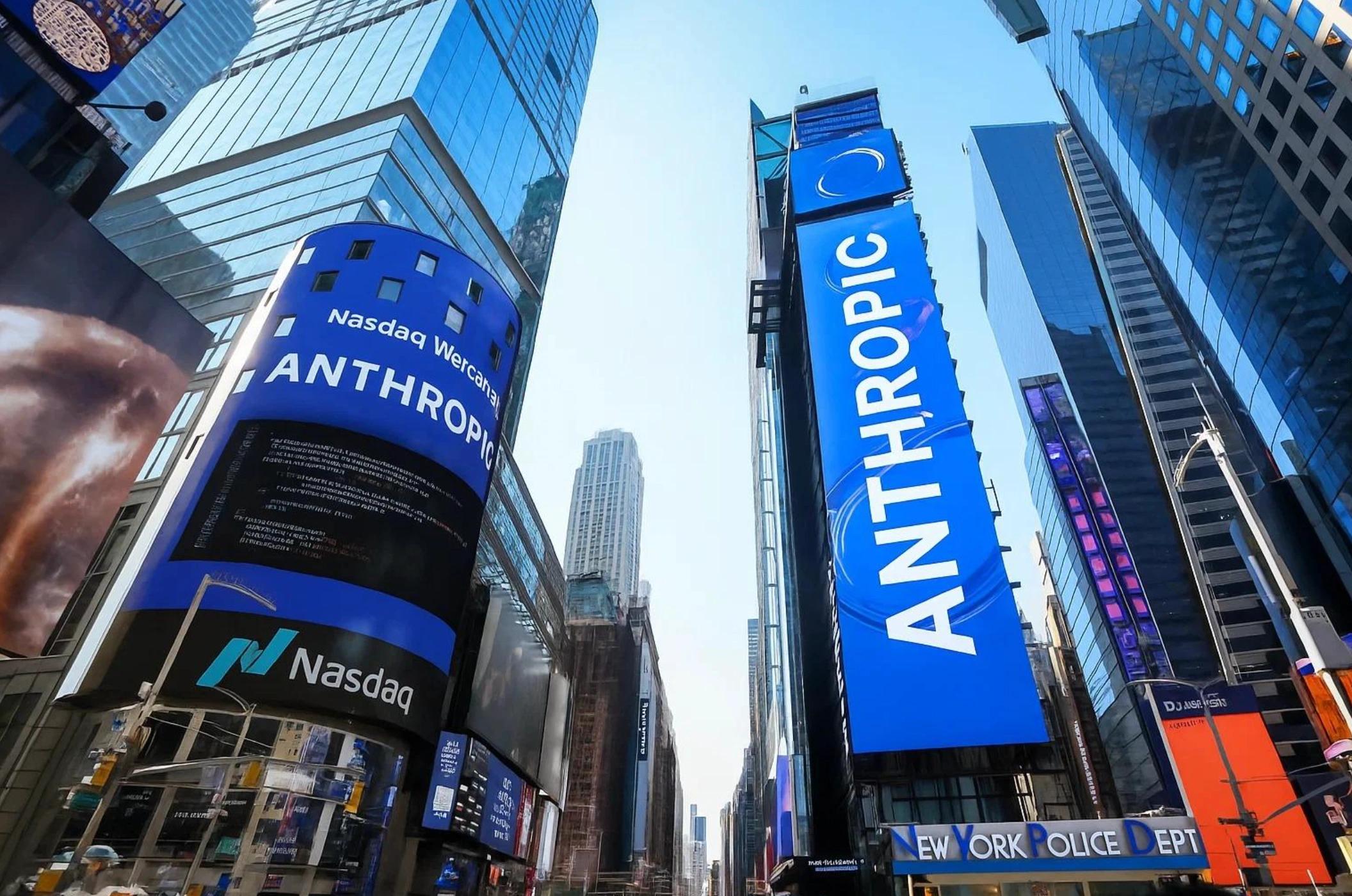
Anthropic kicked off its Nasdaq roadshow Wednesday under the ticker ANT with a $70-to-$78 price range that implies a roughly $1.4 trillion opening valuation — and reports circulating today already suggest that institutional demand could push the final number above $1.5 trillion before the book closes. Seven of the company's biggest chip and cloud suppliers are writing a combined $26 billion side check to get equity alongside the public float, a structure that is either the most sophisticated demand-signaling mechanism in IPO history or a material conflict of interest, depending entirely on how you read the lock-up terms.
The Strategic Placement That Isn't Simple
The $26 billion commitment from Nvidia, Google, AMD, Micron, Broadcom, Microsoft, and TSMC Partners is the headline number driving the narrative that Anthropic's IPO has institutional credibility baked in before the first retail dollar arrives. The breakdown: Nvidia and Google are each in for $10 billion, AMD for $2.5 billion, and Micron, Broadcom, and Microsoft have each pledged $1 billion, with TSMC Partners contributing $500 million. The optics are unambiguous — when your chip suppliers are also your IPO anchor investors, the demand signal reads as structural rather than speculative.
But the optics require a stress test. These seven companies are not passive allocators taking a flier on an AI name. They are Anthropic's infrastructure counterparties — the firms on the other side of the $900.9 billion in computing and infrastructure commitments that Anthropic carries on its books. That $26 billion, impressive in absolute terms, is less than 3% of the total obligation stack. What that ratio tells a sophisticated allocator is that the strategic investors are buying equity in an entity that is contractually dependent on them for the compute it needs to generate revenue. The alignment of interests cuts both ways: suppliers who hold equity have incentive to keep Anthropic solvent and scaling, but Anthropic's cost structure is locked into those same suppliers at a scale that dwarfs any equity upside the IPO generates.
The comparison to OpenAI's financials is instructive even though the companies are structured differently. OpenAI reported $10 billion in quarterly revenue in its most recent period alongside an operating loss of $10.9 billion — an adjusted operating margin of negative 109%, which is itself an improvement from negative 150% the prior period. Anthropic has not disclosed equivalent public financials ahead of the roadshow, which means public market investors are being asked to price a $1.4 trillion valuation against a cost structure that, by its closest comparable, runs at a loss exceeding its revenue every single quarter.
Claude as a Product Company
Anthropic's decision to time a full productivity suite launch to the roadshow is not a coincidence — it is an attempt to reframe the valuation conversation from "AI model provider" to "enterprise software company," a category that commands higher multiples and more predictable revenue curves. The launches are substantive, not vaporware. Claude Sheets, now in beta on paid plans, generates multi-tab Excel-equivalent workbooks from plain-language descriptions and edits cells in real time while annotating every change — a workflow integration that competes directly with Microsoft Copilot inside the spreadsheet layer where finance and operations teams live. Claude Data reached general availability today, connecting to Snowflake, Salesforce, Amazon Redshift, Google BigQuery, and ClickHouse with certified metric definitions and version tracking — a stack that positions Anthropic inside the data infrastructure layer that enterprise IT buyers consider core, not optional.
The benchmark positioning is aggressive. Anthropic is claiming the top slot on CursorBench 4.0, Perplexity's WANDR, and Zapier's AutomationBench simultaneously — a triple benchmark sweep timed to the roadshow that is designed to give sales teams a defensible answer to the "why Claude over GPT-4o" question in every enterprise procurement conversation. Claude Meetings and Claude Whiteboards round out what is now a coherent office suite pitch: Anthropic is not selling API access to developers, it is selling a productivity layer to the same enterprise buyers that Microsoft has locked up for three decades through Office.
The question for public market allocators is whether the product strategy changes the revenue trajectory fast enough to justify the valuation. At $1.4 trillion, Anthropic is being priced above virtually every company on earth, in a category where its nearest disclosed comparable — OpenAI — is burning more cash than it earns every quarter while growing rapidly. The enterprise software reframe requires proof of enterprise revenue retention and expansion rates, neither of which Anthropic has disclosed publicly ahead of pricing.
What the Pricing Week Reveals
The $1.5 trillion figure circulating in today's reports is the number traders should anchor on as a signal of book quality. If the final pricing comes in above $78 — which would require the implied valuation to exceed the $1.4 trillion headline — it means institutional allocators covering AI names are willing to pay above the initial ask on a company with undisclosed unit economics and a $900 billion infrastructure obligation. That is a data point about the current state of institutional risk appetite in AI, not just about Anthropic specifically.
The lock-up structure on the seven strategic investors is the mechanism most likely to create post-IPO volatility that retail traders can exploit. When a supplier-investor like Nvidia — which is simultaneously navigating its own DOJ criminal probe, antitrust subpoenas, and a board-level espionage investigation — holds a $10 billion equity position in a newly public AI company, the correlation between NVDA headlines and ANT price action becomes a live trading variable from day one. Any forced selling by a constrained strategic holder, or any lock-up expiration that hits during a period of sector stress, creates asymmetric downside in a stock that will almost certainly debut at a premium to its already-aggressive range.
Google's $10 billion commitment carries its own complexity: the DOJ's Google search antitrust remedy has now been extended to include generative AI firms, meaning Alphabet is simultaneously an anchor investor in Anthropic and a defendant in a case where Anthropic-category companies are named as remedy beneficiaries. For traders thinking about ANT's first 90 days as a public company, the regulatory calendar — not the product roadmap — is the event risk that matters most. Watch the final IPO pricing date for the $78 ceiling test; that number, and whether it breaks higher, will tell you everything about how aggressively the market is willing to underwrite the AI infrastructure buildout at current loss rates.
The Weekly Investor
Daily market analysis for active traders. Free.