Anthropic IPO: $83 Pricing Smashes Range, Lists as ANT
Anthropic priced 980 million shares at $83, above its $70–78 range, raising $81 billion in the largest IPO in history. Here's what traders need to know.
Key Points
- Anthropic priced 980 million Class A shares at $83 — above its $70–78 range — raising $81 billion in the largest IPO in U.S. history.
- Pricing above range in a week the Dow shed 1.6% on AI spending doubts signals institutional conviction at a scale that overrode broad-market sentiment.
- Watch the Day 1 open: if ANT trades through $90, it sets a floor for AI-native valuation multiples across the sector; a fade below $83 reopens the debate about whether peak AI enthusiasm has already passed.
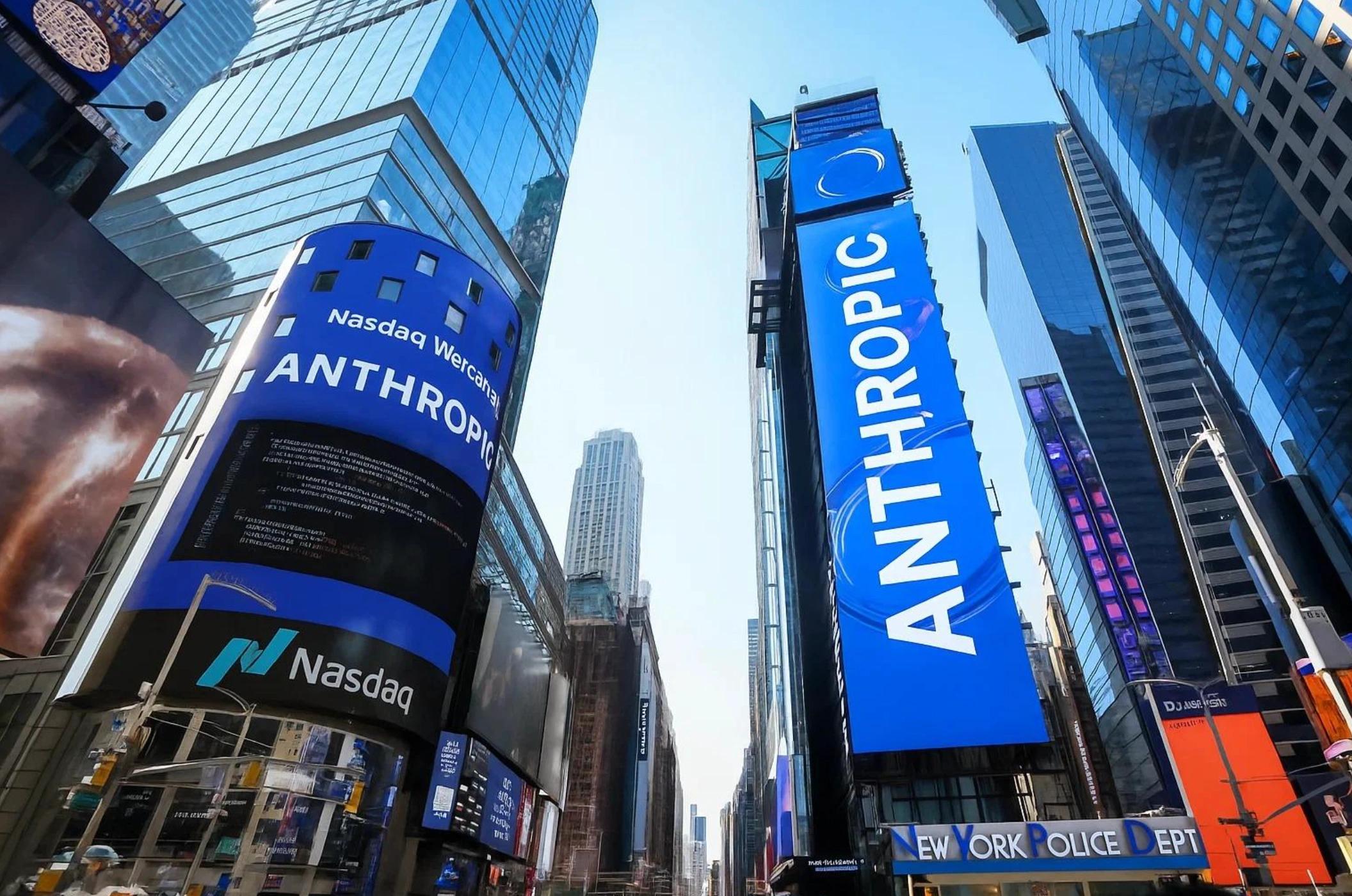
Anthropic priced at $83 per share on Wednesday night — $5 above the top of its already-elevated $70–78 range — selling 980 million Class A shares and raising $81 billion in what the Financial Times confirmed is the largest IPO in recorded U.S. market history. The deal closed November 20, listing on Nasdaq under "ANT." That it priced here, in this week, is the data point that matters most.
The Number That Reframes Everything
The Dow fell 1.6% this week. Nvidia — the bellwether of the entire AI infrastructure trade — dropped 2.9% after reporting $115.84 billion in quarterly revenue that beat every estimate on the board. The macro context was hostile: AI spending-return skepticism, export control tightening, leadership uncertainty at the most important chip company in the world. Against that backdrop, Anthropic not only priced its IPO but priced it above range on an upsized deal, suggesting underwriters and institutional allocators had more demand than paper to fill.
That is not a small signal. When a deal the size of a mid-cap country's GDP gets upsized and prices above range on a down tape, the buy-side is making a deliberate statement about where it wants exposure. The institutions that received allocations at $83 did not get there by accident — they competed for it. That compression of demand into a single pricing event tells traders more about institutional AI conviction than any earnings call commentary. These are not retail tourists; these are sovereign wealth funds, long-only mega-caps, and crossover hedge funds betting that Anthropic's Claude platform is a durable revenue engine, not a science project.
The upsizing matters structurally, too. More shares at a higher price means Anthropic captured more primary proceeds — cash that goes directly onto the company's balance sheet to fund compute infrastructure, model training, and the talent war with OpenAI. For context, OpenAI posted $10 billion in quarterly revenue this week amid reported heavy losses. Anthropic's ability to raise $81 billion publicly — rather than through another private round — suggests its bankers and leadership made a deliberate judgment that the public market would price the company more favorably than the private market could at this stage. That judgment cleared.
What the Deal Structure Tells You
Class A shares carry standard voting rights; Anthropic's founders and early insiders almost certainly retained super-voting Class B or Class C structures, as is standard for founder-controlled AI companies at this scale. That means retail and institutional buyers at $83 are buying economic exposure, not governance influence — a tradeoff that the demand figures suggest the market accepted without friction. It's the same structure that allowed Google, Meta, and Snap to go public without ceding operational control, and it has not historically been a primary valuation impediment for high-growth tech.
The $83 price implies a fully diluted market capitalization in the range of $200 billion or above, depending on total share count including insider holdings — a figure that would rank Anthropic among the 30 largest U.S.-listed companies on its first trading day. That valuation is being assigned to a company with no public earnings history, in a week when the market punished Nvidia for delivering what should have been a perfect quarter. The divergence is instructive: investors are rotating out of infrastructure exposure and into application-layer AI bets where the revenue model is a subscription and API fee stack rather than a capital-expenditure arms race measured in billions of dollars per data center campus.
Anthropic's primary revenue engine — Claude, available via direct API and through enterprise agreements with Amazon Web Services and Google Cloud — benefits directly from the infrastructure buildout that is punishing Nvidia's stock. Every dollar of GPU capex that lands in AWS's or Google's data centers is potential compute that Claude consumes. Anthropic is effectively long AI demand without being long AI supply costs. That asymmetry is exactly what institutional allocators are paying $83 to own.
What Traders Watch Next
The Day 1 print is the first real test. IPOs priced above range in hostile tape conditions have historically traded in one of two patterns: a sharp pop followed by a multi-week consolidation as flippers exit, or a flat-to-down open that reveals the deal was fully allocated to long-only holders who don't flip. Either pattern carries information. A pop above $95 — roughly 14% above issue price — would signal that retail and secondary-market demand exceeded even the institutional clearing price, and would reprice every private AI company still on the IPO backlog. A close below $83 on Day 1 would not necessarily signal a broken deal, but it would hand ammunition to everyone arguing that AI valuations have disconnected from fundamentals.
Beyond the opening print, traders should track Claude API pricing versus Google's Gemini 4 Neon, which launched this week at $3 per million input tokens and $15 per million output tokens and ranks third on the Artificial Analysis index. If Anthropic is forced into a pricing war on API fees to defend enterprise market share, margin compression will follow. The company has no public income statement, so proxy signals — API pricing moves, enterprise contract announcements, AWS partnership expansions — will be the primary indicators of fundamental trajectory for at least the first two quarters of trading. ANT's first earnings call, expected roughly 90 days after listing, will be the moment the institutional thesis either gets confirmed or starts to crack. The specific level to watch on the chart: if ANT cannot hold $83 — the issue price — through the end of its first week of trading, the technical picture deteriorates sharply, as issue price acts as the first line of psychological support for a stock with no prior trading history to anchor valuation.
The Weekly Investor
Daily market analysis for active traders. Free.