AMD Earnings Tonight: $8.19B Data Center Print Is the Sector's Circuit Breaker
AMD reports Q3 2026 after the bell. The $8.19B Data Center estimate and Q4 guidance will either halt the $3.7T chip rout or accelerate it.
Key Points
- AMD shares have shed nearly 18% across two sessions heading into tonight's print, closing Monday at $466.84 before recovering 2.37% in pre-market to $477.90.
- The $8.19B Data Center revenue estimate — an 88% year-over-year jump — is the fulcrum: a miss validates Intel's demand-destruction narrative and sends the entire semiconductor group lower.
- Watch Q4 revenue guidance against the $16.15B consensus; a beat-and-raise could trigger an 8.6%-plus snap-back given options pricing and the depth of the two-session drawdown.
AMD's Q3 2026 earnings print, due after the bell tonight, has become the most consequential single event for the semiconductor sector in months. With chip and memory stocks having shed approximately $3.7 trillion in market value since October 6, AMD's data center number — analysts expect $8.19 billion, up 88% year-over-year — will either serve as the stabilizing catalyst this group desperately needs or confirm that the infrastructure spending cycle has cracked.
The Setup Heading Into the Print
The two-session collapse into tonight's report tells you everything about market anxiety. AMD fell below $500 after disappointing results from Amazon and Intel hammered confidence in AI-driven semiconductor demand, closing Monday at $466.84 — down $37.96, or 7.52% on the session alone. Pre-market Tuesday showed a partial recovery of 2.37% to $477.90, but that bounce is entirely contingent on what CEO Lisa Su delivers at 5PM ET. Options markets are pricing an approximately 8.6% move in either direction — a range that translates to roughly $40 per share from Monday's close. Given the depth of the drawdown, the asymmetry here leans toward a violent snap-back on a clean beat. But that's only half the equation.
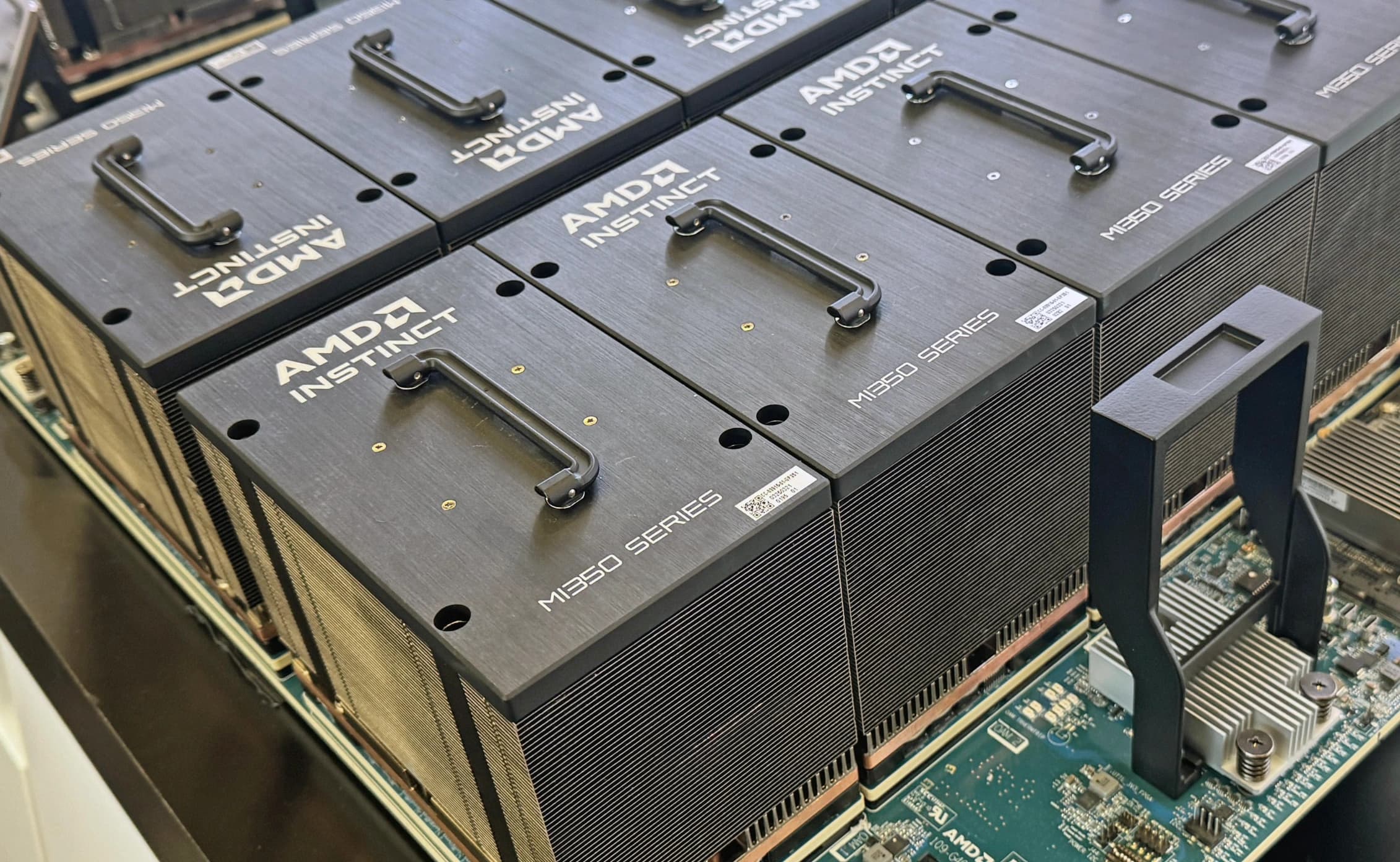
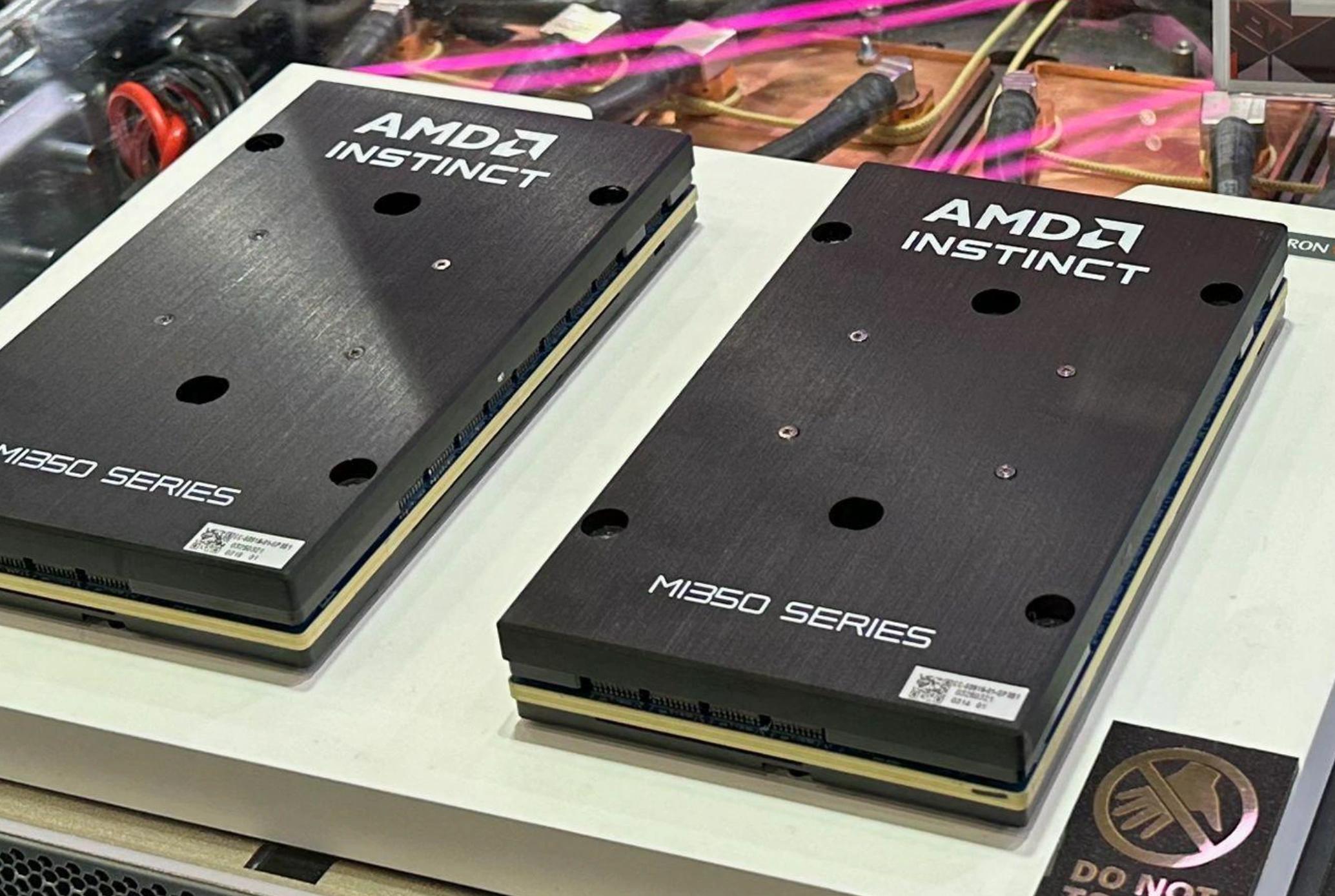
Intel's wreckage is the context AMD must escape. Intel fell 9% Monday to $59.97, posting its worst single session since 1974, capping what was its worst month since at least 1980 — a 45% October collapse. Intel's Q4 adjusted EPS guide of $0.25, down from $0.52 in Q3, signaled that the traditional semiconductor demand recovery is stalling in pockets. AMD operates in a fundamentally different product mix — its Instinct GPU accelerators and EPYC server processors are in a different demand environment than Intel's client and legacy data center business — but in a sector rout of this magnitude, the market has been treating them as proxies for each other. Breaking that correlation requires AMD to post numbers that make the distinction undeniable.
The Data Center Number Is All That Matters
Consensus calls for $8.19 billion in Data Center segment revenue, an 88% year-over-year surge that would mark AMD's fastest-growing quarter in the segment's history. That figure is not detached from reality — AMD's Instinct MI300X accelerators have been selling into hyperscaler and enterprise AI training workloads all year, and the company entered Q3 with a visible backlog. The question is whether accelerating competition from Nvidia and early customer interest in next-generation alternatives has begun to compress AMD's win rate at the margin.
Gaming is expected to fall 49% year-over-year to $655 million — a number that's already baked in and largely irrelevant to the investment thesis. Client and Embedded segments are secondary noise. Gross margin guidance of approximately 56%, up from 54% a year ago, will be scrutinized for any compression signal that suggests pricing pressure in the accelerator market. If AMD delivers $8.19B in Data Center revenue with margins intact, the bear case built on Intel's implosion evaporates. If it misses — particularly if it misses with a margin warning — the sector rout enters a new and uglier phase.
Nvidia held relative ground Monday at $206.76, up 1% on the session and outperforming every other major chip name. Since October 6, Nvidia has lost roughly $896 billion in market cap in dollar terms — the largest absolute loss in the sector — though its percentage decline has been far more contained than Intel's 47% crash or AMD's 18% two-session plunge. That relative strength in NVDA into AMD's print is a tell: the market is preserving optionality on the AI accelerator thesis while it waits for AMD's numbers to confirm or deny it.
Q4 Guidance Is the Real Trade
Experienced traders know that in a high-stakes earnings print during a sector rout, Q3 actuals are table stakes. The trade is in the forward guide. Analysts are modeling Q4 2026 revenue of $16.15 billion — a 23.4% sequential jump from Q3's $13.09 billion estimate. That is an aggressive ask. It implies that AMD's hyperscaler customers are not just sustaining their Instinct accelerator orders but materially accelerating them into year-end. A guide that meets or exceeds $16.15 billion signals that the AI infrastructure spending cycle is intact and that AMD's design wins are converting to revenue at scale. A shortfall — even a modest one, say guidance of $14.5 to $15 billion — reframes the entire narrative and invites the question of whether the first cracks appeared in Q4.
Memory and storage names are watching this print just as closely as the pure-play chip stocks. Micron, Sandisk, Seagate, and Western Digital all fell 6% to 8% Monday, dragged down by the same macro fear that's been compressing the group since October 6. A strong AMD Q4 guide has a direct read-through to DRAM and HBM demand, since AI accelerators are among the most memory-intensive workloads in data center history. Micron's HBM3E product is embedded in AMD's MI300X stack — AMD's Q4 demand signal is effectively Micron's earliest leading indicator for its own February quarter.
TSMC reported strong Q3 2026 results on AI and high-performance-computing demand but hasn't been able to insulate itself from the sector selloff. Barclays maintained its Overweight on TSM with a price target raised to $670 on October 16, but the stock still fell 1.68% on November 2. If AMD's print provides the all-clear, TSMC is arguably one of the cleanest beneficiaries — it manufactures AMD's chips on leading-edge nodes and has the most direct exposure to any acceleration in AI accelerator build-out. The $435 billion in TSMC market cap that has evaporated since October 6 won't come back in a single session, but a credible AMD guide gives the recovery a foundation to build on.
What Traders Watch Next
The 5PM ET earnings call is the event. Watch for three things in order of importance: the Q4 revenue guide versus the $16.15 billion consensus, the Data Center segment print versus $8.19 billion, and any language from Lisa Su on Instinct MI350 and MI400 customer commitments — forward product cycle visibility that would stretch the bull case into 2027. AMD's adjusted gross margin guidance for Q4 will also matter; any guidance below 56% would signal accelerator pricing pressure and undercut the margin expansion story that justified the stock's pre-rout valuation.
A beat-and-raise scenario likely puts AMD back above $500 in after-hours, with momentum into Wednesday's session — and provides the circuit-breaker signal that other chip names need to stabilize. A miss on Data Center revenue combined with a weak Q4 guide could push AMD toward the $420 to $430 support band that was the last major consolidation level before the AI accelerator rally began in earnest. That outcome would also put Nvidia's $206 level back under pressure ahead of its own results later this month. The next scheduled critical data point after AMD is Qualcomm and Arm Holdings, both reporting Wednesday after the close — but tonight's print will set the tape for both.
---
The Weekly Investor
Daily market analysis for active traders. Free.