TTD Stock Rockets 36%: The Trade Desk's AI Bet Pays Off
The Trade Desk (TTD) posted EPS of $0.33 vs. $0.04 consensus and guided Q4 revenue to $755M+. Here's what's driving the two-day, 36% surge.
Key Points
- The Trade Desk reported Q3 EPS of $0.33 versus a $0.04 consensus — a $0.29 beat — on revenue of $735.97 million against the $650.93 million estimate, a 13% revenue upside.
- Q4 2026 guidance of at least $755 million in revenue and at least $280 million in adjusted EBITDA both cleared consensus by a wide margin, while a 15% workforce cut and $1 billion share repurchase authorization signal management confidence in the margin recovery story.
- Traders should watch whether TTD can hold the combined 36% two-day gain and whether the EBITDA margin trajectory — currently compressed to 36% from 43% a year ago — returns to historical levels by mid-2027.
The Trade Desk just delivered the best single earnings report in the programmatic advertising sector this cycle, and the market is pricing it accordingly. The stock closed up 15.47% on Monday — before the numbers even dropped — then surged another roughly 21% in after-hours trading once the actual results hit the tape, creating a combined two-day move approaching 36%. The catalyst: Q3 EPS of $0.33 annihilated the $0.04 consensus by $0.29, while revenue of $735.97 million ran $85 million ahead of the $650.93 million estimate. These are not incremental beats — they represent a structural re-acceleration that Wall Street's models had completely missed.
The Beat No One Saw Coming
Street estimates for TTD had been reset aggressively lower heading into this print, following a difficult stretch in 2025 when the company lost ground to walled-garden platforms and saw its take-rate compress under competitive pressure. That reset created the conditions for exactly this kind of blowout: when consensus is anchored at $0.04 EPS and the company delivers $0.33, the gap is not noise — it's a signal that the fundamental narrative has changed faster than the analyst community updated its models.
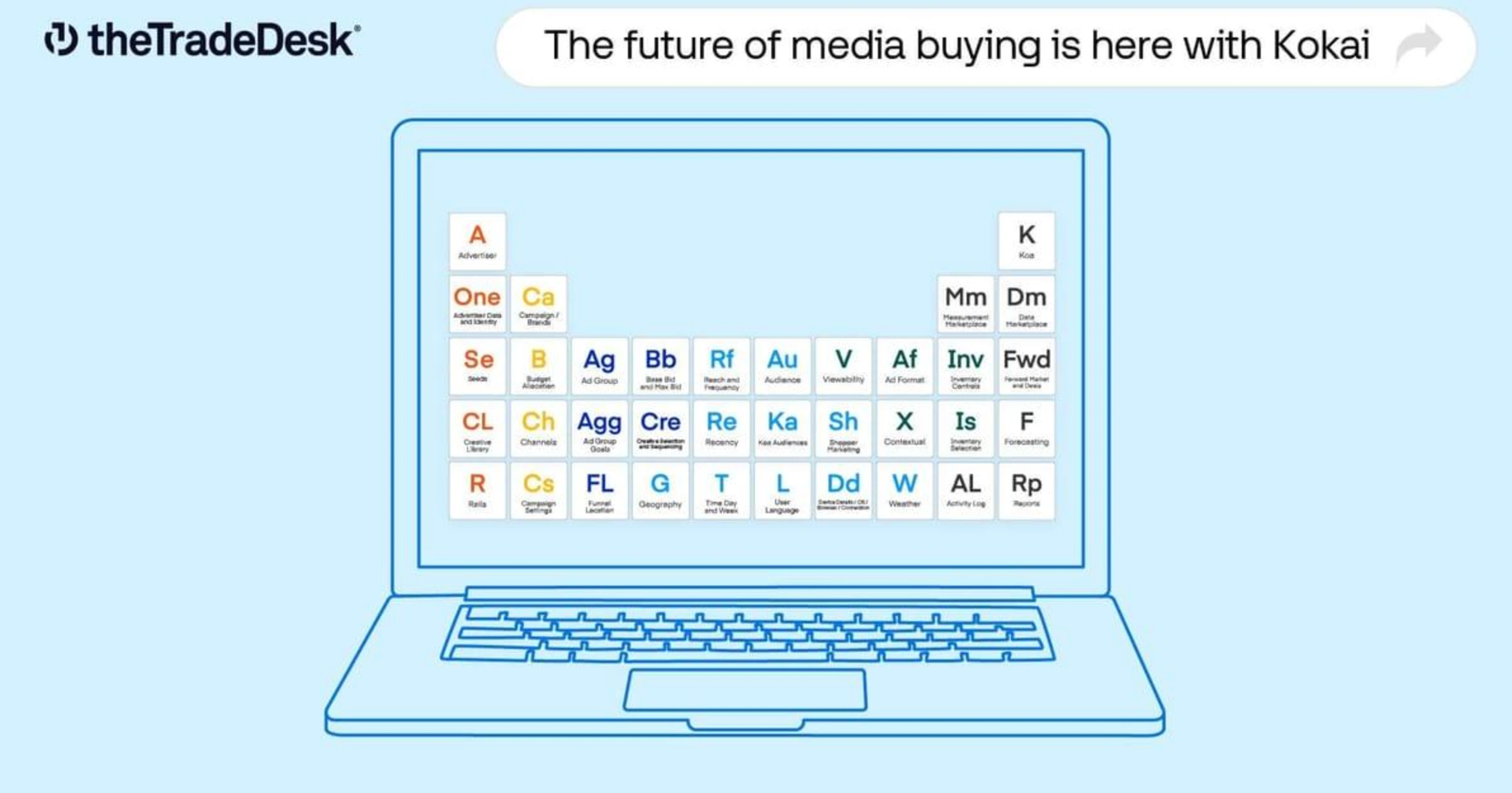
Revenue of $735.97 million represents meaningful acceleration in absolute dollar terms, as the company's AI-driven bidding infrastructure — marketed under its Kokai platform — appears to be attracting incremental budget from advertisers who had either paused or diverted spending to social and search channels. Management's commentary on the earnings call pointed directly to AI-powered optimization as the driver of wallet share recovery. When a programmatic platform can demonstrate measurable return-on-ad-spend improvements versus alternatives, budget follows. That dynamic, more than any macro tailwind, explains how TTD posted a 13% revenue beat in a quarter where the broader digital advertising environment was not uniformly strong.
The adjusted EBITDA picture requires a separate read. At $265.84 million, EBITDA actually fell from $317.48 million in the year-ago quarter, compressing the margin to 36% from 43%. The decline reflects restructuring costs associated with the 15% workforce reduction the company is executing — a cut that, on a base of roughly 3,000 employees, eliminates approximately 450 positions. Restructuring charges are transitory by definition, but margin compression in the middle of a revenue reacceleration creates a tension that traders need to watch carefully. If the revenue trajectory holds and headcount costs fall through, the EBITDA margin should recover materially in the first half of 2027. If the revenue line softens while the cost structure remains elevated, the multiple the stock is now commanding becomes harder to justify.
The Buyback and the Guidance Signal
The board's decision to approve an additional $731 million under the share repurchase program — bringing total repurchase capacity to $1 billion — is a direct statement about management's view of intrinsic value. Companies do not authorize nine-figure buybacks in the middle of a restructuring unless they believe the stock, even after a 36% two-day surge, remains undervalued relative to future cash flows. For traders, this matters for a specific mechanical reason: buyback authorizations provide a demand floor that pure fundamental buyers cannot replicate, because the company can step in as a buyer of last resort during any post-earnings retracement. That floor changes the risk/reward profile of holding through near-term volatility.
Q4 2026 guidance of at least $755 million in revenue and at least $280 million in adjusted EBITDA were the numbers that confirmed the thesis rather than just the quarter. Prior consensus for Q4 revenue sat at approximately $692 million, meaning the guidance midpoint represents a roughly 9% topline beat relative to what the street expected before this print. More importantly, the EBITDA guidance of at least $280 million on $755 million in revenue implies a margin of approximately 37% — essentially flat with Q3's restructuring-impacted 36%, which means management is not guiding for meaningful margin recovery in Q4. The actual recovery story, if it materializes, lives in fiscal 2027.
That framing matters for how traders should size positions. The quarter was objectively excellent, the guidance was meaningfully above consensus, and the buyback provides structural support. But the EBITDA margin narrative — the most important long-term valuation driver for a platform business like TTD — won't resolve until the company reports its first full post-restructuring quarter, which won't arrive until roughly February or March 2027. Between now and then, the stock will trade on momentum and revenue growth rate, not on margin recovery, which makes it vulnerable to any macro data point that clouds the digital advertising spending outlook for Q1 2027.
What Traders Watch Next
The immediate technical question is whether TTD can consolidate the two-day gain without giving back more than half of the move. A 50% retracement of the combined 36% surge would take the stock back to the level it traded at before Monday's pre-earnings momentum push — a scenario that would still represent a significant repricing but would shake out leveraged longs who bought the after-hours spike. The first 48 hours of trading after a gap of this magnitude are almost always cleaner to read in hindsight than in real time, which argues for patience over aggression on new entries.
The next scheduled data point for the digital advertising complex arrives mid-November, when several smaller ad-tech names report and provide a cross-check on TTD's volume claims. If peer companies confirm the inventory and pricing environment TTD described, the bull case gains corroboration. If peers report a more mixed picture, questions will emerge about whether TTD's beat was share-gain driven — a durable story — or reflected one-time budget flush — a story that fades in Q1.
The formal next catalyst for TTD specifically is the Q4 2026 earnings report, expected in mid-February 2027. Management has committed to at least $755 million in Q4 revenue and at least $280 million in adjusted EBITDA. Those are the numbers that now define the accountability frame. If TTD delivers on both and shows any margin improvement above the 37% implied floor, the stock will have a credible path toward the high end of its historical valuation range. If it misses either line — particularly EBITDA, given investor sensitivity to the margin compression narrative — the two-day surge will face a severe stress test. Watch the $280 million EBITDA floor in February like it's the only number that matters, because for this stock, it will be.
The Weekly Investor
Daily market analysis for active traders. Free.