TSMC Eyes 20% CoWoS Price Hike as AI Demand Overwhelms Supply
TSMC plans to raise advanced chip packaging prices up to 20% as AI demand for CoWoS capacity outpaces supply — a direct margin catalyst for TSM shareholders.
Key Points
- TSMC is preparing to raise chip-on-wafer-on-substrate packaging prices by up to 20%, driven by AI demand that now spans GPUs, server CPUs, and custom ASICs simultaneously.
- CoWoS monthly capacity is expected to exceed 130,000 wafers in 2026 and reach 200,000 in 2027, but lead times suggest supply won't catch demand before mid-2027 at the earliest.
- TSM closed at $424.37 on Monday, still 12.94% below its 52-week high of $487.47 — a potential re-rating target if the price hike flows through to margins in Q1 2027 guidance.
TSMC is preparing to raise prices for its chip-on-wafer-on-substrate packaging services by as much as 20%, according to the *Commercial Times* citing industry sources — the clearest supply-demand pricing signal yet that AI infrastructure buildout has consumed every unit of advanced packaging capacity the world's largest contract chipmaker can produce. TSM closed at $424.37 on Monday, up 1.40%, as chip stocks broadly rebounded on the Anthropic S-1 filing, but the stock remains 12.94% below its 52-week high of $487.47, leaving a concrete re-rating gap if the pricing increase translates into margin expansion on 2027 guidance.
Why CoWoS Is the Chokepoint
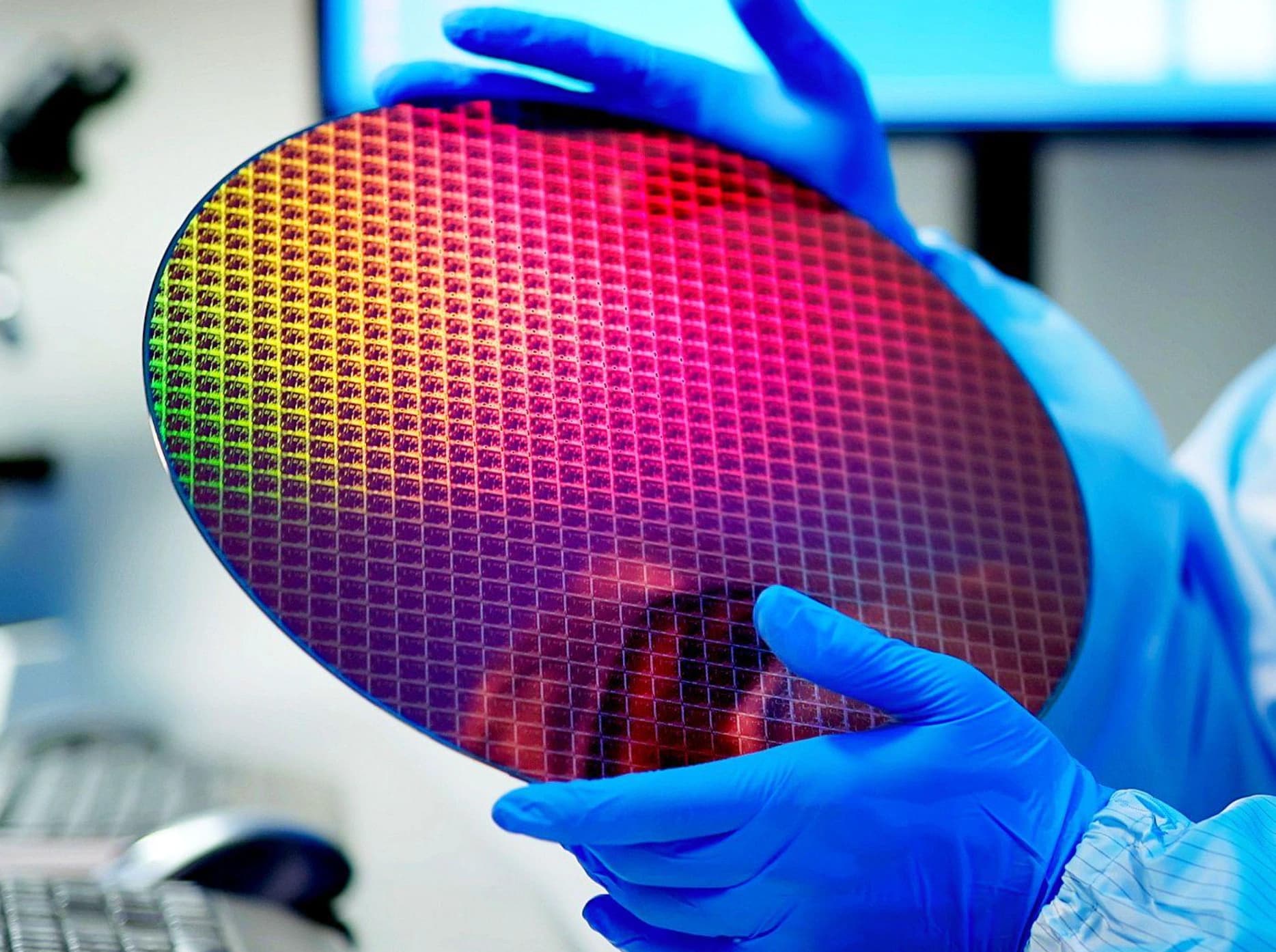
CoWoS — chip-on-wafer-on-substrate — is not a product most retail traders track. It should be. It is the packaging architecture that makes high-bandwidth memory stacks and logic chips function as a single integrated unit inside Nvidia's H100, H200, and Blackwell processors. Without CoWoS, you cannot ship a competitive AI accelerator at the performance levels hyperscalers are paying for. That structural dependency has made TSMC's packaging facilities the single most constrained node in the entire AI supply chain — not the logic fab, not the memory plant, but the packaging line.
What's changed in 2026 is the breadth of demand. CoWoS was initially pressure-tested by GPU demand from Nvidia's accelerator program. It is now absorbing simultaneous orders from server CPU designs, custom ASICs from Google, Amazon, and Meta, and an expanding roster of AI-focused chip startups. Every one of these programs requires CoWoS or a direct equivalent, and TSMC is the only manufacturer operating at the volume and yield levels that hyperscalers require. That monopoly on quality at scale is precisely why a 20% price hike is commercially viable — customers have no credible alternative at production volumes.
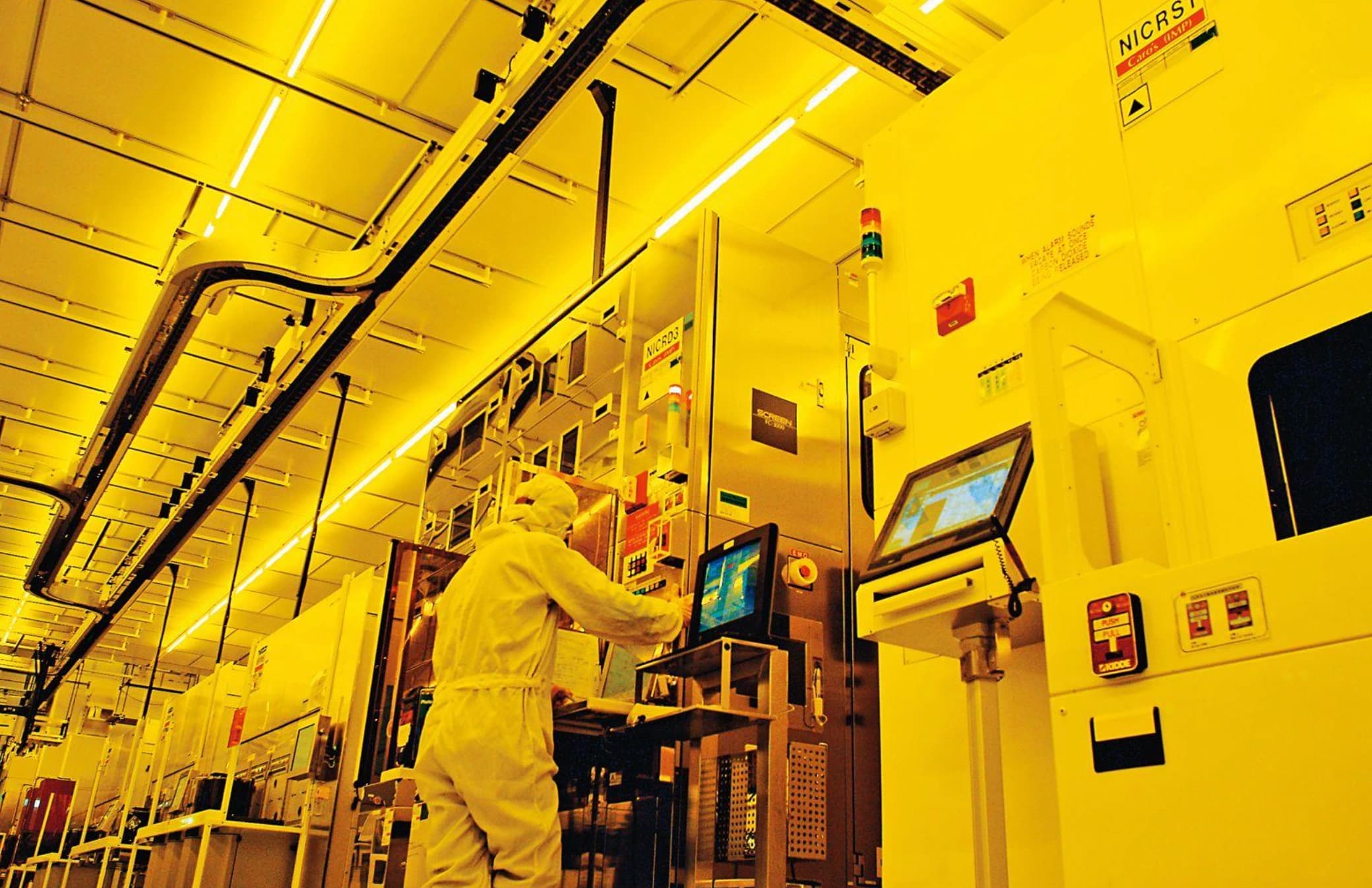
TSMC's own numbers confirm the capacity math. Monthly CoWoS throughput is on track to exceed 130,000 wafers in 2026, up from levels that were constraining Nvidia deliveries as recently as late 2024. The company projects 200,000 monthly wafers by 2027. That 54% capacity expansion sounds aggressive until you map it against the demand curve: Anthropic alone just disclosed compute commitments beginning in 2026 and 2027 that imply continuous, multi-year hardware absorption. Add the $40 billion GPU financing SpaceX secured with Apollo, the $63 billion Broadcom-to-Anthropic equipment lease, and Meta's $97.5 billion equity raise explicitly earmarked in part for AI infrastructure, and the demand side of this equation is growing faster than any 54% capacity ramp can neutralize.
The Earnings Foundation Underneath the Price Hike
The packaging price hike is a forward catalyst, but the underlying business has already validated the bull case. TSMC grew Q3 2026 earnings 58% on revenue that was 41% higher year over year. The technology mix shift within those numbers is the detail worth holding: 3-nanometer shipments accounted for 33% of total wafer revenue in Q3, up from 23% a year ago. 2-nanometer chips hit 8% of revenue, up from 3% in Q2 — the first quarter in which TSMC broke out 2-nm as a separate revenue line, signaling that the technology has crossed from pilot to commercial scale.
Analysts are projecting 41% full-year revenue growth for TSMC in 2026, followed by an additional 33% in 2027, which would bring total revenue to approximately $229 billion. Those projections were built before the CoWoS price hike report hit the tape. A 20% increase in packaging service pricing, applied across a monthly throughput base that is growing toward 200,000 wafers, has direct operating leverage implications that consensus estimates have not yet absorbed. The operating margin comparison is instructive: TSMC is running at approximately 59% operating margin. Intel's foundry business posted a 36% operating loss in Q2. The gap between those two numbers is the structural reason every advanced chip program in the world defaults to TSMC, pricing power included.
Yahoo Finance's analysis of TSM's recent trading session noted the stock's 1.40% gain on Monday against below-average volume — 13.52% under the 30-day mean — suggesting Monday's move was index-rotation and sentiment-driven rather than a fundamental re-pricing. That distinction matters: when the CoWoS price hike officially transmits into contract renewals and TSMC updates its packaging revenue guidance, volume and institutional positioning will look very different.
What Traders Watch Next
The memory supply picture adds a second pressure layer that TSM investors should track alongside the packaging story. KB Securities analyst Jeff Kim flagged that over 70% of Samsung and SK Hynix's planned 2027 memory production is already locked up under five-year agreements with major tech companies, leaving under 30% available for other buyers. That concentration of memory supply mirrors the CoWoS dynamic: the customers who moved earliest are protected, and everyone else is bidding on spot availability at premiums that amplify the cost advantage of being vertically integrated or locked into long-term agreements. The Asian chip equity response to the Anthropic S-1 was immediate and large — the Kospi surged as much as 4.9%, Samsung and SK Hynix both gained over 4%, and Advantest surged over 9% in Monday's session — confirming that sophisticated regional capital read the Anthropic filing as a direct demand signal for every node in the semiconductor stack.
The specific level for TSM shareholders to target is $487.47 — the 52-week high. The stock closed Monday at $424.37, a 14.9% gap to that level. The path to closing that gap runs through two specific events: first, official confirmation of the CoWoS price increase in contract renewals or a TSMC management statement, which would give analysts the data they need to revise 2027 margin estimates upward; second, Microsoft, Alphabet, and Amazon earnings on October 28 and 29, where any upward revision to 2026 or 2027 capex guidance — particularly Alphabet's $195 to $205 billion range or Amazon's approximately $220 billion — will be read directly as incremental CoWoS demand. If both catalysts land in the same week, TSM's 52-week high becomes a near-term technical target rather than a distant reference point.
The Weekly Investor
Daily market analysis for active traders. Free.