SMCI Surges 12% as Data Center Boom Rewrites Outlook
Super Micro Computer jumps 12% premarket after hiking Q1 revenue guidance to $18.5B–$19.5B, dragging Dell and HPE higher in AI infrastructure trade.
Key Points
- Super Micro Computer raised its fiscal Q1 revenue guidance to $18.5B–$19.5B, a $4 billion beat above the prior $14.5B–$15.5B range.
- The guidance hike reflects explosive AI-driven server demand, pulling Dell up 7.42% and HPE up 4.53% in sympathy trades.
- Traders should watch whether the AI infrastructure bid holds through today's open as the broader tape faces a tech-led selloff driven by Netflix and macro headwinds.
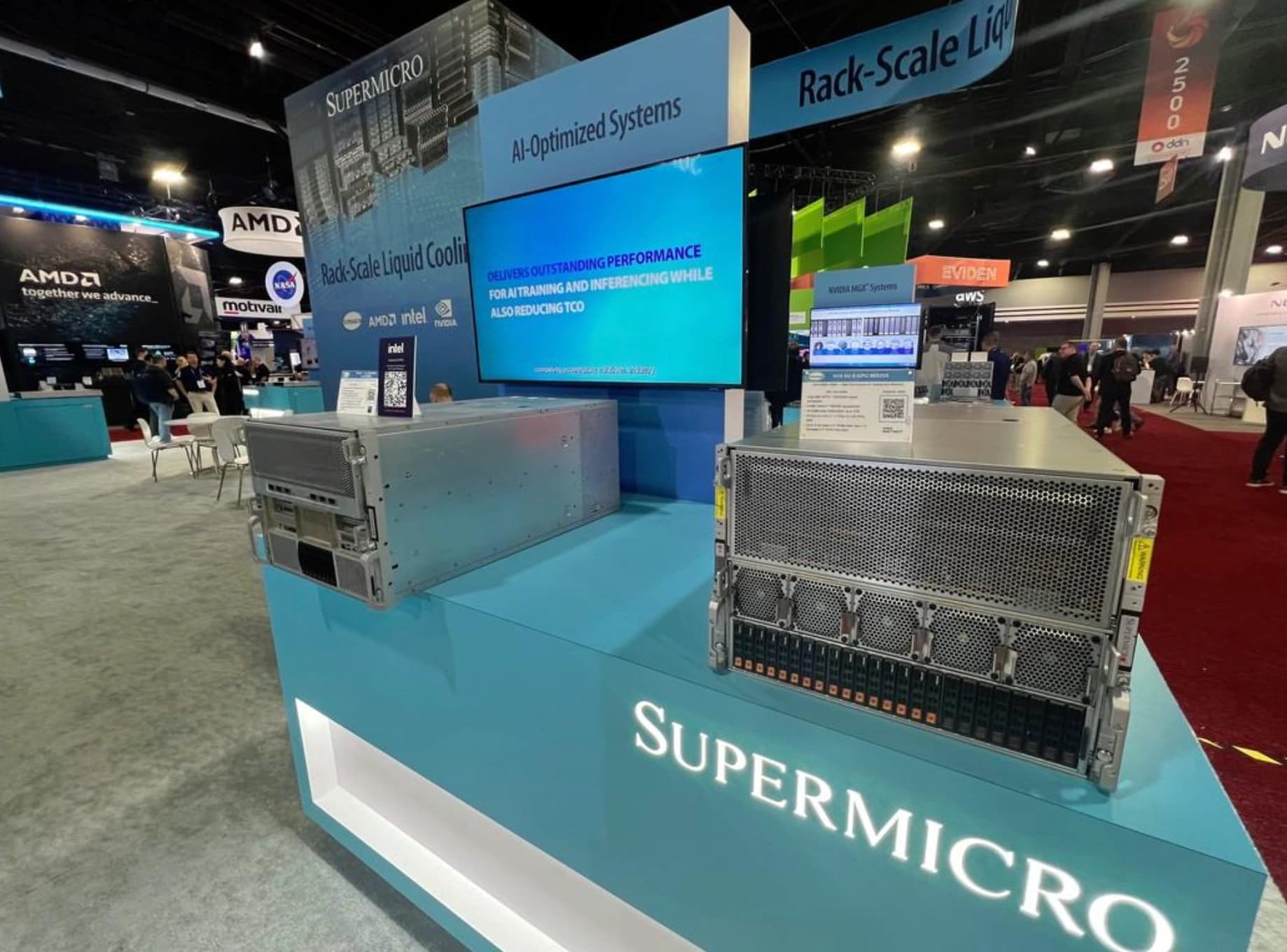
Super Micro Computer is the only stock in premarket trading that doesn't care about the macro. SMCI is up 12.1% as of early Thursday, after the data center server company detonated a revenue guidance hike that blew past Wall Street's estimates by $4 billion at the midpoint — the kind of upside revision that resets the entire AI infrastructure investment thesis for the quarter.
The Number That Changes the Narrative
The guidance range SMCI put on the table — $18.5 billion to $19.5 billion for fiscal Q1 — isn't a rounding error above the prior forecast of $14.5 billion to $15.5 billion. It is a 27% upside revision at the midpoint. To put that in dollar terms: SMCI is guiding for roughly $4 billion more in quarterly revenue than it told investors to expect just weeks ago. That is not noise. That is a structural demand signal from the hyperscaler and enterprise AI buildout that has now been running at full throttle through 2026.
For context, SMCI had already been one of the most volatile names in the AI hardware complex this cycle, whipsawed by regulatory scrutiny, accounting delays, and competitive pressure from ODM rivals. Today's print cuts through all of that. Revenue of $18.5 billion to $19.5 billion in a single fiscal quarter — from a company that was doing roughly $3 billion per quarter as recently as fiscal 2024 — represents one of the more stunning demand ramps in the history of the server hardware business. The market is waking up to that, and premarket movers are reflecting the magnitude of the revision.
The Coattail Trade: Dell and HPE Get the Bid
When SMCI prints a number like this, the read-through is immediate and binary: if AI server demand is this hot, the pie is big enough for multiple winners. Dell Technologies is up 7.42% in premarket, trading at $495.79 — a $34.23 move — on exactly that logic. Dell's PowerEdge AI server line has been a quiet beneficiary of the same hyperscaler capex wave feeding SMCI, and traders aren't waiting for Dell's own earnings to reprice the stock. The move is happening now.
Hewlett Packard Enterprise is up 4.53%, adding $2.54 to trade at $58.63. HPE has lagged both SMCI and Dell in the AI infrastructure arms race, but when the tide comes in this fast, even the slower boats rise. The key distinction for traders is that HPE's AI-optimized ProLiant and Cray systems are still a smaller share of its overall revenue mix than SMCI or Dell's equivalent lines, which explains why HPE is catching less of the bid — 4.5% versus 7.4% and 12.1%. The market is discriminating correctly by degree of AI infrastructure exposure.
What's notable about the sympathy trade is that it's holding even as the broader tape is in the red. Dow futures are down 322 points, the S&P is off 75 points, and Nasdaq futures are down 481 points heading into the open. The fact that SMCI, Dell, and HPE are all printing meaningful gains against that macro backdrop tells you the signal here is strong enough to override the index-level noise — at least in premarket. Whether that holds through 9:30 AM ET is the critical question.
What the AI Infrastructure Bid Has to Survive Today
The structural case for data center server demand is not new — every major hyperscaler from Microsoft to Amazon to Google has telegraphed elevated AI capex through at least 2027. What SMCI's guidance hike does is provide real-time confirmation that the orders are landing and converting to revenue faster than the sell-side modeled. That distinction matters for how you size a position today versus simply acknowledging a trend.
But Thursday's session is not a clean read. The broader market is under significant pressure from a confluence of forces: Netflix down nearly 7% after in-line results and a cut to its 2026 ad revenue target, AT&T down 7.22%, and the 10-year Treasury yield anchored at 5.15% — a level that compresses the multiple on every growth name in the index. The VIX is trading at 18.40, up 10.31% on the session, and the CNN Fear & Greed Index sits at 29, firmly in "Fear" territory. This is not an environment where speculative bids hold easily.
For the SMCI trade specifically, the risk is that the broader Nasdaq selloff — down 1.61% in futures, driven by Meta and Tesla weakness — creates forced selling pressure that overwhelms even legitimate fundamental upgrades. SMCI is still a high-beta, high-short-interest name. A 12% premarket surge in a down-tape environment invites profit-taking from overnight longs and potential gap-fill dynamics in the first 30 minutes of the session. Traders who chased the open on positive guidance prints in 2026 have been burned before by exactly this pattern.
The earnings slate that follows today adds another layer. Tesla, Meta, IBM, Lam Research, and Texas Instruments all report Thursday, and Lam Research in particular will serve as a secondary read on semiconductor capital equipment demand — a related but distinct signal for the AI infrastructure complex. If Lam's results confirm strong demand, the SMCI bid gets fundamental reinforcement. If Lam disappoints, the sector could reverse sharply regardless of what SMCI's guidance says. Watch QQQ's key support at $724.29: if that level breaks on the open, the AI infrastructure names are not immune, and SMCI at +12% becomes a target rather than a leader. The specific level to watch on SMCI itself is whether the stock can hold above Wednesday's close after the first hour of trading — that test will determine whether today's move is a sustainable rerating or a premarket head-fake in a volatile tape.
---
The Weekly Investor
Daily market analysis for active traders. Free.