SK Hynix: 80% Margin, Sold Out to 2029
SK Hynix posted 632% YoY profit growth and a 79.7% operating margin in Q3 2026. HBM4 is the engine. Here's what it means for NVDA, MU, and AMD.
Key Points
- SK Hynix reported ₩83.33 trillion ($62.9 billion) in Q3 operating profit — a 632% year-over-year surge — with an operating margin of 79.7%, the highest in the company's history.
- HBM4 entered full-scale mass production in Q3 and management stated DRAM and HBM output is effectively sold out through 2029, removing supply-side uncertainty for the entire AI memory stack.
- Micron is the most direct U.S. equity read-through — up 200% YTD already — and the SK Hynix sold-out signal supports further upside if Micron's November earnings confirm matching demand visibility.
SK Hynix just printed the most consequential semiconductor earnings report of 2026: ₩83.33 trillion ($62.9 billion) in quarterly operating profit, a 632% year-over-year surge, on revenue of ₩104.62 trillion that beat the analyst estimate by 8.6%. The operating margin of 79.7% is not a rounding error — it is a structural statement about pricing power in a market where AI compute demand has outrun every supply forecast written in the last 24 months. The stock rose 1.92% in regular trading to $145.36 and jumped another 6.11% after hours to $154.24; Korean-listed shares surged as much as 9.4% in morning trading, the largest single-session move for the name this year.
The HBM4 Engine
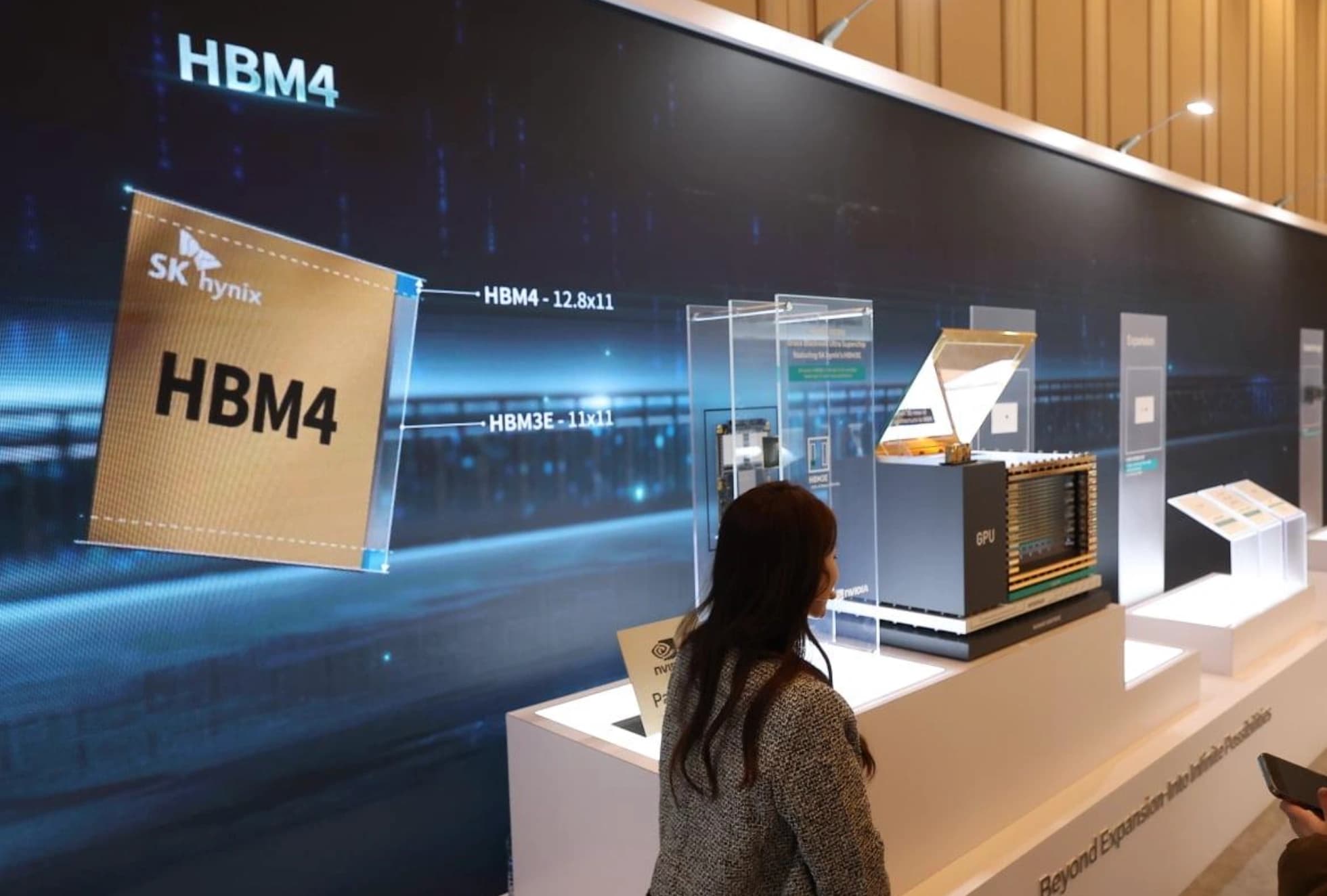
The mechanism behind these numbers is High Bandwidth Memory generation 4. HBM4 entered full-scale mass production during Q3 2026 and is already expected to overtake HBM3E shipment volumes in Q4. To understand why that transition matters for the broader chip trade, consider the pricing dynamics: SK Hynix reported DRAM average selling prices rose by high-20% sequentially in Q3, while NAND ASPs climbed mid-20% QoQ. Server DDR5 shipments increased more than 40% quarter-over-quarter. DRAM bit shipments rose approximately 10% sequentially. These are not numbers produced by an industry in normal supply-demand equilibrium — they are numbers produced by a supply chain running structurally short against an AI training and inference demand curve that is still accelerating.
HBM is the memory architecture that sits directly on the same package as Nvidia's H100, H200, and Blackwell-series GPUs, as well as AMD's MI300X and MI350. Every AI accelerator that ships from either company requires HBM stacks, and SK Hynix is the dominant supplier with Samsung and Micron as the only credible alternatives. The company's statement that DRAM and HBM output is effectively sold out through 2029 is not marketing language — it is a supply commitment that hyperscalers, who are spending $600 billion in aggregate on AI infrastructure in 2026 alone, will be building procurement models around for the next three fiscal years. For Nvidia, which requires HBM allocation to ship its highest-margin products, this print functionally validates the demand side of its own revenue guide.
The U.S. Equity Read-Through
The most direct U.S. equity beneficiary of today's SK Hynix print is Micron Technology. MU is already up 200.33% year-to-date — the top performer in the Philadelphia Semiconductor Index — and the SK Hynix margin and ASP data tells Micron investors exactly what pricing environment the company is operating in when it reports in November. If SK Hynix is generating 79.7% operating margins on HBM and server DRAM in the same quarter Micron was shipping, the logical inference is that Micron's own HBM3E and HBM4 ramp carries significantly more margin upside than the Street has modeled. The consensus Micron EPS estimate for fiscal Q1 2027 — the quarter that will capture the bulk of HBM4 volume — may be materially stale after today's read.
TSMC is the second major read-through. TSMC is up 2.95% in today's session as reports confirm the company is preparing to raise advanced chip packaging prices by as much as 20%, citing surging AI demand and tightening CoWoS capacity. TSMC's CoWoS monthly throughput is expected to exceed 130,000 wafers in 2026 and reach 200,000 in 2027, and Mizuho's Jordan Klein told CNBC that competition for available TSMC capacity is particularly fierce among Broadcom, Nvidia, Apple, and AMD. TSMC North America President Sajiv Dalal said he fields at least 10 calls daily from customers seeking wafer allocation — a detail that converts an abstract supply crunch narrative into a specific operational data point. A 20% packaging price increase, layered on top of SK Hynix's 20%-plus ASP gains in DRAM, means the per-unit cost of an AI accelerator is rising across every major component simultaneously, which is either margin compression for hyperscalers or a signal that AI infrastructure pricing power has become structural.
AMD's position in this landscape strengthened materially this week independent of the SK Hynix print. The company confirmed its Helios rack-scale systems are running at Meta Platforms — a production deployment, not a pilot — and separately committed $1 billion to Meta's equity offering, an alignment of balance sheets that signals AMD is treating Meta as a long-duration strategic partner rather than a transactional customer. AMD rose 5.45% on Tuesday alone and reports Q3 earnings after today's close with consensus at $1.94 EPS on $13.08 billion in revenue. A beat driven by MI350 data center GPU shipments, arriving in the same session as the SK Hynix print, would add a second confirming datapoint to the AI chip supply tightness narrative before the market opens Thursday.
What the Supply Signal Means Next
The sold-out-through-2029 language from SK Hynix management deserves specific scrutiny because it is either the most important supply-side commitment of the AI infrastructure cycle or a carefully worded statement about current contracted backlog rather than unconstrained production capacity. The distinction matters for how investors should weight Micron's November earnings guide, Samsung's HBM ramp timeline, and the competitive dynamics between HBM4 suppliers. Samsung has faced well-documented yield challenges on its own HBM3E qualification with Nvidia, and if HBM4 qualification at Samsung remains delayed into Q1 2027, SK Hynix and Micron will split an even tighter duopoly than the current share split implies. SK Hynix management also announced a shareholder return plan of approximately ₩100 trillion for FY2026 — ₩30 trillion in dividends and ₩60 trillion in buybacks and cancellations — with a Q3 dividend of ₩20,000 per share including a ₩10,000 special dividend, payable December 2026. That is capital return at a scale that only makes sense if management has genuine visibility into the demand curve sustaining these margins.
For traders with positions in MU, NVDA, AMD, or MRVL — Marvell is up 163.4% YTD and directly leveraged to custom AI silicon packaging — the actionable question is whether tonight's AMD print and tomorrow's cloud earnings from Amazon confirm or contradict the HBM demand signal SK Hynix just delivered. If AMD beats on data center GPU revenue and Amazon Web Services reports accelerating AI infrastructure consumption, the SK Hynix setup becomes the most well-corroborated bullish semiconductor thesis of the year. The specific level to monitor on MU: the stock has technical resistance near $175, approximately 20% above current levels. A post-SK Hynix re-rating of Micron's HBM margin model, confirmed by a strong AMD print, puts that level in play before Micron's own November report.
The Weekly Investor
Daily market analysis for active traders. Free.