Nvidia Forces TSMC 3nm Standard on AI Memory Chips
Nvidia directs Samsung, SK Hynix, and Micron to use TSMC's 3nm process for next-gen HBM chips, deepening AI supply chain concentration at one fab.
Key Points
- Nvidia has directed Samsung, SK Hynix, and Micron to manufacture base dies for its next-generation custom HBM chips exclusively on TSMC's 3-nanometer process, consolidating a second critical AI supply chain node at one fab.
- TSMC is already running at effective capacity limits, with its North America president fielding 10-plus calls daily from customers competing for wafer allocation — Nvidia's HBM mandate makes that bottleneck structurally worse.
- Traders should watch TSMC's Q4 capacity guidance and any Intel Foundry announcements as the primary release valve for a supply chain that now has a single point of failure.
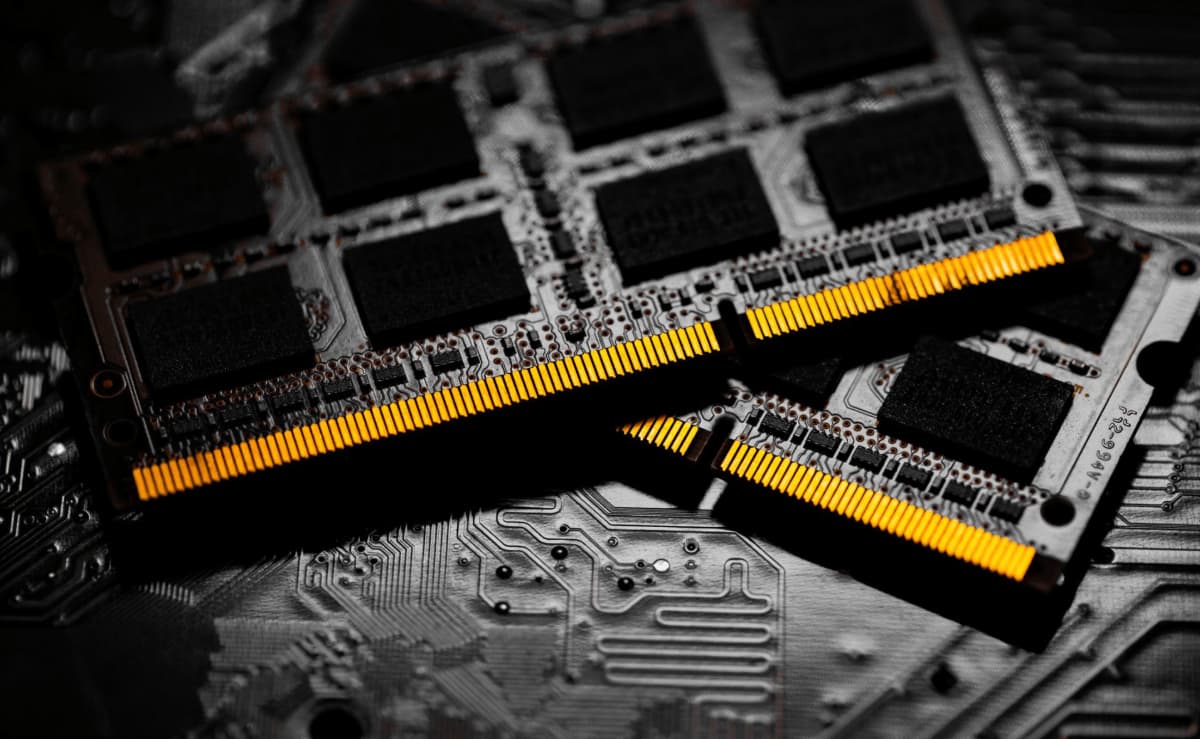
Nvidia has told Samsung, SK Hynix, and Micron to build the base dies for its next-generation custom HBM chips on TSMC's 3-nanometer process — a directive that hands one Taiwanese fab decisive control over the two most critical nodes in AI chip manufacturing simultaneously and raises the stakes on TSMC's already-maxed capacity picture considerably.
One Fab, Two Chokepoints
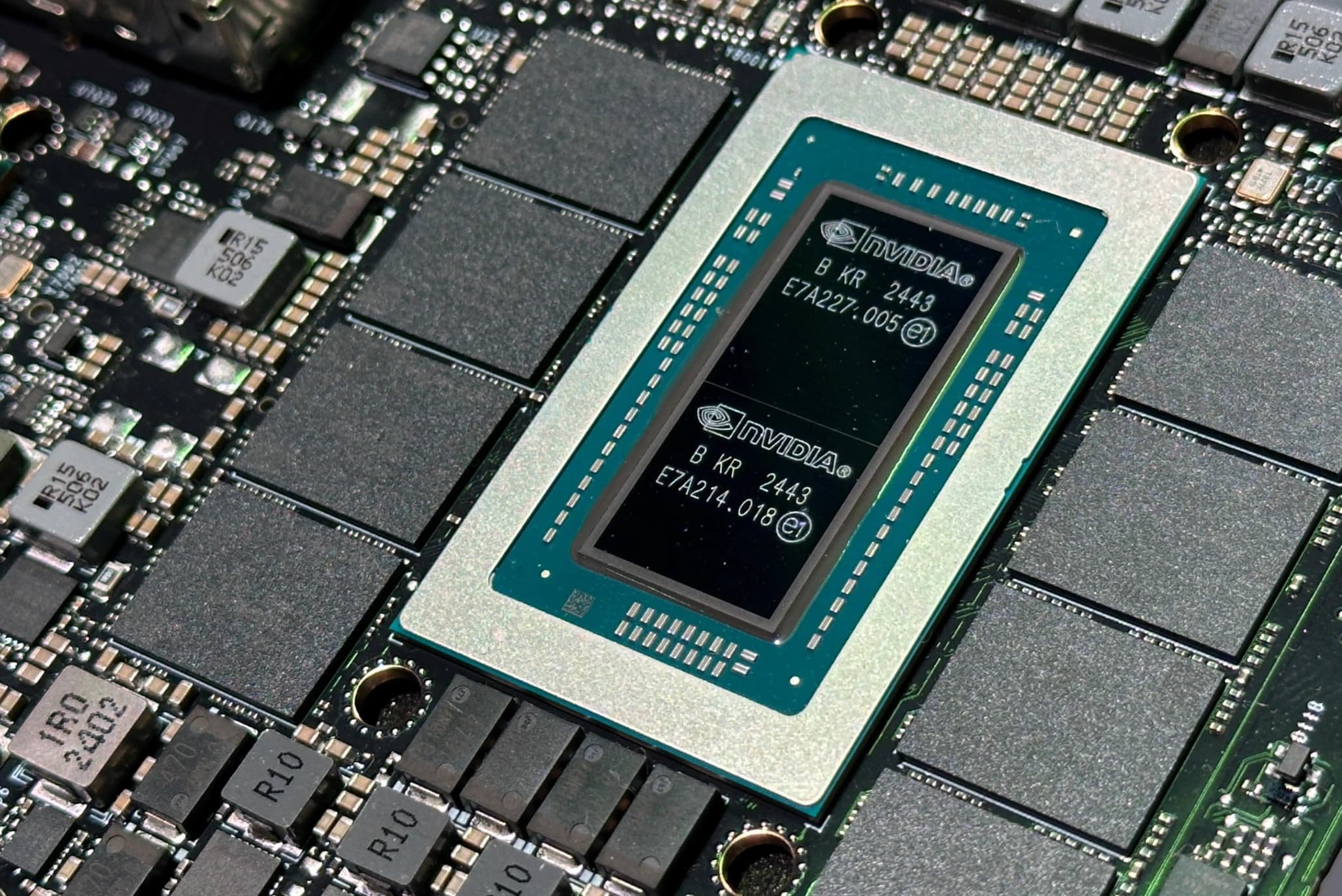
Until this week, TSMC's stranglehold on AI infrastructure was primarily a leading-edge logic story — Nvidia's GPUs, Apple's application processors, AMD's data center chips, all competing for the same advanced fab lines in Hsinchu and Arizona. The HBM directive changes the geometry. High-bandwidth memory is the other half of AI compute: it's what allows a GPU to move data fast enough to actually use its processing power. By standardizing HBM base die production on TSMC's 3nm node, Nvidia is routing both the logic and the memory supply chain through the same constrained resource.
The capacity math is already uncomfortable. TSMC's North America president Sajiv Dalal disclosed this month that he receives a minimum of 10 customer calls per day from companies seeking wafer allocation — and that's before the HBM mandate adds a new category of demand on top of existing logic orders. Analysts had previously estimated TSMC could push capacity 10% to 20% beyond earlier targets, potentially reaching 120,000 wafers per month by year-end. That upside scenario now needs to be evaluated against a demand stack that includes Nvidia's GPU logic, Apple's A-series and M-series chips, AMD's EPYC and Instinct lines, Broadcom's custom AI accelerators, and now the base die requirements for next-generation HBM from three separate memory suppliers. The arithmetic is not favorable.
TSMC shares have gained nearly 40% year-to-date in 2026, a strong run but one that actually trails the PHLX Semiconductor Index's 60%-plus advance — which means TSMC's stock has not yet fully priced the pricing power the company now holds as a structural monopolist across two AI supply chain nodes. The post-Q3 earnings target raise from Needham, which moved its price target to $560 from $530 following TSMC's $4.60 EPS beat against $4.46 consensus, was directionally right but may prove conservative if the HBM mandate drives a fresh round of analyst revisions.
What This Costs the Memory Suppliers
For Samsung, SK Hynix, and Micron, the TSMC 3nm directive is a margin story as much as a supply story. HBM manufacturing is already capital-intensive; adding a requirement to source base dies from the world's most expensive advanced fab introduces a cost layer that memory suppliers cannot easily absorb without either compressing margins or passing costs upstream to Nvidia — which, given Nvidia's current pricing power and order book dynamics, is an extremely difficult negotiation to win. Jensen Huang confirmed this week that Nvidia's order books continue to grow faster than the company can increase supply, describing AI chip orders arriving "almost daily." A supplier trying to negotiate a cost pass-through against a customer with that kind of demand visibility is negotiating from a weak position.
SK Hynix is best positioned among the three to manage this transition. The company has been the dominant HBM supplier to Nvidia through multiple product generations and has existing process relationships with TSMC that the other two suppliers will need time to replicate at scale. Samsung, which has faced yield challenges on advanced HBM nodes in recent cycles, faces the steepest technical ramp. Micron, the U.S.-based supplier that Washington has actively encouraged as a domestic alternative, now faces a supply chain structure where its competitive differentiation on advanced HBM is being partially defined by access to a foreign fab — a geopolitical wrinkle that will not be lost on the Commerce Department or the CHIPS Act oversight apparatus.
The week's broader semiconductor tape underscores the fragility of the current setup. Nvidia and AMD fell more than 2% and 3% respectively in last week's sell-off, with Broadcom and Intel also declining despite what had been a constructive TSMC and ASML earnings week. NVDA's last close printed at $214.13, down $3.10 or 1.43% as of October 16, even as the underlying demand story remains structurally intact. The disconnect between demand fundamentals and recent price action suggests the market is repricing concentration risk — exactly the risk the TSMC 3nm HBM directive amplifies.
Intel's Opening and the Regulatory Overhang
The single most important secondary consequence of Nvidia's TSMC consolidation play is the opportunity it creates for Intel Foundry. Industry sources have already flagged that the fierce battle for TSMC capacity among Nvidia, Apple, AMD, and Broadcom is generating genuine customer interest in Intel's fab arm as an alternative — and that was before Nvidia formally added HBM base die requirements to TSMC's load. Intel Foundry does not currently have a 3nm-equivalent process that memory suppliers would consider production-ready for this application, but the strategic argument for accelerating that development just became materially stronger. Any Intel Foundry process announcement or customer win disclosure in the next 90 days should be read against this backdrop.
The regulatory dimension cannot be dismissed. The DOJ has taken the lead in examining Nvidia's market position, while the FTC has opened a separate investigation into OpenAI and Microsoft — a division of labor that reflects Washington's recognition that AI infrastructure and AI application layers present distinct antitrust concerns. A supply chain structure in which one company's product decisions effectively determine how three competing memory manufacturers allocate their most advanced production capacity is precisely the kind of vertical influence that antitrust reviewers flag. It does not automatically constitute a violation, but it provides ready-made narrative material for DOJ investigators who are already engaged with Nvidia's competitive conduct.
For traders, the actionable watch points are sequenced clearly. TSMC's Q4 capacity guidance — specifically any revision to the 120,000 wafers-per-month target — is the first data point that will reveal whether the fab can physically absorb the HBM mandate on top of existing demand. That guidance is likely to surface in TSMC's next investor communication. The second watch point is SK Hynix's earnings disclosure, which will show whether the TSMC 3nm cost structure is already flowing through HBM margins. Nvidia's own Q3 earnings, expected in mid-November, will be the definitive test: if Nvidia discloses HBM supply as a constraint on GPU shipments, the concentration risk that this week's directive created will move from theoretical to market-moving. NVDA above $230 likely requires a clean supply narrative; a supply miss would put the $195 technical support level back in focus before year-end.
The Weekly Investor
Daily market analysis for active traders. Free.