NVDA Hits 28x P/E as AI Revenue Reckoning Arrives
NVIDIA trades at 28x earnings vs. its 5-year median of 55x as Tesla, Lam, and IBM misses trigger a sector-wide AI monetization repricing.
Key Points
- NVIDIA is trading at a P/E of 28.06x — exactly half its 5-year median of 55.54x — while the stock sits 46.5% below GuruFocus's calculated intrinsic value of $414.64.
- Earnings misses from Tesla, Lam Research, and IBM this week crystallized the market's demand for proof that AI capital expenditure is converting into actual revenue.
- Traders should watch NVIDIA's next earnings date and any Vera Rubin rack order announcements as the first hard evidence of whether the new product cycle can reverse the multiple compression.
NVIDIA closed Wednesday at $221.97 and is down another 2.2% in pre-market trading this morning — making it the steadiest decliner in a chip sector that is otherwise in freefall. Intel is off nearly 5%. AMD is down 3.8%. Micron has shed 3.5%. The proximate cause is a three-day cascade of AI-adjacent earnings disappointments from Tesla, Lam Research, and IBM, but the underlying cause is more structural and more dangerous for bulls: the market has collectively decided it is done paying for AI potential and has started demanding AI profit.
The Multiple That Tells the Whole Story
The compression in NVIDIA's valuation is the starkest single data point in tech right now. At 28.06x trailing earnings, the stock is trading at roughly half its five-year median P/E of 55.54x. GuruFocus calculates a GF Value of $414.64, implying the stock is undervalued by 46.5% at current prices — a figure that would be extraordinarily bullish in a vacuum. But valuation gaps only close when a catalyst arrives, and right now the tape is supplying the opposite: a rolling series of reports from AI-adjacent companies confirming that the monetization timeline is longer and lumpier than the 2024 and 2025 buildout narrative ever acknowledged.
What's changed is not NVIDIA's dominance — its hardware remains the spine of every serious AI infrastructure deployment on the planet. What's changed is the framing. BlackRock's Wei Li articulated it cleanly this week: the focus has shifted from capital expenditure — previously the key proxy for AI progress — to monetization. For two years, every dollar spent on NVIDIA GPUs was treated as a leading indicator of future earnings. That proxy is now broken. The market wants to see the revenue line, not the capex line, and NVIDIA does not report until its next scheduled earnings, leaving bulls with little near-term ammunition.
The Vera Rubin Launch and What It Actually Means
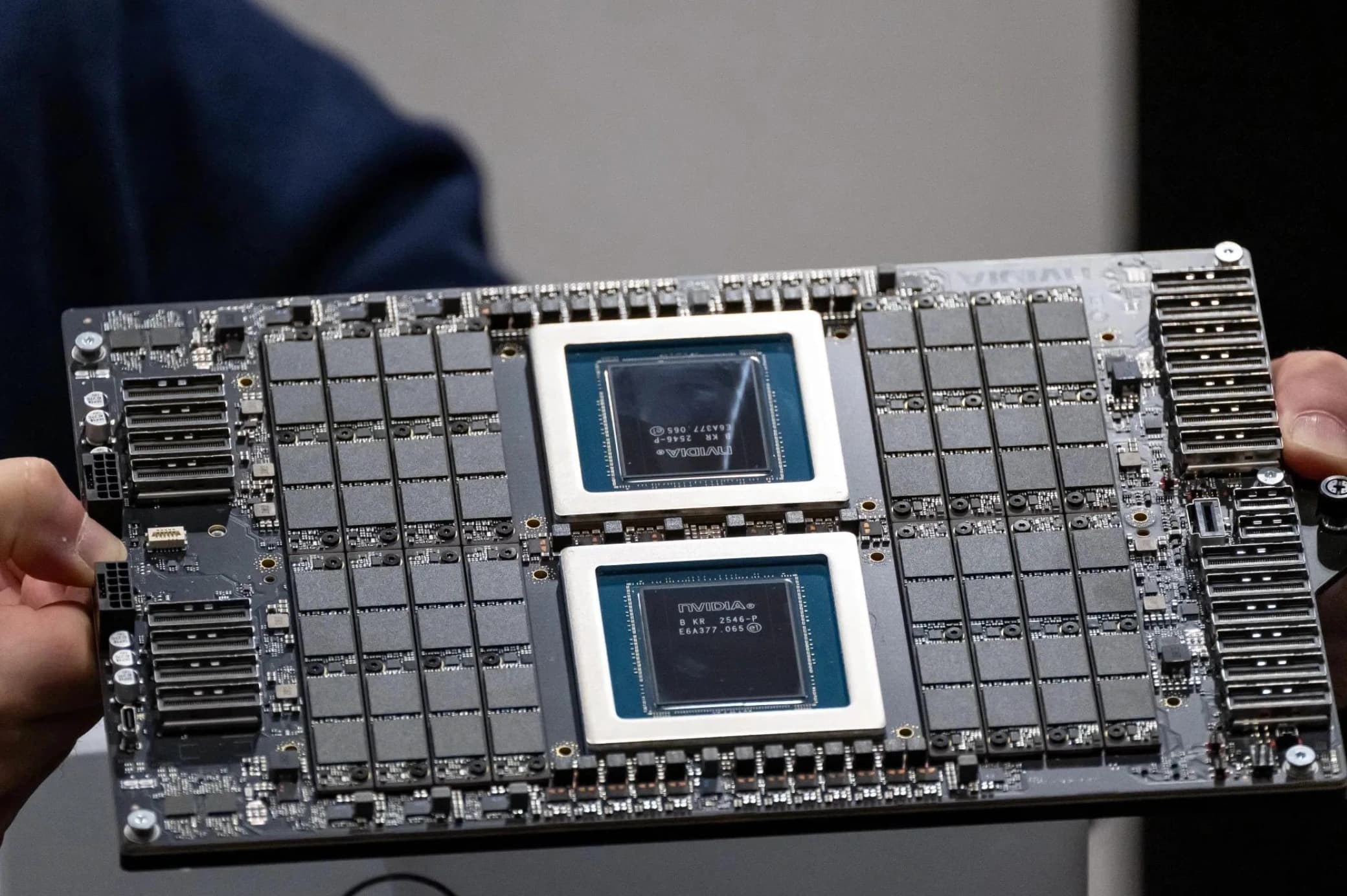
NVIDIA is not standing still. The company announced this week that its plug-and-play Vera Rubin racks can now be shipped on a truck — a logistics and deployment breakthrough explicitly designed to slash data center build times. Supermicro moved in lockstep, introducing the NVIDIA Vera CPU Rack today: a 256-CPU, fully liquid-cooled rack-scale solution targeting agentic AI workloads at scale. SMCI's fiscal 2026 revenue reached $39.1 billion, and the company is reporting a record order backlog for AI systems — which at minimum confirms that enterprise demand for this hardware tier is real and growing.
The Vera Rubin truck-deployable rack is a meaningful product evolution because it attacks the single biggest friction point in AI infrastructure: time to compute. Hyperscalers and the emerging neocloud tier — operators like CoreWeave, Lambda Labs, and now SpaceX's renamed Super Intelligence business, which reported 1.7 gigawatts of compute under management in Q3 — have all cited deployment lead times as a binding constraint on revenue growth. If NVIDIA can compress the gap between order and operational rack from months to weeks, that is a genuine demand accelerant. But it is a demand accelerant that will show up in revenue six to twelve months from now, not in the current quarter's print.
TSMC, the Real Bottleneck, and What the Sector Faces Next
The competitive picture underneath NVIDIA's headline numbers is getting more complicated by the week. TSMC reported Q3 revenue of $46.7 billion and has gained nearly 40% year-to-date — a strong number, but one that masks an intensifying supply crisis. TSMC North America President Sajiv Dalal told investors this week that he receives at least 10 calls daily from customers seeking wafer capacity. Nvidia, Apple, AMD, and Broadcom are locked in what Mizuho's Jordan Klein described as an "extremely fierce" battle for factory line space. Klein added that TSMC could push capacity 10% to 20% beyond earlier targets, potentially reaching 120,000 wafers per month by year-end — but even that upside scenario does not resolve the fundamental mismatch between what the AI industry wants to build and what TSMC can actually fabricate.
For chip investors, the TSMC bottleneck is a double-edged signal. On one side, it confirms that underlying AI hardware demand is not weakening — the calls are still coming in. On the other, it means that the companies best positioned to win the next phase of AI infrastructure are not purely the chip designers but the firms that have locked in foundry relationships and secured capacity commitments. That dynamic advantages TSMC itself (NASDAQ: TSM, +40% YTD versus the PHLX Semiconductor Index's +60%) and creates an increasingly asymmetric risk for smaller fabless players who lack the leverage to jump the queue.
Adding to sector pressure, the U.S. government is reportedly weighing export restrictions on 23 AI-related technologies, including advanced chip designs. That news has not yet fully priced into valuations, but it represents a tail risk that bears watching — particularly for companies with significant China revenue exposure. Intel, already down nearly 5% in pre-market despite holding a fresh JPMorgan Buy upgrade from Monday, is caught in multiple crosscurrents: strong CPU demand in its core business, continued market share erosion to AMD and Arm in PCs and servers, and foundry prospects that remain structurally questionable against TSMC's dominance.
The forward-looking trade here is binary and date-driven. If NVIDIA's next earnings release — and the order data embedded in Supermicro's backlog commentary when WDC, and then GOOGL on October 28, reset sector sentiment — can demonstrate that Vera Rubin deployments are generating hard revenue rather than pipeline, the 28x P/E becomes a generational entry point. If the monetization timeline slips another quarter, the technical picture offers no obvious floor above the $190 level that served as support during the February 2026 correction. Watch $190 and watch October 28.
The Weekly Investor
Daily market analysis for active traders. Free.