NFP Preview: Why Friday's Jobs Number Owns the December Fed
Friday's October payrolls report — consensus 65K, prior 29K — is the decisive input for the December FOMC. Here's what the leading data says.
Key Points
- Initial jobless claims printed 194K for the week of October 31, below the 196K consensus, but Challenger job cuts surged to 51K in October from 43.3K — a divergence that makes the ADP beat of 86K harder to trust as a clean signal.
- The October FOMC held 10-2 at 3.75%-4.00% with one dissenter seeking a hike, meaning any NFP upside surprise directly reactivates the hawkish minority and pressures the December decision.
- The number to beat is 65K consensus — a soft bar; a print above 120K would be the threshold that materially shifts December pricing toward a hike.
Nonfarm payrolls for October print Friday morning, and the consensus of 65,000 net new jobs is so soft that beating it barely qualifies as good news — but missing it in a meaningful way reframes the entire December FOMC conversation in a matter of minutes. The labor market data released in the past 48 hours tells a story with conflicting chapters: claims are tight, layoff announcements are rising, ADP surprised to the upside, and productivity just posted its worst quarter in over a year. Friday is where those threads either resolve or tangle further.
The Leading Indicators Don't Agree
Initial jobless claims for the week ended October 31 came in at 194,000 — 2,000 below the 196,000 consensus and flat with the prior week. The four-week moving average sits at 196,750, also essentially unchanged. On the surface, this is the picture of a labor market with a stubborn floor: firms are not laying off workers at a pace that would signal recession or significant demand destruction. Continuing claims for the week of October 24 printed 1,701,000 against an expectation of 1,710,000 — another modest beat that confirms workers who do lose jobs are finding new ones relatively quickly.
But the Challenger job cut data for October complicates that read. Layoff announcements hit 51,000 last month, up sharply from 43,281 in September — an 18% jump in announced cuts that hasn't yet flowed into claims filings but historically precedes them by four to eight weeks. Challenger data doesn't track actual separations; it tracks corporate announcements. Some of those cuts get rescinded, delayed, or spread across quarters. But the directional signal — that corporate decision-makers are accelerating workforce reduction plans in October — is not something you discount heading into a payroll release where the consensus is already priced for a weak number.
ADP, Productivity, and What They Signal
Wednesday's ADP report showed 86,000 private-sector jobs added in October, well above the 69,000 consensus and roughly in line with September's upwardly comparable reading. On a standalone basis, ADP beating by 17,000 would typically push street estimates for NFP higher. The problem is the ADP-NFP correlation in 2026 has been noisy — ADP has overstated payroll strength in four of the past six months, with the gap in both directions exceeding 50,000 jobs on two separate occasions. The beat is a mild positive signal, not a reliable forecast.
The productivity data released Thursday morning is a separate but related variable the Fed is watching carefully. Nonfarm productivity growth decelerated sharply to 1.4% in Q3, down from 2.8% in Q2 — a print that matters because productivity gains were one of the central arguments for why a 3.4% GDP growth rate could coexist with gradually easing inflation. If productivity is downshifting, the same level of output requires more labor input, which is marginally bullish for payroll counts but also raises unit labor costs — which came in at 1.2% in Q3, well below the 2.5% prior. The unit labor cost deceleration is a genuine inflation comfort for the Fed, but it sits in tension with CPI still running at 3.7% year-over-year with core at 2.6% — both well above the 2% target.
Why December Hangs on This Print
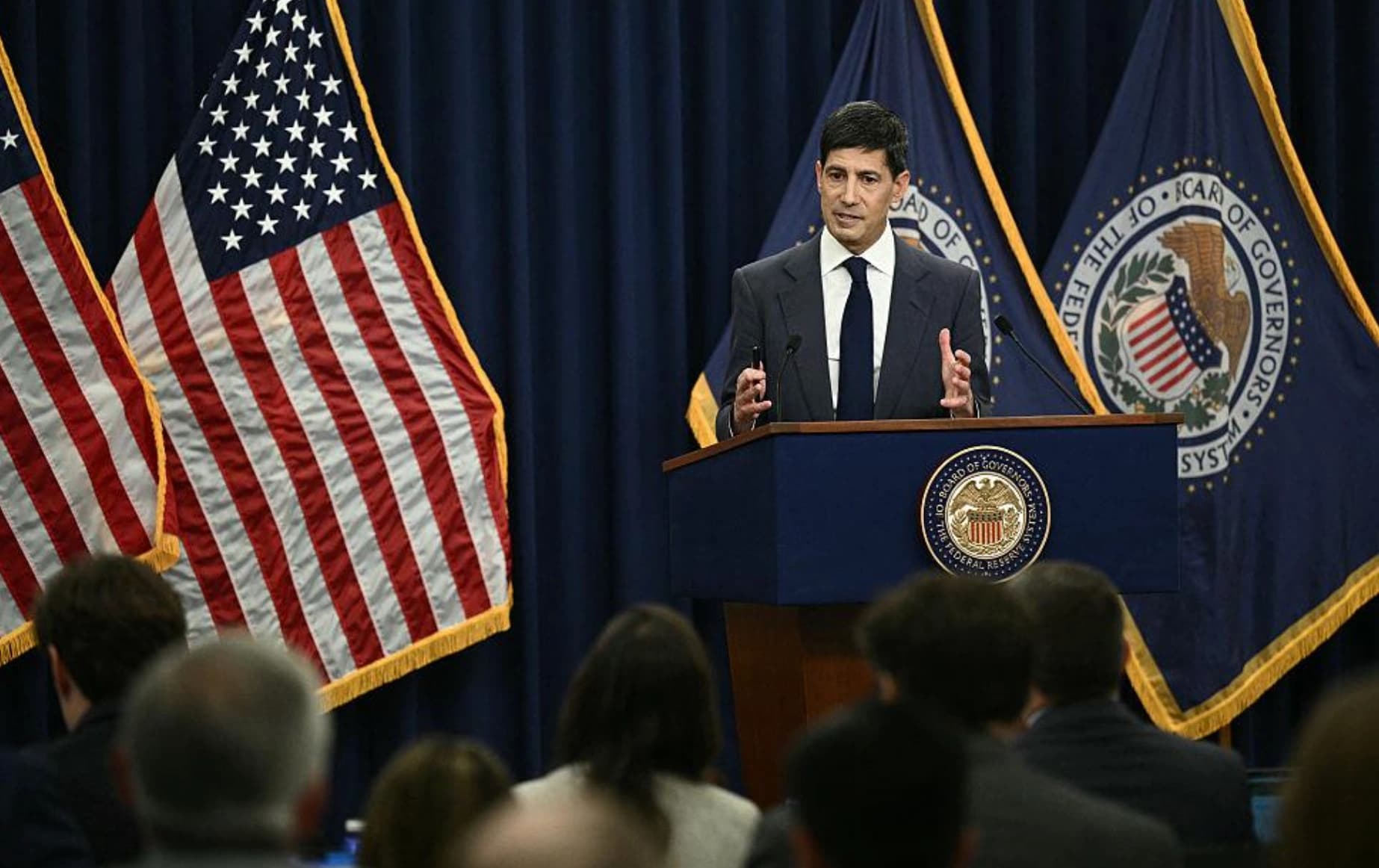
The October FOMC statement was explicit: the committee sees economic activity "expanding at a strong pace" but flagged "elevated uncertainty" and characterized inflation as "elevated." The 10-2 vote to hold, with dissenter Hammack pushing for a 25bp hike, means the hawkish threshold inside the committee is not far from the current rate. One strong payroll number doesn't flip the committee, but it empowers the dissenters and puts December back in play as a live meeting rather than a certain hold.
The December 8-9 FOMC meeting is six weeks away. Between now and then, the committee will see October CPI (due in approximately 10 days), one more round of jobless claims, October retail sales, and Friday's NFP. Of those data points, NFP tomorrow has the longest lead time for incorporation into December positioning — which is exactly why a large miss or beat Friday will move Treasury yields and equity futures more violently than the same magnitude surprise would generate mid-cycle. The 2-year Treasury yield, currently the most rate-sensitive point on the curve, is the instrument to watch for the Fed's real-time reaction function.
The specific framework traders should apply Friday morning: a print in the 50,000-80,000 range keeps December on hold and validates the prevailing consensus; a print below 30,000 opens the door to discussions about labor market deterioration and potentially pulls forward any rate-cut conversation into early 2027; a print above 120,000 — roughly double consensus — is the number that meaningfully pressures the December meeting toward a hike. Fed speakers Musalem and Bowman are on the calendar for Friday, and their comments following the release will be the first official Fed interpretation of the data. If the number surprises significantly in either direction, those speaking slots become important secondary inputs. Watch the unemployment rate separately: consensus holds at 4.2%, and any tick up to 4.3% or higher alongside a weak payroll number is the combination most likely to force an explicit dovish pivot in December language — even if the committee ultimately holds at 3.75%-4.00%.
The Weekly Investor
Daily market analysis for active traders. Free.