Musk Slams Door on TSMC at Terafab; Intel Bounces
Elon Musk ruled out TSMC operating Terafab, calling for "zero doubt" his firm runs the $16.8B Texas fab. Intel shares recovered as the ownership question settled.
Key Points
- Elon Musk posted Wednesday that his company "will build and run the fab" at Terafab, explicitly limiting TSMC's potential role to a sublease of part of the site — ending two days of ownership ambiguity that sent Intel shares down roughly 2% Monday.
- The whipsaw reflects how much Intel's foundry narrative is now entangled with Terafab: any dilution of Intel's anchor customer role at the $16.8 billion Texas facility lands directly on INTC's investor base.
- TSMC reports October 15 earnings with its own Texas expansion under evaluation — the two stories are now on a collision course.
Elon Musk shut down the TSMC-as-Terafab-operator story Wednesday morning with a single post on X: "We will build and run the fab. Let there be ZERO doubt about that." Intel shares, which had fallen roughly 2% Monday on reports that TSMC was in talks to join the Texas chip venture as a potential operator, recovered. The two-day whipsaw is a clean illustration of how completely Intel's foundry credibility story has become hostage to Terafab's ownership structure.
How the Story Broke and Why It Moved Intel
Monday's Intel selloff traced directly to a report that TSMC was in discussions to take an operational role at Terafab, the massive Texas semiconductor facility being built with Musk's backing. The initial read from Intel investors was logical: if TSMC — the world's most technically capable contract chipmaker — was being brought in to run the facility that Intel had positioned as a showcase for its own foundry ambitions, then Intel's role as anchor customer and strategic beneficiary was being diluted. The stock's 2% decline on that news reflected a specific fear, not general market weakness.
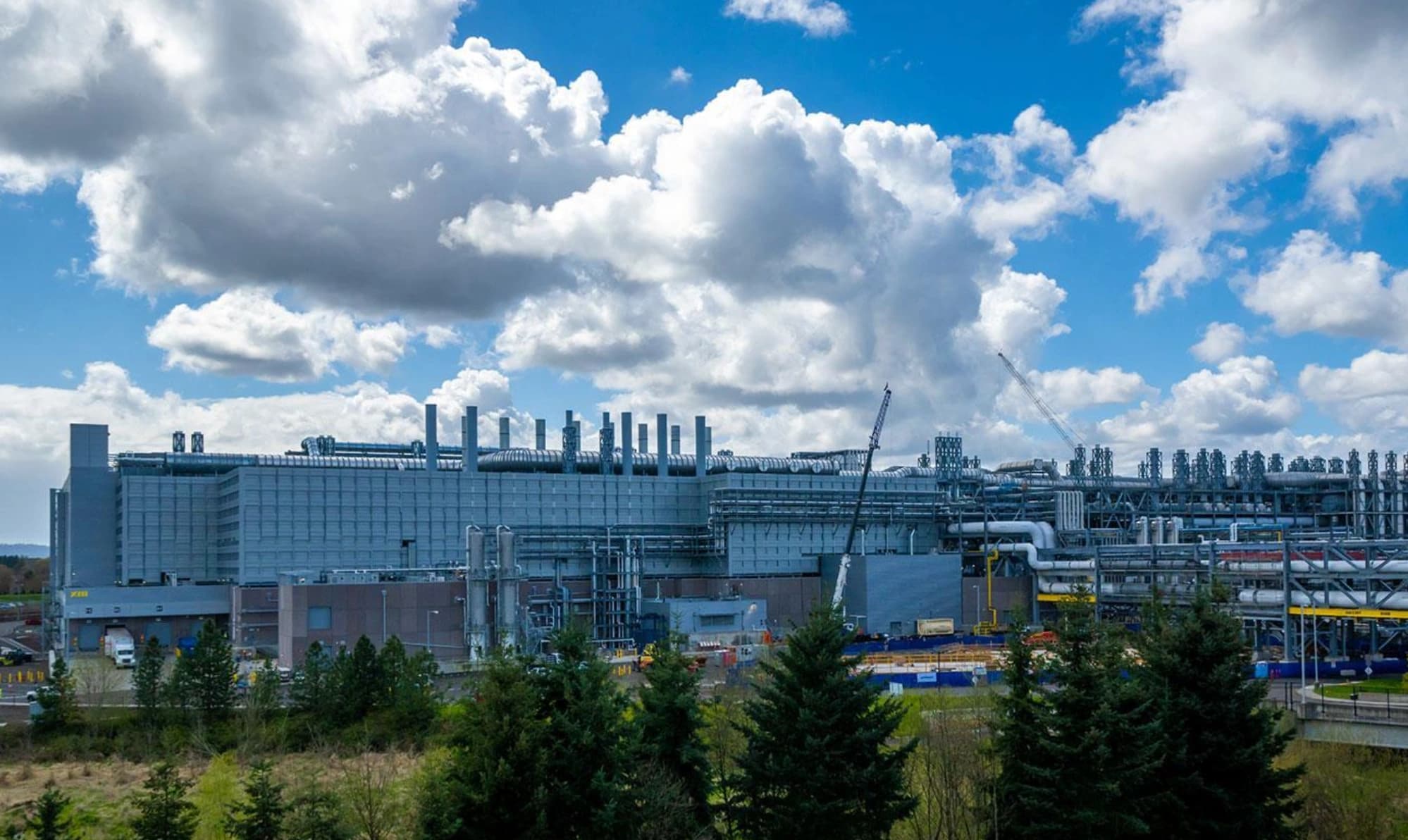
The Terafab numbers justify the attention. Initial investment is $16.8 billion, with total potential spending across all phases reaching up to $119 billion — a figure that, if realized, would represent one of the largest single industrial capital commitments in American history. The planned workforce is at least 3,000. At that scale, the question of who operates the facility is not a governance footnote; it determines which company's process technology, yield management, and customer relationships sit at the center of a potentially transformative piece of US semiconductor infrastructure.
Intel's shares moved inversely with the TSMC Terafab headlines in a way that should tell investors something important: the market is treating Terafab as a direct Intel proxy. That relationship creates a persistent volatility risk for INTC shareholders that is entirely external to Intel's own operational execution — any future Terafab headline, positive or negative, will move the stock regardless of what Intel's foundry business is actually doing.
Musk's Clarification and What It Actually Settles
Wednesday's post from Musk clarified the operational question but left the door open on a narrower issue: TSMC could potentially sublease part of the Terafab site. That distinction matters. A sublease arrangement — TSMC occupying physical space within the Terafab complex under its own brand and process technology — is meaningfully different from TSMC running the facility as an operator. The former is a real estate transaction. The latter would have been an effective transfer of Terafab's competitive identity to the world's dominant foundry.
For Intel, the clarification is net positive but not unambiguously clean. The company's foundry strategy depends on winning external customers by offering competitive process technology, advanced packaging, and manufacturing scale. Intel is up a stunning 215% year-to-date — a number that reflects a complete narrative reset from the company's darkest foundry credibility period — and that move is partly supported by investor belief that Terafab validates the foundry pivot. A TSMC operational presence within Terafab, even as a subtenant, would have complicated that story considerably.
The TSMC angle also introduces a second layer of complexity. TSMC is separately evaluating a potential investment in Texas to expand US chip production, on top of the $265 billion already committed to its Arizona operation. Barclays maintained its Overweight rating on TSM on October 6 and raised its price target from $650 to $665, with the Texas expansion optionality factoring into the revised estimate. That means TSMC's Texas footprint is expanding on multiple fronts simultaneously — and the Terafab sublease question, however limited Musk defined it Wednesday, is not the only vector through which TSMC could establish a Texas manufacturing presence that competes with or complicates Intel's own ambitions in the state.
TSMC's October 15 Print and the Convergence Risk
The timing of all this matters for positioning. TSMC reports earnings on October 15 — eight days from today — and the stock is sitting near a 52-week high after a -0.72% regular-session move Wednesday. The earnings call will almost certainly surface questions about the Texas expansion timeline, the Terafab sublease reports, and management's view on 2nm ramp margin pressure, which is the central fundamental concern heading into the print. Investors who want clean TSMC exposure are getting it with Terafab noise attached, and that noise is Musk-generated — which means it can reverse again on a single post.
For AMD, which is up 195% year-to-date and got a fresh Citigroup price target raise to $800 this week on a $300 billion CPU TAM estimate for 2030, the Terafab saga is relevant but secondary. AMD's supply chain runs through TSMC for leading-edge wafers, and any signal that TSMC's Texas capacity expansion is accelerating — whether through Terafab, its own Arizona buildout, or a new Texas site — is a long-term positive for AMD's ability to source advanced process nodes domestically. That connection is not priced as a discrete catalyst yet, but it becomes more relevant as Lisa Su's 3-to-5-year supply planning framework matures.
The TSMC earnings report on October 15 is the next hard date that resets the entire conversation. If management provides explicit guidance on Texas investment scale, operational timeline, or any Terafab-adjacent commentary, the Intel-TSMC-Terafab triangle becomes the defining narrative of chip sector positioning for Q4 2026. The specific level to watch on INTC is whether the stock can hold its year-to-date gains above the +200% threshold — a psychological floor that short sellers will test if any new Terafab ambiguity surfaces before TSMC reports. The 215% YTD move in a stock with Intel's foundry execution history is a number that requires continuous narrative support, and right now that narrative runs directly through a Texas construction site and whatever Elon Musk posts next.
The Weekly Investor
Daily market analysis for active traders. Free.