Microsoft's Custom Chip Is NVDA's $1B Problem
Microsoft plans to deploy over one million homegrown AI chips in 2026, cutting Nvidia dependence. DOJ subpoenas escalate. Here's what traders need to know about NVDA now.
Key Points
- Microsoft announced it will deploy potentially more than one million homegrown AI chips in 2026 to power internal AI services, explicitly reducing its dependence on Nvidia — a direct structural threat to NVDA's hyperscaler revenue concentration.
- Simultaneously, the DOJ has escalated its antitrust investigation into Nvidia by issuing subpoenas to third-party companies, signaling active case-building around NVDA's dominance in AI accelerator supply.
- NVDA trades at $226.35, up just 22% YTD against AMD's 175% and INTC's 174% — the underperformance relative to peers is now compounding with structural demand risk and regulatory tail risk in the same week.
Two structural threats landed on Nvidia in a 24-hour window, and neither is a rumor. Microsoft confirmed Monday it will deploy potentially more than one million homegrown AI chips next year to back its internal AI services, with explicit language about reducing dependence on Nvidia. Hours later, reporting confirmed the DOJ has graduated its antitrust investigation into Nvidia from background inquiry to active subpoena issuance — not just to Nvidia itself, but to third-party companies, the tell-tale sign of a prosecution building an evidentiary record. NVDA is down 0.8% in premarket trade today, but the question traders are pricing is whether this week's headlines mark the beginning of a sustained re-rating of the stock's hyperscaler revenue assumptions.
The Microsoft Chip Deployment — The Numbers Behind the Threat
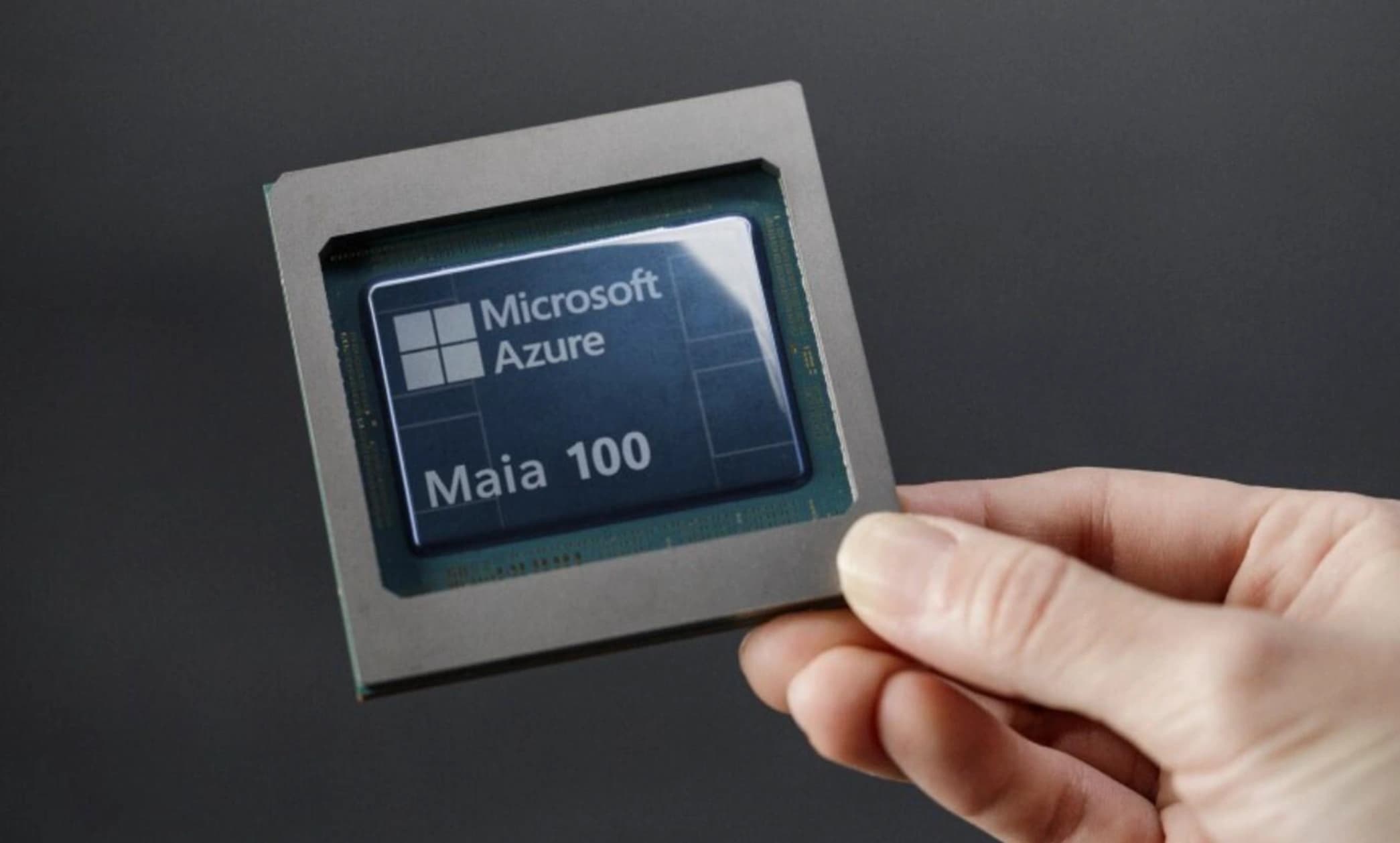
One million chips is not a rounding error. To contextualize the scale: Nvidia shipped an estimated 3.5 to 4 million H100 and H200 units in fiscal 2024, and the broader AI accelerator market — which Nvidia dominates with an estimated 70% to 85% market share depending on the metric used — is projected to generate roughly $150 billion in annual revenue by 2027. A hyperscaler of Microsoft's size redirecting even 20% of its AI accelerator spend toward homegrown silicon is a demand displacement that flows directly to NVDA's top line. Microsoft is Nvidia's single largest hyperscaler customer by most analyst estimates, and the company has been developing its Maia AI chip line since at least 2023. Monday's announcement is not the beginning of this story — it is the moment the story became impossible to discount.
The mechanism matters for understanding the financial impact timeline. Microsoft is not replacing Nvidia chips for training frontier models, where Nvidia's H100 and Blackwell architecture maintain a significant performance lead that custom silicon cannot yet match cost-effectively. The displacement is happening in inference — the repetitive, high-volume work of running AI services at scale once a model is trained. Inference is exactly the workload where custom silicon pays off: the arithmetic is predictable, the memory bandwidth requirements are known in advance, and the economics of building a chip optimized for a specific workload beat buying a general-purpose accelerator at Nvidia's margin structure. Inference is also the fastest-growing segment of AI compute demand, which means Microsoft's pivot is aimed directly at the market's growth engine, not its legacy base.
DOJ Subpoenas — From Inquiry to Case
The DOJ antitrust escalation on Nvidia arrived on the same day as the Microsoft chip news, and the timing is coincidental but the compound effect on sentiment is not. Subpoenas to third-party companies are a specific and significant procedural step. They mean the DOJ is no longer just asking Nvidia to produce internal documents — it is seeking corroborating evidence from customers, competitors, or partners about specific conduct. The most likely theory of the case, based on prior reporting, centers on allegations that Nvidia used its dominant position in AI accelerators to penalize customers who also purchased competing products, and potentially that it leveraged its CUDA software ecosystem to create switching costs that go beyond legitimate competition on technical merit.
CUDA is the key. Nvidia's software moat — the compute unified device architecture that has been the standard programming framework for GPU-accelerated workloads since 2006 — is simultaneously its most valuable competitive asset and the most legally vulnerable element of its market position. If the DOJ can establish that Nvidia conditioned access to CUDA tooling, pricing, or supply priority on customer commitments to purchase Nvidia hardware exclusively or preferentially, that is a textbook Section 2 Sherman Act monopolization case. The third-party subpoenas suggest the DOJ is gathering testimony from companies who may have experienced exactly that dynamic. This is a multi-year legal process, not a binary event, but the existence of an active case with subpoenas outstanding creates an ongoing regulatory discount that will weigh on NVDA's multiple even if Nvidia ultimately prevails.
What NVDA's Chart and Consensus Are Telling Traders
NVDA at $226.35 — up 22% YTD against the iShares Semiconductor ETF (SOXX) up 81% and AMD up 175% — is already telling a story of structural underperformance relative to the sector it supposedly leads. The stock spent most of 2024 functioning as the primary expression of the AI infrastructure trade; the fact that it has dramatically lagged INTC and AMD in 2026 reflects the market's gradual repricing of its hyperscaler concentration risk, its regulatory overhang, and competition from both homegrown silicon and AMD's MI300X and successor accelerator line, which has been gaining meaningful traction in inference workloads at exactly the same accounts — Microsoft Azure, Meta, and others — where Nvidia has historically been dominant.
The analyst community has not yet caught up to Monday's headlines. Price targets on NVDA from major banks range from approximately $185 to $280 at last update, with consensus still reflecting a bull case built on the assumption that hyperscaler capex continues to flow disproportionately to Nvidia silicon. The Microsoft chip announcement is a direct invalidation of that assumption's upper bound — not in FY2026, but in the FY2027 and FY2028 estimates that determine where a stock trading at a premium multiple to current earnings should be priced. Expect analyst notes addressing the hyperscaler revenue model this week, and watch specifically for any cuts to the inference-segment revenue assumptions that have been a key component of the bull case for the past 12 months.
The Firmus IPO shelving — the Nvidia-backed cloud computing startup that placed its IPO on hold with no stated timeline — adds a third data point to the week's negative NVDA narrative. A company backed by Nvidia choosing not to access public markets is either a statement on private AI infrastructure valuations broadly or a signal of specific concerns about the NVDA ecosystem's momentum. Neither interpretation is positive. For traders, the setup into the week is a stock at $226.35 with premarket pressure, two structural demand and regulatory headlines in 24 hours, a potential analyst revision cycle ahead, and TSMC's October 15 earnings print — which will speak directly to the health of AI chip demand from the foundry side — as the next hard catalyst. A TSMC gross margin print at or above 67% would stabilize the sector; anything below the low end of the 65% to 67% guidance range would accelerate the current de-risking in AI hardware names, and NVDA, carrying the most concentrated combination of regulatory and competitive risk in the group, would be the most exposed.
The Weekly Investor
Daily market analysis for active traders. Free.