IBIT Posts Record $541M Single-Day Outflow
BlackRock's IBIT bled $541M Thursday — its largest single-day outflow ever — as Bitcoin ETFs shed $582M combined and November's total hit $3.47B.
Key Points
- BlackRock's IBIT recorded its largest single-day outflow in its history on November 19, pulling $541 million — 93% of the $582.3 million bled across all 12 U.S. spot Bitcoin ETFs in a single session.
- November's $3.47 billion in cumulative Bitcoin ETF outflows, spread across 12 of 14 trading sessions, signals systematic institutional de-risking, not retail noise — with the Anthropic IPO redirecting AI-linked capital away from crypto.
- Traders should watch the $61,300 support level daily; Bitfinex analysts have flagged that sustained trading below that threshold combined with ETF outflows above $300M per day exposes Bitcoin to its July cycle low of $57,803.
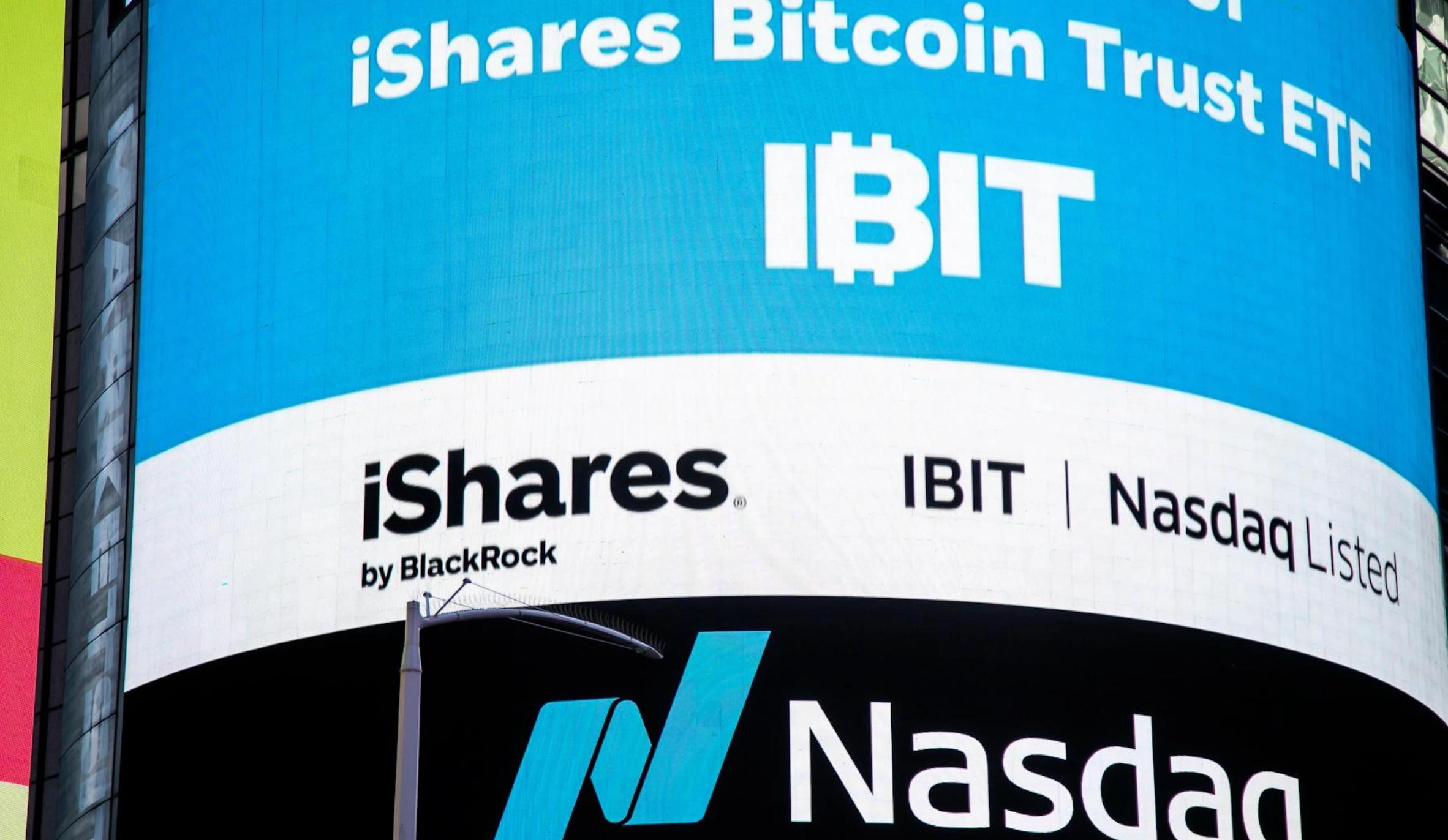
$541 million left BlackRock's iShares Bitcoin Trust in a single session on Thursday, November 19 — the largest single-day outflow IBIT has recorded since its January 2024 launch, eclipsing the previous record of $528.3 million set on January 30, 2026. That one fund accounted for 93% of the $582.3 million that exited all 12 U.S. spot Bitcoin ETFs on the day. The Crypto Fear & Greed Index is currently sitting at 12 — deep inside "Extreme Fear" territory — and November's cumulative net outflows have now reached $3.47 billion, with IBIT alone responsible for roughly $2.9 billion of that total.
The Scale of the Damage
Twelve of November's 14 completed trading sessions have printed net outflows across U.S. spot Bitcoin ETFs. That is not a correction; that is a sustained, systematic liquidation. Thursday's breakdown was stark: beyond IBIT's $541.08 million, Fidelity's FBTC shed $45.87 million, ARK 21Shares' ARKB lost $31.29 million, and Grayscale's GBTC contributed another $13.88 million to the pile. The only counterweights in the entire ecosystem were Morgan Stanley's MSBT, which attracted $49.60 million in net inflows, and WisdomTree's BTCW, which pulled in a rounding-error $327,772. Combined, those two funds recaptured less than 9% of what IBIT alone surrendered.
The pattern holds on the Ethereum side as well. U.S. spot Ethereum ETFs recorded $131.2 million in net outflows on November 19, with BlackRock's iShares Ethereum Trust accounting for $124.2 million — nearly 95% of that day's total. November's cumulative net Ethereum ETF outflows have now reached $972.6 million, closing rapidly on the $1 billion threshold. Add Bitcoin and Ether together, and Thursday's combined crypto ETF outflow hit $713.4 million in a single session, with BlackRock products alone responsible for approximately 93.5% of it. For a fund family that spent most of 2024 and 2025 positioning itself as the institutional on-ramp to digital assets, these numbers represent a sharp and very public reversal of that narrative.
What Is Driving the Selling
The proximate catalyst is Anthropic's Nasdaq listing and the leveraged ETF products being engineered around it. GraniteShares is set to launch its 2x Long Anthropic Daily ETF (AIL) and 2x Short Anthropic Daily ETF (ANS) on November 23, 2026, and the institutional capital hunting AI-linked volatility appears to be rotating directly out of crypto and into that trade. The logic is straightforward: Bitcoin ETFs offered the closest liquid proxy to high-beta technology speculation for a certain class of allocator. Anthropic's public listing removes the need for that proxy. Capital that entered IBIT in late 2024 and early 2025 as a momentum vehicle — not a conviction hold — is now finding a more direct expression of the same theme.
TokenPost's coverage of Thursday's session also points to broader macro de-risking ahead of the holiday week, with thin liquidity amplifying the size of individual redemption events. But the monthly data undermines any reading of this as random volatility. Twelve red sessions out of 14 this month is a regime, not a reaction. Institutional sellers are operating on a schedule, and Thursday's record single-day print suggests at least one major allocator accelerated its exit rather than spreading redemptions across the remaining sessions before Thanksgiving.
What Traders Watch Next
The critical technical level is $61,300. Bitfinex analysts have been explicit: sustained trading below that threshold, combined with daily ETF outflows exceeding $300 million, opens a direct path to Bitcoin's July cycle low of $57,803. Thursday's outflow of $582.3 million cleared that $300 million trigger by a wide margin, and the fact that the third consecutive session of redemptions produced the largest single-day number in IBIT's history suggests that selling pressure is not exhausting itself — it may be accelerating.
The asymmetry for the coming week is uncomfortable. MSBT's $49.60 million inflow on Thursday is the only institutional signal suggesting any buyer of size is stepping in, and Morgan Stanley's distribution network — while meaningful — does not come close to offsetting the structural redemption pressure hitting IBIT. The November 23 launch of the Anthropic leveraged ETFs will be the first real test of whether that rotation thesis holds. If AIL opens to substantial inflows on its first trading day while IBIT simultaneously records its fourth, fifth, or sixth consecutive session of outflows, the rotation narrative becomes the dominant story in crypto markets heading into December. The next level traders must hold on their screens beyond $61,300 is $57,803 — and given the pace of November's cumulative damage, it is no longer a theoretical target.
The Weekly Investor
Daily market analysis for active traders. Free.