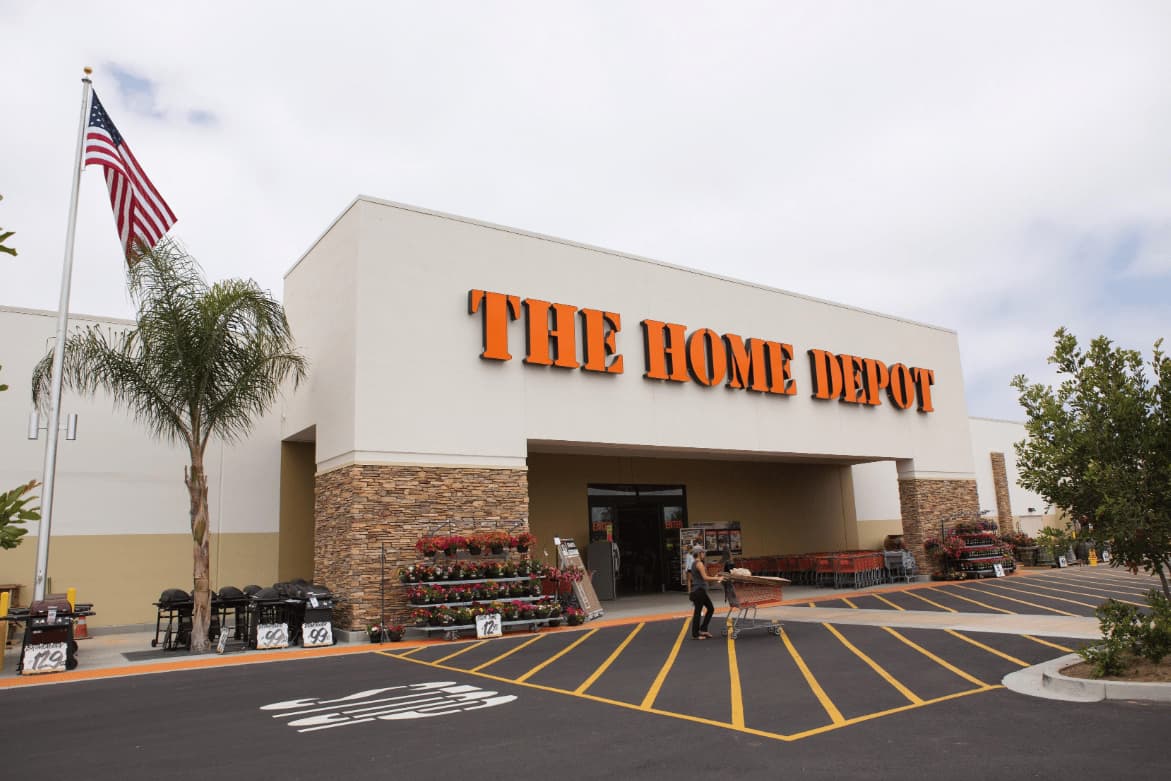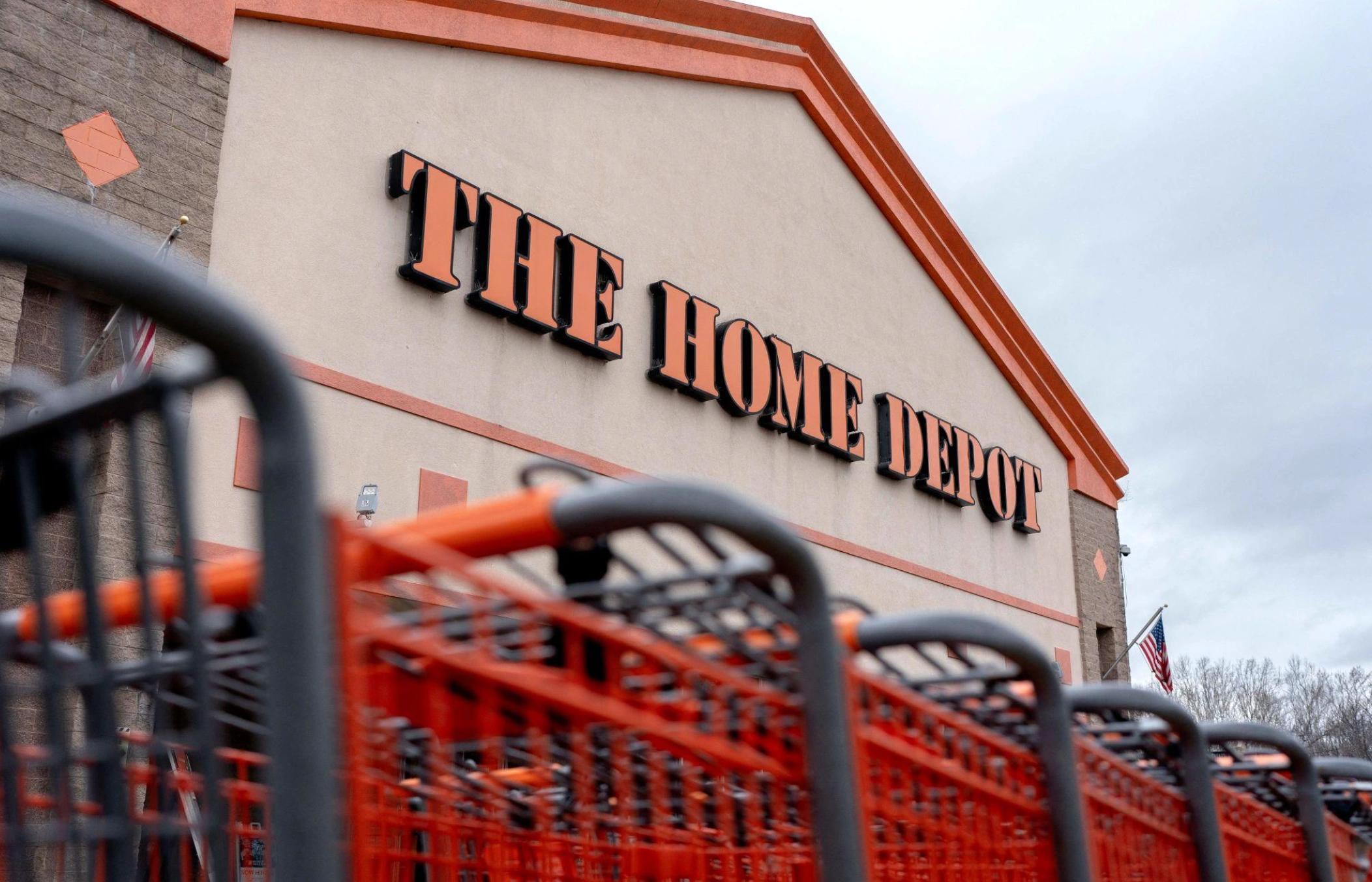
Home Depot Q3: Housing Drag Meets a $42.8B Revenue Test
Home Depot reports Q3 FY2026 pre-market with $3.84 EPS and $42.81B revenue expected as high mortgage rates suppress big-ticket renovation spending.
Key Points
- Home Depot is expected to report $3.84 EPS on $42.81 billion in revenue for Q3 FY2026, with consensus reflecting a housing market still paralyzed by elevated mortgage rates.
- The stock carries 17 Buy ratings and zero Sells with a $387.16 consensus price target, but the real catalyst is any forward guidance that signals a housing activity inflection.
- Traders should watch same-store sales comps and management's language on big-ticket discretionary purchases — the two data points that determine whether HD can sustain its premium multiple into 2027.
Home Depot hits the tape this morning with Wall Street expecting $3.84 in earnings per share on $42.81 billion in revenue for its fiscal third quarter — a modest $0.10 improvement over last year's $3.74 EPS on a revenue base that has struggled to grow meaningfully while the U.S. housing market remains in deep freeze. High mortgage rates have kept existing home sales historically suppressed, and the renovation projects that follow home purchases — kitchens, bathrooms, structural upgrades — have failed to materialize at the volumes HD needs to accelerate beyond low-single-digit growth.
The Housing Trap
The fundamental problem for Home Depot is arithmetic. Existing home sales drive a disproportionate share of HD's high-ticket revenue because new homeowners consistently spend more in the first 24 months of ownership than established residents. With 30-year fixed mortgage rates still elevated — keeping potential sellers locked into sub-3% pandemic-era loans and keeping buyers priced out — transaction volume has remained near multi-decade lows. That turnover drought doesn't kill Home Depot's business; the company's professional contractor channel and maintenance-driven consumables provide a durable floor. But it caps the upside in exactly the categories — large appliances, flooring, cabinetry — where HD earns its best margins.
Full-year FY2026 consensus sits at $14.99 EPS on $171.56 billion in revenue, implying a back-half acceleration that the company will need to either validate or walk back this morning. Home Depot's market cap of $347.88 billion already prices in a recovery cycle that has not fully arrived. The sell-side community remains constructive — 17 Buy ratings, 7 Holds, and zero Sells, with a consensus price target of $387.16 — but that skew reflects hope for a housing inflection more than evidence of one. The company's ability to hold that analyst alignment depends heavily on what management says about forward order trends and whether professional contractor backlogs are building or contracting.
What the Comps Actually Tell You
Same-store sales — the metric that strips away acquired revenue and isolates organic demand — are the number that matters most in this print. Last quarter, HD's comparable sales were negative or flat depending on the geography, reflecting the ongoing pressure from deferred large projects. Any comp figure that turns meaningfully positive this morning would be the first real evidence that the housing market's lock-in effect is starting to thaw — either because rates have eased enough to unlock marginal sellers, or because homeowners are finally accepting that they need to renovate in place rather than wait for a move. Either dynamic is ultimately positive for HD's trajectory, but the magnitude of the comp print will determine whether this is a trend or a one-quarter blip.
The professional segment deserves particular attention. Home Depot has invested heavily in its Pro ecosystem — dedicated sales teams, job-lot quantities, credit programs, and digital tools — and that segment has been the company's growth engine during the retail consumer drought. If Pro revenue shows acceleration this quarter, it signals that commercial construction and renovation activity is picking up slack from the stalled residential market. Conversely, if Pro growth is decelerating alongside weak consumer comps, the bears get the data point they need to argue that the housing malaise has finally spread into the contractor channel. Management's commentary on Pro backlog and quoting activity will be as important as any single reported number.
Guidance Is the Trade
The actual Q3 print matters less than what Home Depot's management says about Q4 and fiscal 2027. The stock is not cheap on a pure earnings basis given the growth constraints — a $347.88 billion market cap against $14.99 in full-year EPS consensus implies a multiple that only works if the housing cycle turns. That's the embedded bet in every HD position, and this morning's call is a progress report on that thesis. If management raises full-year guidance even modestly — or provides qualitative language suggesting that big-ticket project inquiries and professional quoting activity accelerated through October — the stock has room to move toward its $387.16 consensus target from wherever it opens today.
TheStreet's earnings calendar flags HD as one of the two major pre-market reports today alongside Disney, making this morning's macro read on consumer spending and housing particularly dense. Traders in lumber names like Weyerhaeuser, appliance-exposed stocks like Whirlpool, and home-improvement adjacents like Sherwin-Williams and Masco should treat the HD call as a direct read-through. A same-store sales beat paired with raised guidance would likely lift that entire cohort, while a soft comp number with a neutral or lowered outlook would re-price the housing-recovery trade for at least another quarter.
The specific number to watch is the same-store sales figure relative to flat — a print of positive 1% or better would be a meaningful beat relative to the recent trend and could serve as the catalyst for a re-rating. Beyond that, listen for any commentary on the spring 2027 selling season and whether management is seeing early-cycle signals in pro contractor project pipelines. The spring season, which typically generates 35 to 40 percent of HD's annual revenue, will be the first real opportunity for a housing-rate-driven demand surge to show up in the numbers — and management's confidence level about that window, expressed on today's call, is what drives HD's multiple between now and February.
The Weekly Investor
Daily market analysis for active traders. Free.