Germany's Ifo Surprises, But the Real Story Is Manufacturing
Germany's Ifo Business Climate rose to 90.2 in October, beating estimates — manufacturing entered positive territory for the first time in over three years.
Key Points
- Germany's Ifo Business Climate rose to 90.2 in October, beating the 90.1 consensus, with manufacturing's climate balance flipping positive to +1.2 for the first time in over three years.
- The improvement is almost entirely forward-looking — expectations jumped to 91.6 while the current assessment fell to 88.8 — signaling the recovery is real but fragile.
- With the ECB decision landing Thursday, traders should watch Lagarde's forward guidance language for any shift toward a December hike conditioned on continued Eurozone stabilization.
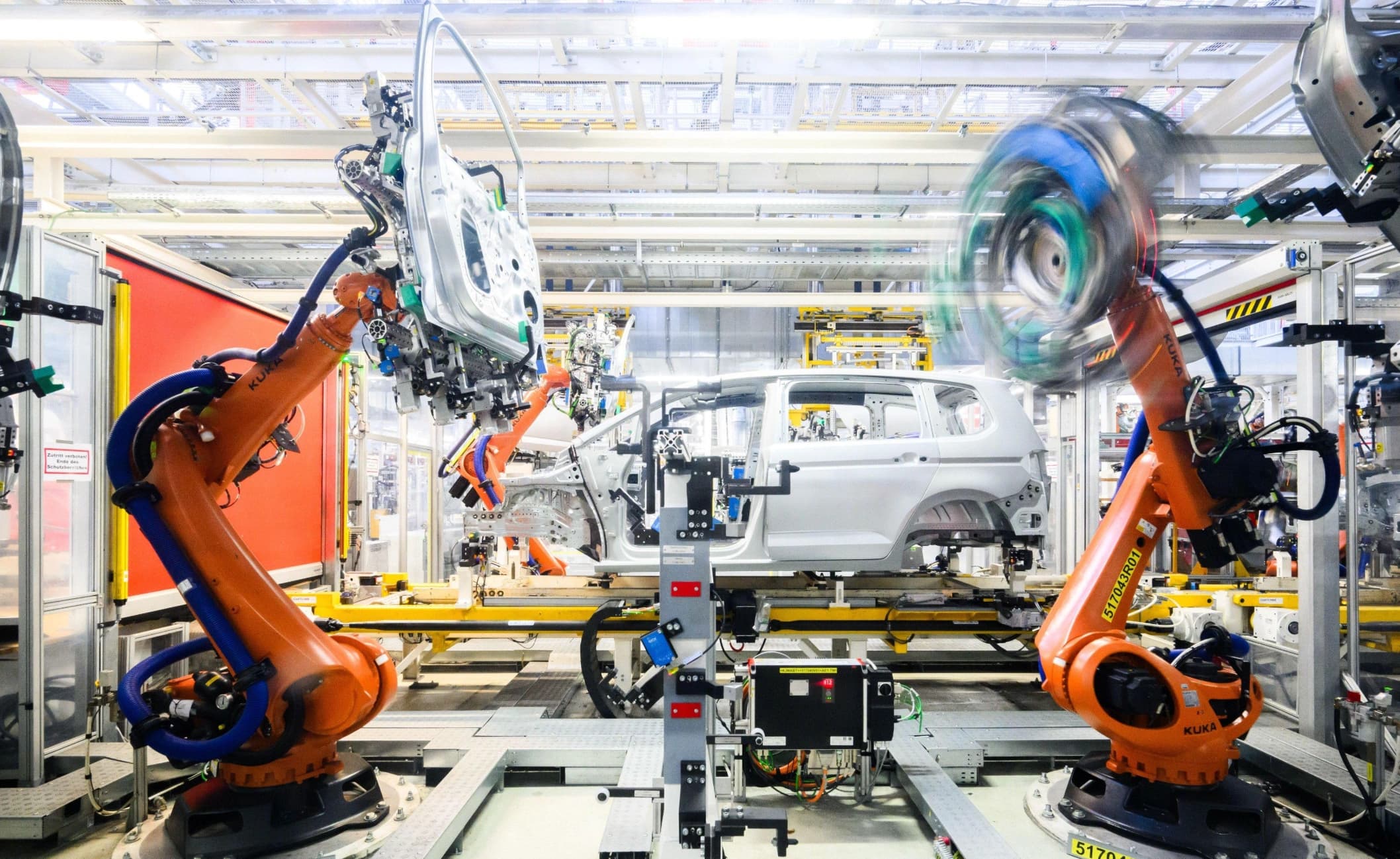
Germany's Ifo Business Climate Index printed 90.2 this morning, nudging past the 90.1 consensus and extending its streak of monthly improvements to six in a row. The headline number is encouraging, but the composition is where the real trade-relevant information lives: manufacturing's climate balance crossed into positive territory at +1.2, up from -2.7 in September — its first positive reading in more than three years. The German economy isn't out of the woods, but something structural may be shifting in its industrial base.
The Manufacturing Signal Traders Should Not Dismiss
For context on why +1.2 in a survey subcomponent matters, consider where German manufacturing has been. The sector spent the better part of 2023 and 2024 in contraction, gutted by the energy price shock that followed Russia's invasion of Ukraine, a structural collapse in Chinese demand for German capital goods, and a domestic cost environment that made exports increasingly uncompetitive. The Ifo manufacturing balance bottomed around -20 in mid-2023 and has been grinding back slowly ever since. Crossing zero — even narrowly — is a psychologically and statistically significant threshold.
What's driving the flip? The Ifo survey notes rising incoming orders and expansion plans, suggesting businesses aren't just feeling better in the abstract — they are responding to actual demand signals. Germany's export-heavy industrial complex is sensitive to global trade volumes, and the sustained expansion in U.S. manufacturing PMIs, which hit a 53-month high of 56.0 in October's flash reading, creates a demand tailwind that German firms are evidently starting to feel. The channel here is direct: stronger U.S. industrial production typically translates into German machinery and capital equipment orders within two to three quarters.
The services component tells a different story and deserves equal weight. The services business climate balance fell from +0.7 to -1.2 in October, driven by deteriorating satisfaction with current business conditions. This is not a minor rounding difference — it's a sign that the domestic consumption story in Germany remains under pressure. Elevated mortgage costs, still-high energy prices relative to pre-2021 norms, and real wage growth that only recently turned positive are all squeezing German household spending. Services businesses live and die on domestic demand, and that demand engine is sputtering even as the factory floor stabilizes.
The ECB Problem Embedded in This Data
The split between manufacturing optimism and services weakness creates an analytical headache for the ECB, and that headache lands squarely on Thursday's decision at 13:15 GMT. The base case remains a hold at the current 2.50% deposit rate — 70 of 73 economists surveyed expect no change. But the Ifo data, particularly the improvement in business expectations to 91.6 from 90.4, will be absorbed by ECB hawks as evidence that the Eurozone's largest economy is stabilizing without additional monetary stimulus. That framing argues against any near-term cut and keeps the December hike conversation alive.
The counter-argument, which the doves on the Governing Council will push, is that the current assessment sub-index at 88.8 — down from 89.5 — reflects an economy that is still underperforming its potential. Germany's GDP has been roughly flat for six consecutive quarters. A services sector that just slipped negative is not consistent with a central bank confident enough to hike into year-end. The French sovereign bond market adds another variable: spreads between French OATs and German Bunds have been widening on political uncertainty, tightening the financial conditions in the Eurozone periphery even without any ECB action. Lagarde cannot ignore that at her press conference Thursday.
The market positioning ahead of the ECB is therefore more interesting than the decision itself. EUR/USD has been trading with a slight offered tone this morning — the Ifo beat was modest enough that it hasn't generated a breakout. Traders looking for directional conviction on the euro should treat Wednesday's FOMC statement as the first real lever: a hawkish hold from Fed Chair Kevin Warsh that signals December tightening would pressure EUR/USD lower regardless of what Lagarde says Thursday, because the dollar repricing would dominate. If the Fed is neutral Wednesday and the ECB is neutral Thursday, the cross stays rangebound and the DAX becomes the cleaner expression of today's Ifo optimism.
What Traders Watch Next
The sequencing of this week's events matters enormously for how the Ifo data ultimately gets priced. On its own, a German business survey beating by 0.1 points doesn't move markets. But it is one piece of a mosaic being assembled in real time. If Thursday's U.S. Q3 GDP advance estimate prints at or above the 3.2% annualized consensus — on top of a U.S. manufacturing PMI at a 53-month high — the global growth narrative strengthens in a way that directly benefits German exporters. Manufacturing at +1.2 today could look prescient by Friday if the demand data confirms the order-book signals.
The specific level to watch on the DAX is the 19,800 area, which has acted as a technical reference point through October. A clean break and hold above that zone, combined with a benign ECB press conference Thursday and a U.S. GDP beat, would give the index room to test 20,200 before month-end. Conversely, if Warsh signals a December hike more forcefully than expected Wednesday — pushing U.S. yields higher and the dollar stronger — European equities face a headwind that no amount of Ifo optimism can fully offset. The ECB's Thursday decision and Friday's Bank of Japan meeting close out a 72-hour window that will define the macro setup for Q4. German manufacturing may have just turned the corner, but the corner is crowded with oncoming traffic.
The Weekly Investor
Daily market analysis for active traders. Free.