German CPI Firms; ECB's Next Move Gets Harder
Germany's September HICP is expected at +3.3% YoY, up from +2.9%. A confirmed re-acceleration tightens the screws on the ECB ahead of its next rate decision.
Key Points
- Germany's September final HICP is expected to confirm re-acceleration to +3.3% YoY from +2.9%, with the monthly reading jumping to +0.6% from +0.2%.
- The ECB already hiked 25 bps at its September meeting citing a deteriorating inflation outlook — a confirmed German re-acceleration removes any remaining case for a pause.
- Traders should watch Thursday's G20 finance ministers' sideline session in Bangkok and ECB speakers Pill, Greene, and Breeden for signals on the pace of further tightening.
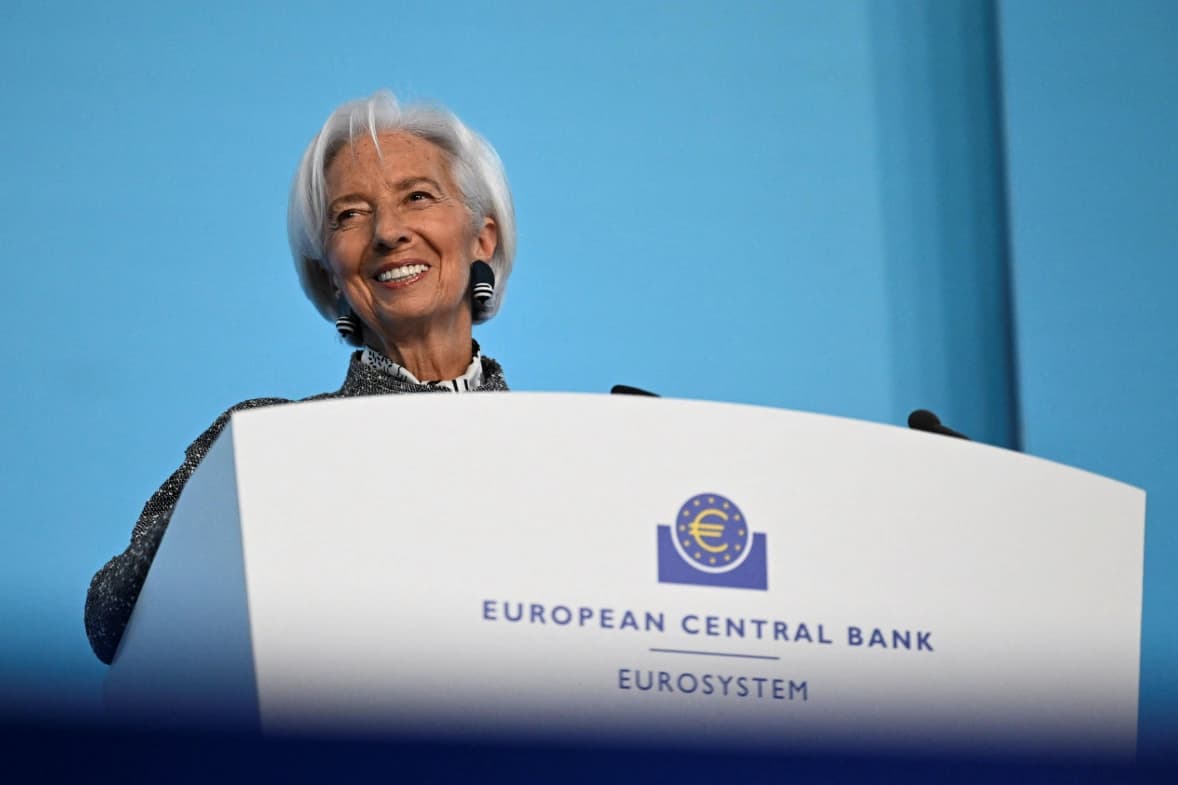
Germany's September inflation data — the final reading of the HICP hitting screens today — is expected to confirm what the preliminary figures already flagged: European price pressures are re-accelerating, not easing. Consensus calls for the Harmonised Index of Consumer Prices to print at +3.3% YoY, up from August's +2.9%, with the monthly gain jumping to +0.6% from just +0.2%. Domestic CPI is tracking the same trajectory, also expected at +3.3% YoY. For the ECB, which hiked 25 bps as recently as September while explicitly citing a deterioration in the inflation outlook, a confirmed German re-acceleration is not a surprise — it is a confirmation that the committee's instincts were correct and its work is unfinished.
Europe's Inflation Problem Isn't Unique — It's Synchronized
What makes today's German CPI print more than a regional data point is the global context in which it lands. The same energy-cost dynamics driving the expected re-acceleration in U.S. headline CPI on Wednesday are operating across Europe, and Germany — the Eurozone's largest economy — is absorbing those shocks with less domestic fiscal buffer than it had during the post-pandemic inflation surge. The +0.6% MoM expected reading for September is three times August's pace. That is not a rounding error or seasonal noise. It is a meaningful step-up that, if sustained into Q4, would push German annual inflation further above the ECB's 2% target and keep pressure on the Governing Council to maintain its tightening bias through year-end.
The ECB's deposit rate currently sits in the range of 2.25%–2.65% following the September hike. The council's September statement was unambiguous in framing the move as a response to deteriorating inflation dynamics rather than a precautionary top-up. That framing matters, because it telegraphs that future decisions will be reactive — tied to incoming data — rather than pre-scheduled. Today's German CPI is exactly the kind of incoming data that shapes those reactions. ECB speakers scheduled this week include Kocher, Simkus, Pereira, and Moulin on Wednesday, followed by Pill, Greene, and Breeden on Thursday. Traders should pay particular attention to Pill and Greene, both of whom have historically provided the clearest forward policy signals among the ECB's communication roster.
The IMF's World Economic Outlook, released today in Bangkok on the sidelines of the annual IMF/World Bank meetings running through October 18, will also carry direct relevance for European macro positioning. The IMF has been progressively revising its inflation forecasts upward across developed markets, and any signal in today's WEO that the Fund sees European price pressures as more persistent than previously modeled would reinforce the ECB tightening narrative and add institutional weight to hawkish council members' arguments.
The Bank of England Adds Another Layer
Across the Channel, the Bank of England is navigating its own version of the same problem, and today's BoE commentary adds texture to the pan-European picture. BoE Governors Greene and Dhingra are both scheduled to speak today, offering two contrasting perspectives inside a committee that has been genuinely divided over the pace of tightening. The BoE's current rate stands at 3.75%, with the next scheduled decision on October 28 — one day after the Fed's October 27–28 meeting closes. That sequencing means European and U.S. central bank decisions will land almost simultaneously, creating a compressed window of policy risk for macro traders carrying cross-currency positions.
Greene has generally aligned with the more hawkish camp inside the MPC, emphasizing that services inflation remains sticky and that wage growth — while moderating — has not decelerated fast enough to be consistent with a timely return to the 2% target. Dhingra has occupied the opposite position, consistently arguing that the lagged effects of previous hikes have not yet fully filtered through the real economy and that additional tightening risks overtightening into a slowdown. Their appearances today serve as a preview of the internal MPC debate that will determine whether October 28 delivers a 25-bps hike, a hold, or — in the most dovish scenario — the first signal of a pivot. Given that UK headline inflation has remained stubborn and services prices have not broken convincingly lower, Greene's hawkish read looks better supported by the data.
The broader point for traders running European macro books is that the BoE and ECB are on paths that increasingly resemble the Fed's trajectory: a September hike in both cases, data-dependent guidance, and incoming prints that are moving in the wrong direction for anyone hoping the tightening cycle is over. Germany's CPI today, UK speakers today, ECB officials Wednesday and Thursday, and the G20 sideline meetings in Bangkok Thursday all feed into the same question: how much further do European rates need to go, and how fast?
What Traders Watch Next
The immediate trade is straightforward: a confirmed +3.3% YoY German HICP today removes the last credible argument for an ECB pause at its next meeting and puts further euro-area tightening on the table before year-end. That is euro-supportive on a rate-differential basis against currencies where tightening cycles are perceived as more advanced, but it also compresses growth expectations for European equities, particularly rate-sensitive sectors. Watch the EUR/USD reaction to today's German print and then again to Wednesday's U.S. CPI — the pair is essentially a live referendum on which central bank the market believes has more tightening left in the tank.
The specific date that matters most for European macro positioning beyond this week is October 28 — the simultaneous arrival of the BoE decision and the day after the Fed's meeting closes. According to market participants tracking rate differentials across the G10, the two-week window between now and October 28 is when the repricing of European terminal rates will accelerate, particularly if U.S. CPI Wednesday prints hot and validates the global re-acceleration narrative. The Federal Reserve's own communications this week, including Chair Warsh's IMF fireside chat later in the week, will also set the tone for how aggressively European central banks feel they can tighten without running ahead of the policy anchor set in Washington. If global central banks are moving together — and today's data suggests they are — the floor for rates across the developed world just got higher.
The Weekly Investor
Daily market analysis for active traders. Free.