Fed Minutes Signal December Hike — What Traders Must Know
FOMC Minutes confirm another rate hike likely by year-end. Fed funds target at 3.75%-4.00% with dot plot raised to 4.1%. What September CPI means for your trades.
Key Points
- The September FOMC Minutes, released October 7, show most officials judge another 25-basis-point hike "probably appropriate" before year-end, with the median dot plot rate raised to 4.1% for 2026.
- A resilient economy running at an estimated 3.7% annualized GDP in Q3, combined with core PCE revised up to 3.4%, is forcing the Fed's hand despite a unanimous September vote masking real internal divisions.
- September CPI on October 14 is the decisive print — a core MoM reading above 0.2% reopens October as a live meeting and puts 4.25% back on the table before year-end.
The Federal Reserve's September meeting minutes, released Wednesday, delivered one unambiguous message to markets: the hiking cycle is not over. With the fed funds target now at 3.75%–4.00% following a unanimous 12-0 vote, most officials signaled a further 25-basis-point move is likely before December 31 — and the updated dot plot backs them up, with the 2026 median jumping to 4.1% from 3.8% just three months ago.
The Fed's Inflation Problem
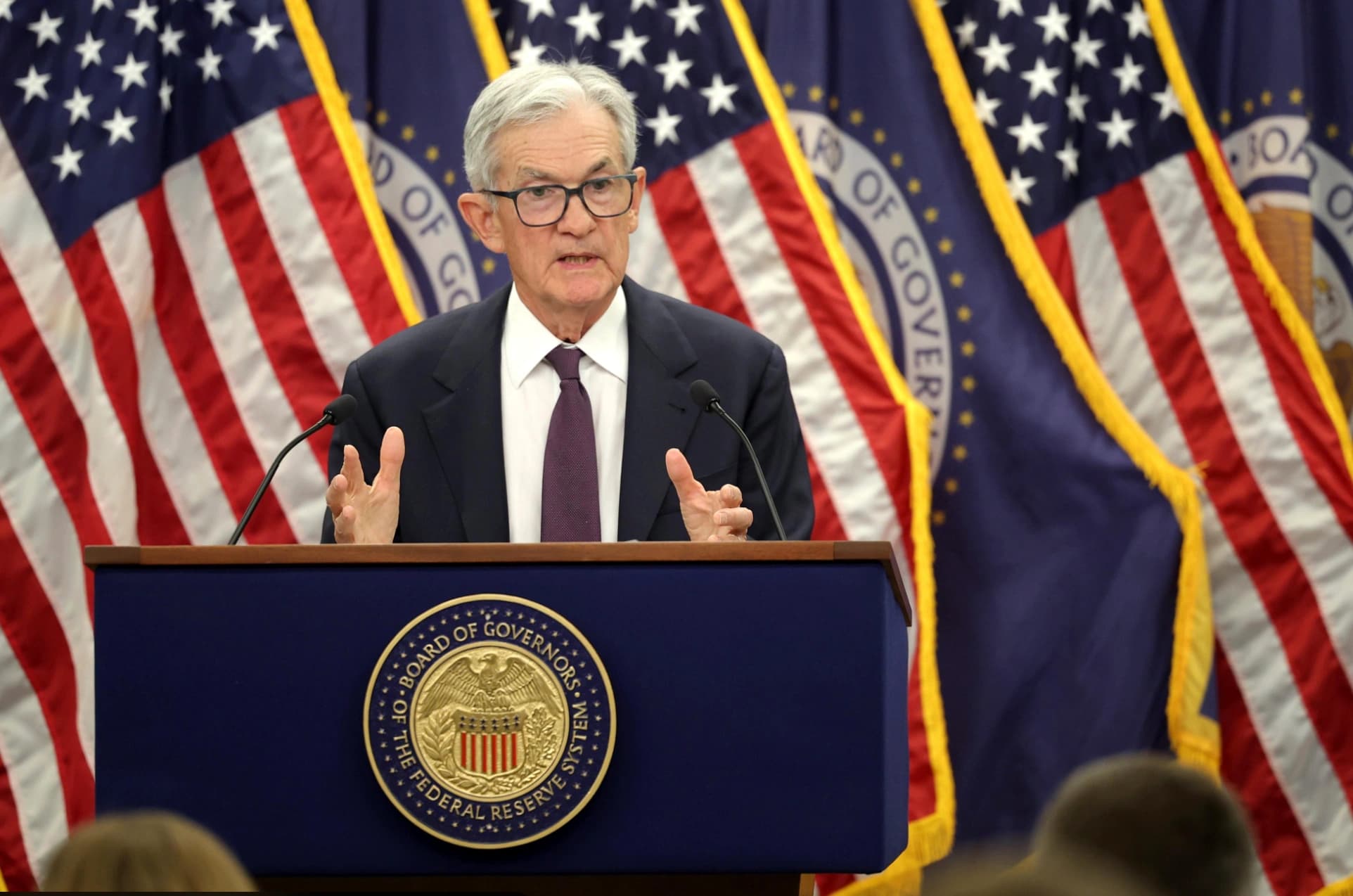
The internal debate the Minutes reveal is more consequential than the headline vote suggests. While all 19 officials backed September's hike, the fault line is clear: one camp wants to move again quickly to crush inflation that has proven stickier than any projection suggested; the other prefers patience, arguing that cumulative tightening is still working through the economy with a lag. Chair Warsh's post-meeting framing — that the hike "removed a dose of accommodation" rather than created restrictive policy — lands squarely on the hawkish side of that debate and gives the inflation hawks rhetorical cover for pushing harder in November or December.
The numbers justify their concern. Headline CPI stood at 3.4% year-over-year in August, more than a full percentage point above the Fed's 2% target. Core CPI at 2.4% looks more manageable on the surface, but core PCE — the gauge the Fed actually targets — was revised up to 3.4% for 2026 against a prior projection of 3.3%. That upward revision, however small in isolation, matters enormously in context: it tells policymakers their models have been systematically underestimating inflation persistence, and it raises the credibility cost of any premature pause. When the staff revises up and the data keeps coming in hot, the burden of proof shifts decisively onto doves to justify holding.
The Minutes also flagged that AI investment could add a fresh demand-side pressure the Fed's models haven't fully priced. That's not a throwaway observation — it's a signal that officials are thinking about whether productivity gains from AI deployment might paradoxically fuel inflationary demand before they deliver disinflationary supply. If that thesis gains traction inside the Eccles Building, the neutral rate assumptions embedded in the dot plot could shift upward again, making even 4.1% look insufficiently restrictive.
What the Data Actually Shows
The macro backdrop the Minutes were reacting to is, by any honest reading, not the picture of a slowing economy that would give the Fed permission to stand down. GDPNow estimates Q3 2026 growth at 3.7% annualized, a stunning acceleration from 2.2% in Q2 and well above any trajectory consistent with cooling inflation at the pace the Fed needs. Retail sales surged 1.1% month-over-month in August, rebounding sharply from a -0.5% contraction, and the unemployment rate ticked up only marginally — to 4.2% from 4.1% in September — offering no evidence of meaningful labor market softening.
Treasury markets absorbed all of this with yields pressing higher. The 30-year yield is at its highest level since 2002, a fact that carries both signal and consequence: signal, because the bond market is pricing a longer period of elevated rates than many equity strategists have built into their models; consequence, because the repricing of the long end tightens financial conditions independently of Fed action, which is precisely what the hawks want but also what makes the economy more fragile at the margin. The interplay between Fed signaling and long-end repricing is now the central dynamic in U.S. rates, and any upside CPI surprise on October 14 could send the 10-year through levels not seen in years.
Market pricing as of this morning gives the October 27–28 meeting only a 20% probability of a hike, with 80% odds of at least one move before year-end concentrated in December. ING's analysis reinforces this base case, arguing that October remains a hold provided core CPI prints at the consensus 0.2% MoM on the 14th. That's a narrow path. The dollar is reflecting this tension: DXY sits near 101.9, close to its 2026 high of 102.53, and ING explicitly notes that risks for the dollar remain skewed to the upside — meaning a hot CPI print doesn't just move rates, it squeezes any short-dollar position built on the assumption the Fed is done.
What Traders Watch Next
The next six days are the only ones that matter for near-term positioning. September CPI on October 14 is the fulcrum event. A 0.2% core MoM print — roughly 2.4% annualized — keeps the October hold consensus intact and allows the market to maintain its December-as-the-terminal-hike narrative. That scenario is mildly risk-positive and negative for the dollar at the margin. A 0.3% print — just one tenth hotter — reactivates October as a live meeting, forces a reassessment of whether the dot plot median of 4.1% is itself underpriced, and likely sends yields and the dollar sharply higher while pressuring equities and credit. The asymmetry here favors caution on the long side of rate-sensitive assets ahead of Wednesday's release.
The October 29 convergence of the Q3 GDP advance estimate and September PCE with the FOMC rate announcement creates a genuinely unusual event-risk cluster. If GDP prints near GDPNow's 3.7% forecast and PCE remains sticky, the Fed will face a politically and analytically difficult choice between hiking into a strong economy or validating accusations that it lacks inflation-fighting resolve. Warsh's "not yet restrictive" framing suggests he would vote to hike. The 2027 dot at 4.1% — unchanged from the new 2026 median — tells you officials see rates staying elevated for at least 15 more months, which means even the December hike base case isn't the end of the story; it's just the next chapter.
For traders positioned in Treasuries, equities, or the dollar, the Fed's rate decision page on October 28 at 2:00 PM ET is the hard deadline. Before that, September CPI at 8:30 AM ET on October 14, followed by PPI and Retail Sales on October 15, will define the range of outcomes. Watch the 10-year yield: a sustained break above its current level toward 4.6% would signal the bond market is moving ahead of the Fed, not following it — and that is the scenario in which the equity risk premium math breaks down fastest.
The Weekly Investor
Daily market analysis for active traders. Free.