Fed Meets Tuesday: What Warsh Says Wednesday Moves Markets
The FOMC holds its October meeting Tuesday–Wednesday. A hold at 4.00% is certain — what Chair Warsh says about December is the only trade that matters.
Key Points
- The FOMC is universally expected to hold rates at 4.00% Wednesday — the only market-moving question is whether Warsh's press conference signals a December hike or an extended pause.
- September CPI ran at 3.7% YoY and PMI selling-price inflation just hit a four-year high, giving hawks concrete ammunition while NFP at +29,000 complicates the picture.
- Thursday's Q3 GDP advance estimate (consensus 3.2%) and Core PCE print (consensus 3.0% YoY) arrive after Warsh speaks, concentrating the week's real volatility in a 24-hour back-half window.
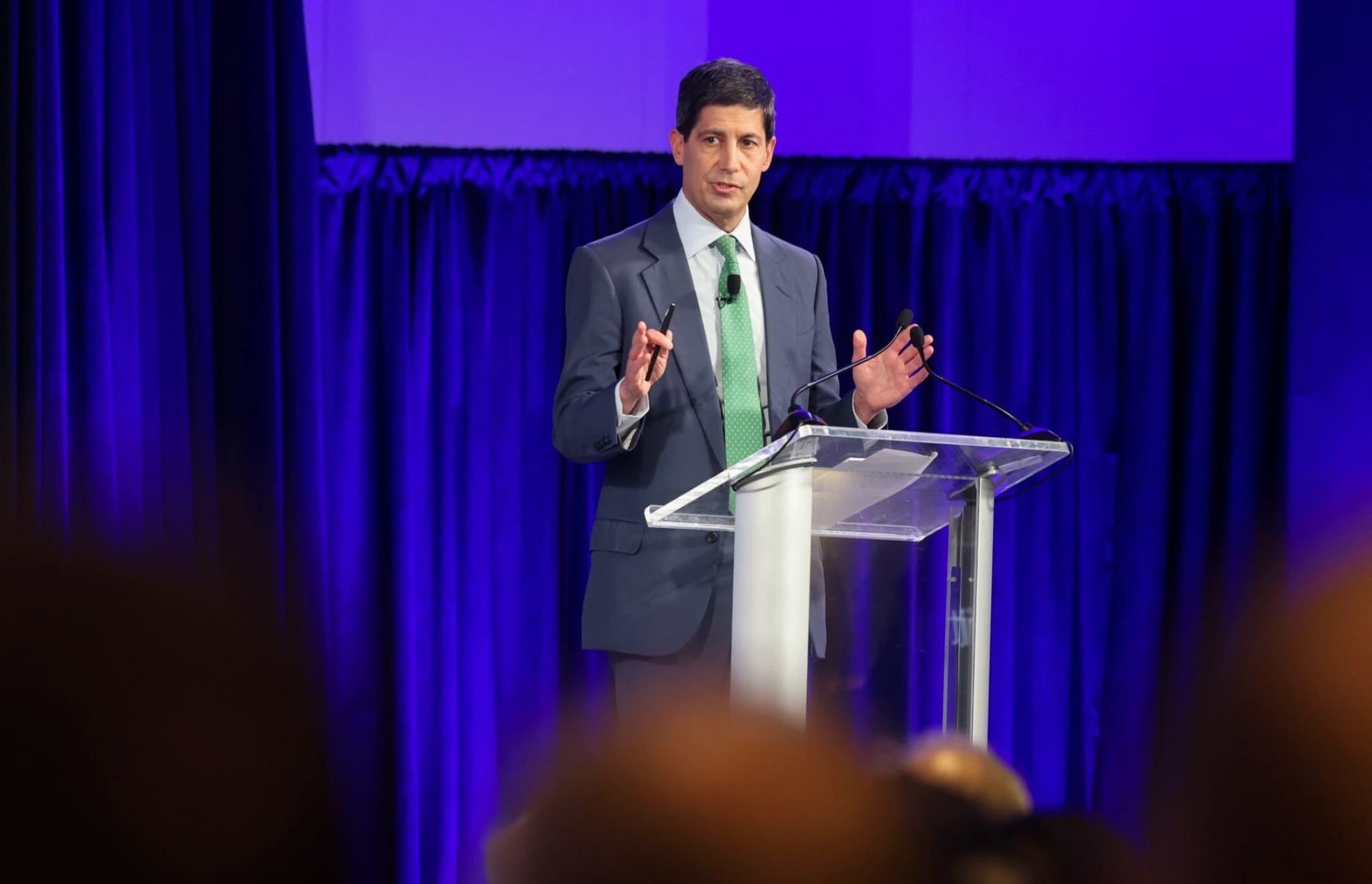
The Federal Reserve's October meeting begins tomorrow, and the rate decision Wednesday at 2:00 p.m. ET is the least interesting part. Nobody is pricing a move: the Fed funds rate stays at 4.00%. What the bond market, the dollar, and the S&P 500 are actually trading is 45 words — specifically, whatever Fed Chair Kevin Warsh says at 2:30 p.m. ET that either opens or closes the door to a December hike. That nuance, given where the inflation data sits right now, is worth hundreds of billions in notional repositioning.
The Data the Fed Walks In With
The macro backdrop heading into Tuesday's opening session is genuinely uncomfortable for a central bank trying to declare victory on inflation. September CPI accelerated to 3.7% year-over-year, up from 3.4% in August, with the monthly gain of 0.6% also running hotter than August's 0.4%. That trajectory — re-acceleration, not deceleration — is the core tension. The Fed's preferred measure, Core PCE, has been running cooler, with September's reading expected to print 3.0% year-over-year Thursday, down from 3.1%. But the directional divergence between CPI and PCE is itself a conversation the FOMC will have in that room.
The labor market reading is more complex. Non-farm payrolls for September came in at just +29,000, a dramatic deceleration from August's +133,000 and the weakest print in years. That number alone would normally give the Fed cover to hold and sound dovish. But the unemployment rate ticked up only marginally to 4.2%, and University of Michigan short-term inflation expectations surged to 4.7% — a level that, if it persists, risks becoming self-fulfilling. Warsh has shown no appetite for letting expectations drift. The PMI data compounds the inflation signal: the October flash manufacturing PMI hit 56.0, its highest in 53 months, and the selling-price component accelerated to its fastest pace since August 2022. Businesses are raising prices again, and doing so with confidence.
Consumer sentiment provides an additional data point that Warsh will not want to dismiss publicly. The University of Michigan's final October reading slipped to 48.0, with the current conditions index dropping 8.3% on affordability concerns. Real purchasing power erosion is showing up in survey data even as headline spending figures — September retail sales at +0.8% month-over-month — remain positive. The Atlanta Fed's GDPNow model has Q3 tracking at 3.5% annualized, above even the already-solid consensus of 3.2%. An economy growing at 3.5% with CPI at 3.7% and PMI selling prices at a four-year high is not an economy that is obviously finished with rate hikes.
The Hawkish Hold Versus the Dovish Hold
The distinction between a hawkish hold and a dovish hold is not semantic — it is the difference between 10-year Treasury yields at 4.60% and 4.90% by Friday, and between the dollar index extending recent gains or reversing. A hawkish hold keeps December live: Warsh signals that the committee is monitoring data closely, that inflation remains above target, that the labor market is not so weak as to preclude further action, and that the bar for a December move is achievable if upcoming prints disappoint. The statement likely retains language about "additional firming may be appropriate." That is a green light for bond bears.
A dovish hold — which the market would interpret as Warsh downplaying December — requires him to lean heavily on the +29,000 NFP figure and to express confidence that the CPI re-acceleration is transitory within the context of a broader disinflation trend. The problem is that September's CPI print is difficult to wave away, and PMI selling-price inflation running at a four-year high makes "transitory" a word Warsh almost certainly will not use. His track record since taking the chair has been hawkish-leaning: he has repeatedly emphasized that the Fed will not declare victory prematurely, and he has shown an explicit preference for waiting for sustained evidence of disinflation before pivoting language. The asymmetry of risks here favors a hawkish hold.
The bond market is the right instrument to watch for the initial signal Wednesday afternoon. The 10-year Treasury yield is the fulcrum. A Warsh press conference that markets read as opening the door to December will push the 10-year toward the 4.85-4.90% range — a zone that would start to create measurable stress in rate-sensitive equity sectors including utilities, real estate, and high-duration technology. Conversely, a neutral-to-dovish tone that closes the December door sends yields lower, the dollar softens, and the S&P 500 likely catches a bid in the final 90 minutes of Wednesday's session. Positioning into the close Wednesday will be the tell for how institutional money is reading the statement in real time.
Thursday Is the Real Gauntlet
Here is the sequencing problem that makes this week structurally unusual: the Fed speaks Wednesday afternoon, and the two most important inflation data points of the month — Core PCE and Q3 GDP — don't land until Thursday morning. Warsh will be making his forward guidance call without knowing what those numbers say. If Core PCE prints at 0.2% month-over-month as expected Thursday, that's a soft landing for the data and Warsh's hold looks prescient. If it prints at 0.3% or above — matching or beating September's elevated reading — the Fed statement will look immediately stale and hawkish traders will pile in, pushing December hike odds sharply higher.
Q3 GDP at a 3.2% annualized consensus is the other Thursday variable. The Atlanta Fed's 3.5% tracking estimate suggests upside risk. A GDP print above 3.5% alongside a Core PCE surprise to the upside would effectively force the market to price a December hike regardless of whatever Warsh said Wednesday — because the data would be speaking louder than the guidance. That kind of violent re-pricing, compressed into Thursday morning, is the tail scenario traders need to have a view on before Wednesday's close. According to recent research on Fed sequencing and volatility concentration, weeks where the Fed statement precedes key inflation data have historically produced outsized Thursday-Friday ranges compared to weeks where data leads the statement.
The specific trigger to monitor Thursday is the 10-year yield at 4.90%. A sustained print above that level — driven by a hot PCE or GDP beat — would be the clearest signal that December is live and that the back half of Q4 carries more rate risk than the equity market is currently pricing. The FOMC statement releases at 2:00 p.m. ET Wednesday, October 28, with Warsh at the podium 30 minutes later. Between now and then, today's Chicago National Activity Index and Dallas Fed Manufacturing print — the latter previously at a solid +9.8 — are the only U.S. data in the queue. Neither will move the needle. The week is about Wednesday afternoon and Thursday morning, in that order, and the gap between them is where the real trade lives.
The Weekly Investor
Daily market analysis for active traders. Free.