ETH Breaks Down, XRP Pops on Swell — Altcoin Reality Check
Ethereum hit $2,278 support with nine straight ETF outflow days. XRP's Swell bounce and Solana's $100 test define Tuesday's altcoin picture.
Key Points
- Ethereum is trading at approximately $2,304–$2,327 — pinned against the lower Bollinger Band with every short- and medium-term moving average stacked overhead — after nine consecutive trading sessions of ETF net outflows totaling roughly $700 million.
- XRP's +2.01% gain to $1.30 is tied to Ripple's Swell conference in New York (Oct. 27–29) and final OCC charter approval, but historical data shows XRP has declined in 5 of 6 past Swell months with rallies typically arriving weeks later.
- Watch $2,278 in ETH and $100 in SOL — two psychological floors whose simultaneous breach would signal a broader altcoin breakdown heading into the FOMC decision Wednesday.
Ethereum is trading at $2,304 — and the technical picture is about as unflattering as a chart can look without triggering outright panic. Every moving average is above the current price, the MACD reads -22.134, and nine straight sessions of ETF outflows have drained roughly $700 million from US spot Ether funds since September 29. Tuesday's late-session bounce to $2,327, up +1.01% at 20:55 ET, was tactical short-covering — not a structural turn.
Ethereum's Technical Trap
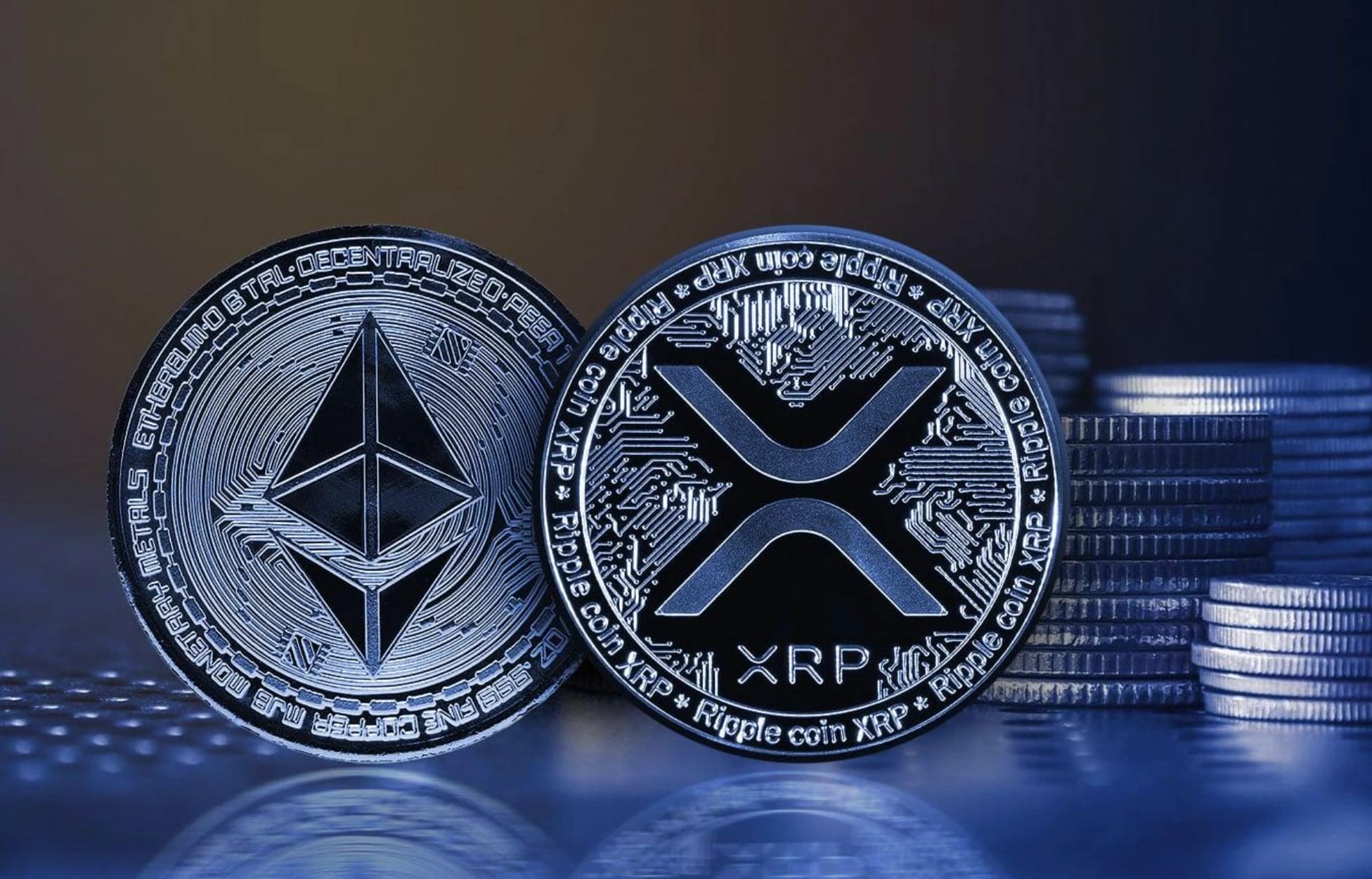
The configuration on the ETH chart is worth understanding precisely because of what it means for the risk/reward calculus. Trading pinned against the lower Bollinger Band with all short- and medium-term moving averages stacked overhead is not merely a bearish signal — it is a technical trap. Any bounce gets immediately sold by traders who bought at higher levels and are relieved to get out near breakeven. The momentum indicators confirm the picture: RSI at 37.827 places ETH in the lower half of the neutral zone, approaching but not yet at oversold territory where contrarian buyers typically step in at scale. Williams %R at 81.622 is already flashing oversold on that measure. The divergence between indicators means the market hasn't reached a clean capitulation point — which is frequently the worst place to be, too weak for sustained rallies, not weak enough to trigger the flush that clears the deck.
The 24-hour range of $2,293.20 to $2,356.33 on Tuesday encapsulates the problem. The session didn't test the critical $2,278 support floor, but it didn't get anywhere near the $2,455 resistance level that would need to break for bulls to have any constructive argument. Market cap sits at $283.51B, down -1.47% on the day. The seven-day loss of -4.88% and the monthly loss of -13.99% from $2,686 tell the medium-term story clearly: this is a sustained drawdown, not a sharp correction that precedes a V-shaped recovery. Ethereum down 14% in a single month while Bitcoin is down 4% in the same period represents significant underperformance — and that spread matters to institutional allocators who benchmark relative performance across the two largest assets.
The ETF data sharpens the concern. US spot Ethereum ETFs have recorded net outflows for nine consecutive trading sessions, a streak that began September 29 and has removed roughly $700 million from the products. October alone accounts for well over $500 million of that figure. The headline number across three weeks is over $1.1 billion in net outflows, led by BlackRock's Ethereum fund — the same institution that is currently the sole source of positive Bitcoin ETF flows. The irony is precise: BlackRock is simultaneously the strongest institutional bid in BTC and the largest source of outflows in ETH. What that reflects is a deliberate reallocation — or a deliberate underweight to Ethereum specifically — rather than a broad crypto exit.
XRP's Conference Pop and What History Says
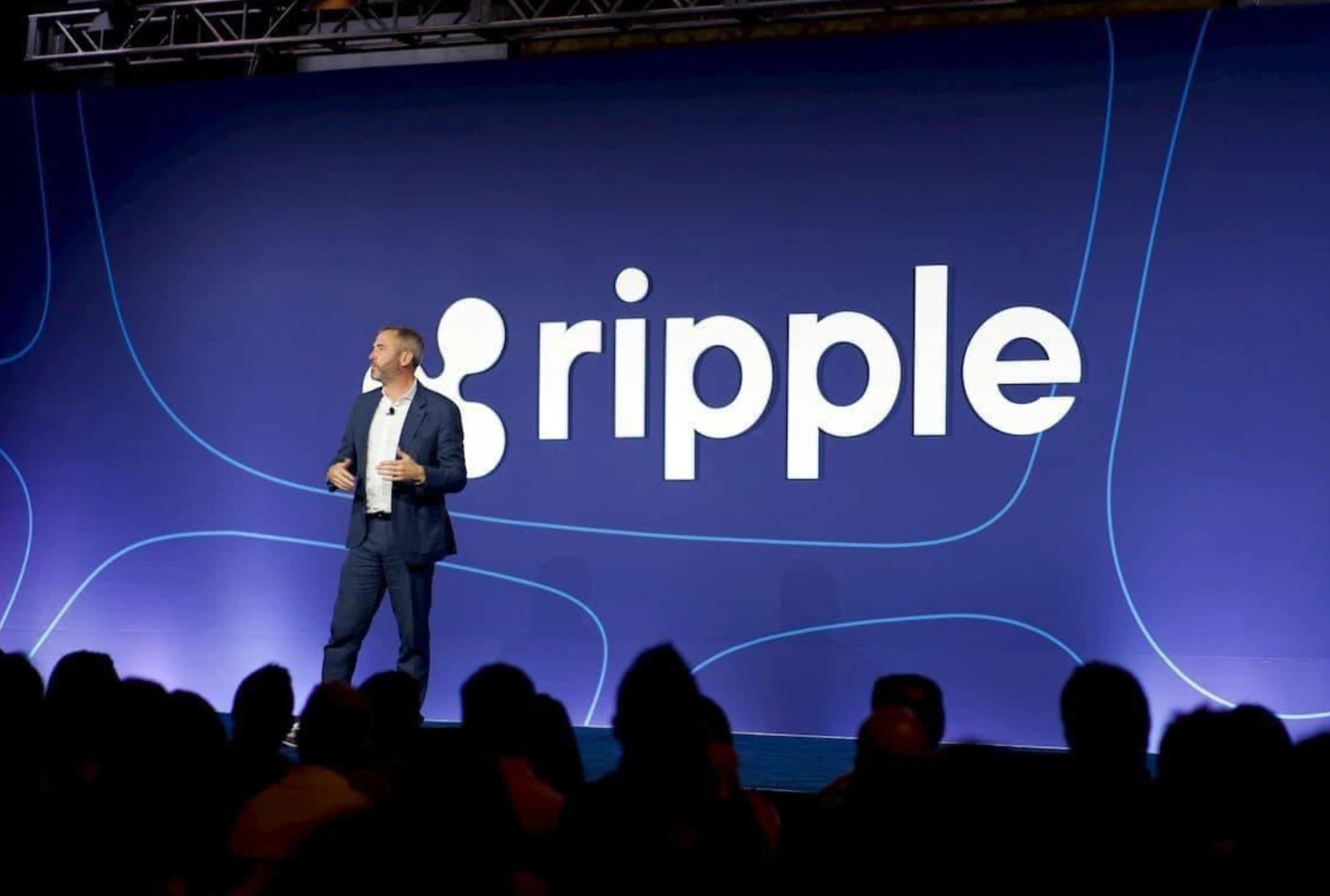
The one green number in Tuesday's major altcoin table belongs to XRP, up +2.01% to $1.30. The catalyst is visible and specific: Ripple's Swell conference opened in New York on October 27 and runs through October 29, and Ripple received final OCC charter approval, with CEO Brad Garlinghouse describing it as a "Revolution From Within." Those are real, meaningful developments. The question is whether the price action that follows will match the narrative momentum.
History argues for caution on duration. XRP has declined in 5 of 6 past Swell conference months, with its biggest post-Swell rallies typically arriving not during the event but in the weeks following it. The pattern makes intuitive sense: conference announcements are pre-positioned, meaning traders buy the rumor, the event arrives, and profit-taking compresses the price regardless of the quality of the news. The OCC charter is a genuinely significant regulatory milestone — it positions Ripple as a federally chartered institution operating with a legitimacy that few crypto-native firms can claim — but that structural benefit plays out over quarters, not hours.
At $1.30, XRP is still trading well below the levels it reached during the late 2024 and early 2025 rallies, which pushed the asset into the $2.50–$3.00 range at peak. A +2.01% single-session move on conference news does not change the medium-term technical picture. Resistance above $1.30 is dense from prior distribution. Traders who bought the Swell anticipation over the prior week and are now sitting on gains have a rational incentive to exit into this pop — which is precisely what history suggests they tend to do.
Solana, the Alpenglow Upgrade, and the $100 Test
Solana's -0.57% slide to $99.96 is the most psychologically loaded data point in Tuesday's altcoin snapshot. The $100 level is not a technical support in the traditional sense — there's no massive on-chain order book defending it — but it functions as a sentiment threshold. When SOL trades below $100, headlines change, retail positioning shifts, and the narrative that Solana is a credible Ethereum alternative at scale becomes harder to sustain in the short term.
The Alpenglow upgrade completed this week is a legitimate technical catalyst. Alpenglow is a significant consensus mechanism improvement designed to reduce finality times and improve validator performance — the kind of infrastructure work that institutional developers and application builders cite when choosing which L1 to build on. That it's arriving while Ethereum is simultaneously delaying a testnet activation creates a direct comparative advantage on the development roadmap. But protocol upgrades do not move prices on a 24-hour basis when macro headwinds are this heavy. Solana ETFs lost $25 million across five consecutive negative sessions, with the bulk coming from Bitwise's BSOL. The product is bleeding regardless of the underlying network's technical progress.
The broader altcoin picture reinforces what the individual data points suggest. DOGE at $0.07734 (+0.93%), LTC at $56.49 (+0.57%), and BNB at $735.71 (-0.20%) are all treading water. AVAX at $8.80 (-0.31%) represents one of the more dramatic medium-term destructions of value in the top-tier altcoin space — a name that was trading above $40 during peak cycle enthusiasm now sits below $9. TRON's -0.74% to $0.3274 rounds out a session where the only genuine green outside XRP was noise-level movement. Wednesday's FOMC decision will determine whether $2,278 in ETH and $100 in SOL hold as floors or become the next lines in the rearview mirror — if Powell delivers any tone that extends the elevated rate environment, both levels get tested before the week is out.
The Weekly Investor
Daily market analysis for active traders. Free.