Dow Breaks 50K as AI Selloff Hits Six Straight Sessions
The Dow closed below 50,000 for the first time since June as the Anthropic IPO triggered a historic sell-the-news rout. S&P 500 down 5% on the week.
Key Points
- The Dow closed at 49,097.06 Thursday — down 1,101 points and below 50,000 for the first time since June — capping a sixth consecutive session of losses.
- Anthropic's record-breaking $81.3 billion IPO became a sell-the-news catalyst of historic proportions, dragging semiconductors and the broader AI trade lower instead of reviving them.
- Watch 48,000 on the Dow and 25,000 on the Nasdaq as the two make-or-break technical levels into Friday's close, with the VIX backwardation signaling no capitulation bottom yet.
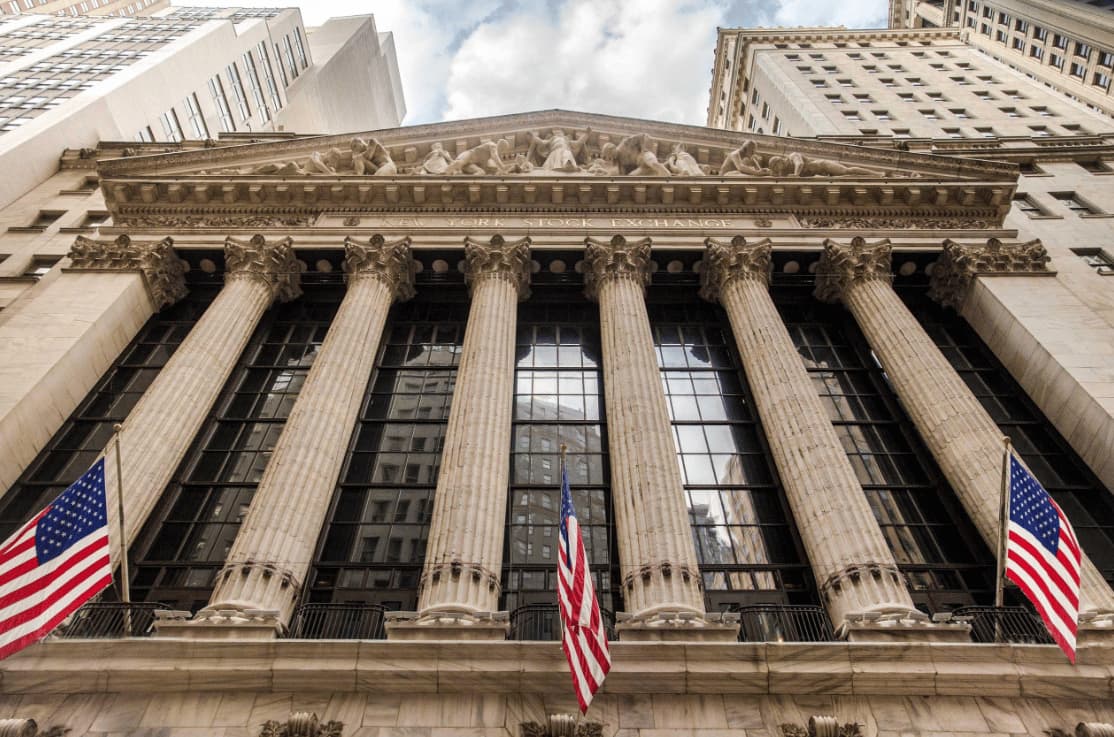
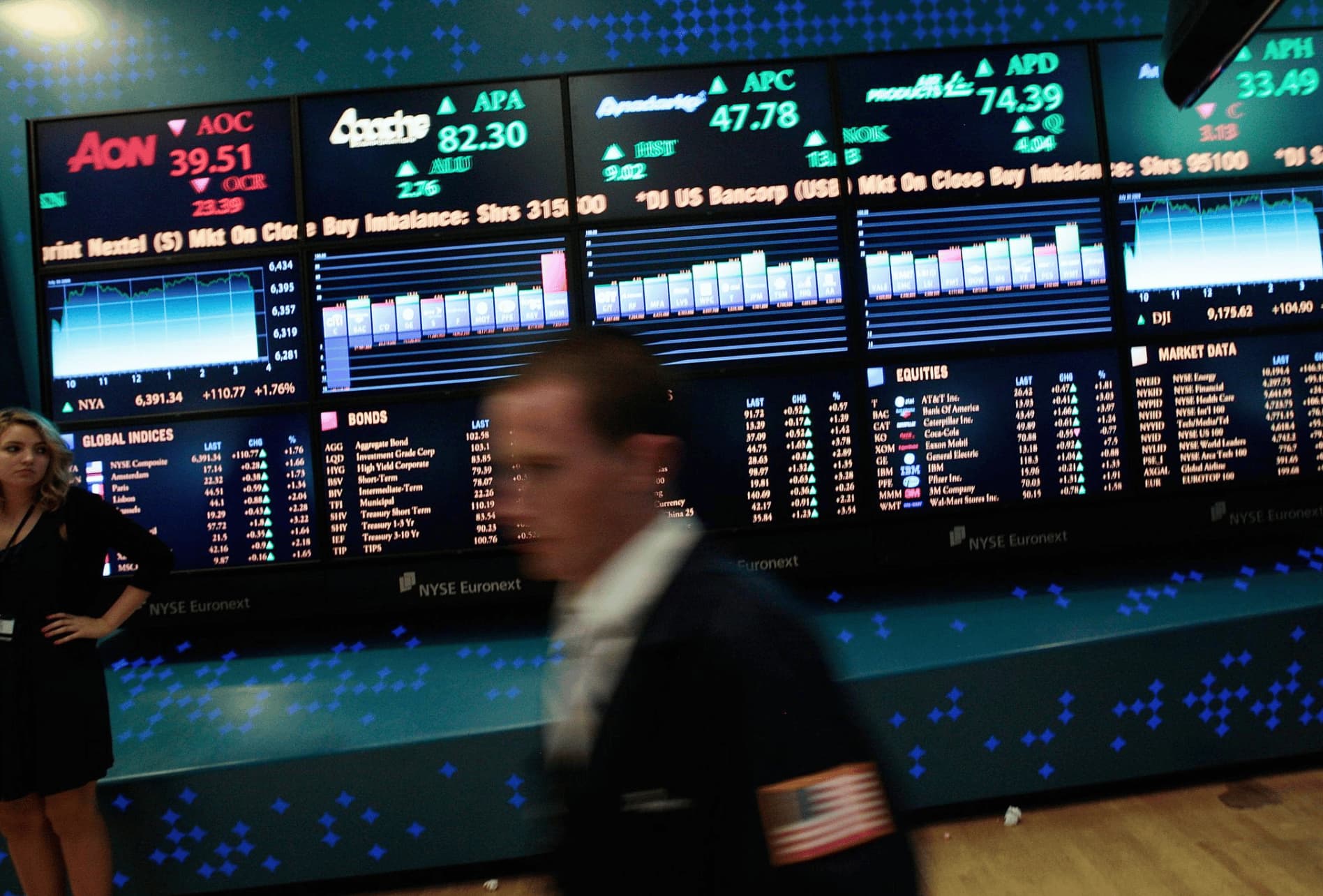
The Dow Jones Industrial Average shed 1,101 points Thursday — a 2.19% collapse to 49,097.06 — breaching the 50,000 level for the first time since June and dragging the index to a sixth consecutive session of losses. The S&P 500 fell 2.02% to 7,175.83 and the Nasdaq dropped 2.25% to 23,879.20, putting both benchmarks on course for their worst weekly declines in more than a year. The proximate cause was the IPO the market had been waiting on for months — and it turned into a wrecking ball.
The IPO That Broke the AI Trade
Anthropic priced its landmark offering at $83 per share, raising $81.3 billion in the largest IPO in recorded history, eclipsing SpaceX's $75 billion deal. By the Thursday close, ANT sat at $97.17 — technically a 17% premium to the IPO price, technically a "successful" debut. What it was not: a catalyst. By Friday pre-market, shares had given back another 6.37%, printing at $91.06 and valuing the company at a fully diluted $1.7 trillion. The market had waited for Anthropic the way a drought-stricken field waits for rain. What it got was a flash flood that washed out the entire AI sector.
The mechanism here matters for traders. When a mega-cap IPO of this magnitude lands, the rotation is mechanical: institutions that have been parking capital in liquid AI proxies — Nvidia, AMD, Marvell, Broadcom — rebalance into the new primary name. That selling pressure, compounded by pre-existing macro headwinds, turned what should have been a sentiment catalyst into a liquidation event. CNBC's live market coverage tracked the deterioration in real time Thursday, with the Dow's 50,000 breach arriving in the final hour of trading as stop-losses triggered across index-linked products.
The semiconductor carnage was broad and specific. Nvidia closed at $145.98, down 3.30%, on volume of 322.94 million shares — institutional-grade distribution. AMD was worse: down 7.72% to $489.19 on 71.66 million shares, compounded by a Hunterbrook Media short-seller report alleging that AMD firmware had appeared in products linked to U.S.-blacklisted companies. That report alone would have been a 3% story on a normal day. In Thursday's tape, it hit a stock already under sector-wide pressure and the result was a seven-handle decline. Marvell fell 4.86% in Friday pre-market. Applied Materials dropped 3.80%. Lam Research shed 3.77%. There was no place to hide in semis.
What the Fear Gauge Is Telling You
The VIX closed Thursday at 28.44 — up nearly 16% on the session and its highest print in two weeks. Friday morning it was holding at 28.57. To put that in context: over the past year, the VIX has averaged 18.125, with an intraday peak of 31.05 on March 27, 2026. Thursday's close came in above 92.2% of all daily readings over the past 52 weeks. That is not noise. That is a regime signal.
More important than the level is the structure. VIX term structure has inverted into backwardation, with December futures at 24.70 against the spot reading of 28.57. That inversion — near-term options more expensive than longer-dated ones — is the market's way of saying that acute, event-driven fear is driving the bid for protection, not a slow-burn deterioration in fundamentals. Historically, backwardation resolves fast: either buyers step in and the curve normalizes within days, or the front end keeps rising and the inversion deepens into something that looks like March 2026 or April 2025. The skew reading of 140.86 confirms elevated demand for downside puts at current strikes.
The macro overlay compounding all of this is the Fed. Rate hike odds are running near 96% — a number that, six months ago, would have seemed impossible given where the economy was. Hawkish Fed commentary has reinforced those expectations this week, pushing investors toward the dollar and Treasuries as risk-off safe havens. Oil is not helping: Brent crude fell 1.94% to $90.18 a barrel in Friday futures, and WTI declined 1.95% to $81.59. When oil sells off alongside equities, it is typically a demand-fear signal, not a supply story — and that is a grimmer read for anyone hoping the economy will absorb higher rates without consequence. Deutsche Bank strategist Binky Chadha offered the lone contrarian voice in the room, calling the tape "very oversold" and noting that earnings and growth fundamentals remain intact. He may ultimately be right. He is early.
What Traders Watch Next
Friday's session opens with futures already pointing lower — Nasdaq-100 down 1.10%, S&P 500 off 0.38% — though early-hour readings were more severe, with the Nasdaq-100 down 1.4% and the S&P dropping 0.6%. The Dow's fractional futures gain of 0.16% offers a theoretical floor, but the real question is whether institutional buyers defend two specific technical levels when cash markets open: 48,000 on the Dow and 25,000 on the Nasdaq. These are not arbitrary round numbers — they represent prior consolidation zones that served as support during the April 2025 drawdown and have been referenced repeatedly this week by derivatives traders positioning for the weekend.
The one genuine bright spot in Friday pre-market is cybersecurity. Palo Alto Networks surged 9.03% to $370.62 after reporting adjusted EPS of $1.05 against consensus estimates of $0.97. CrowdStrike added 5.91% to $251.05 in sympathy. That PANW gap is significant not just for the sector but as a broader signal: institutional money did not vanish overnight, it rotated. The bid went to companies with visible, near-term earnings power insulated from the AI infrastructure spending debate. That rotation tells you where the defensive institutional play is heading into a weekend with elevated VIX and unresolved macro pressure.
The weekly scorecard heading into Friday's close is damaging: the Dow is on pace for a 6.2% weekly loss, its worst since April 2025; the S&P 500 and Nasdaq are each down 5% on the week. If 48,000 on the Dow holds into the 4 p.m. close, the backwardated VIX curve has a path to normalization next week. If it doesn't — if Friday becomes session seven of an unbroken losing streak with a close below that level — the next meaningful technical reference is the June 2026 low, and the conversation shifts from "oversold bounce" to something considerably more serious.
The Weekly Investor
Daily market analysis for active traders. Free.