CoreWeave Q3 Earnings: $3.54B Test Hits Tonight
CoreWeave reports Q3 2026 earnings tonight. Revenue consensus is $3.54B, bond yield tops 16%, and the stock trades below 4x P/S. Here's what matters.
Key Points
- Wall Street consensus pegs CoreWeave Q3 2026 revenue at $3.54B, implying 159% year-over-year growth, with EPS expected at -$1.45.
- A bond yield exceeding 16% and projected Q3 interest expense of $860–$940 million are the clearest financial pressure points on the company's cash flow narrative.
- Watch the backlog disclosure and interest coverage commentary tonight — if the $100B backlog figure from Q1 hasn't grown, that's the number that will define tomorrow's open.
CoreWeave's Q3 2026 earnings call begins at 5:00 PM ET tonight, and one number will cut through everything else: $3.54 billion. That's Wall Street's consensus revenue estimate, implying 159% year-over-year growth. The stock has been punished anyway — CRWV now trades at a price-to-sales multiple below 4x, a material discount to AI infrastructure peers and its own historical average. The question tonight is whether a beat changes the multiple or whether the bond market's 16%-plus yield signal is telling a story that revenue growth can't override.
The Bear Case Is Written in the Bond Market
Start with what the fixed-income market is screaming. CoreWeave's bonds are yielding north of 16% — a level that reflects genuine credit stress, not a minor risk premium. For context, investment-grade corporate bonds are trading closer to 5–6%. A 16% yield on CRWV paper means the market is pricing in meaningful probability of financial distress, and that signal doesn't disappear because GPU utilization rates are strong.
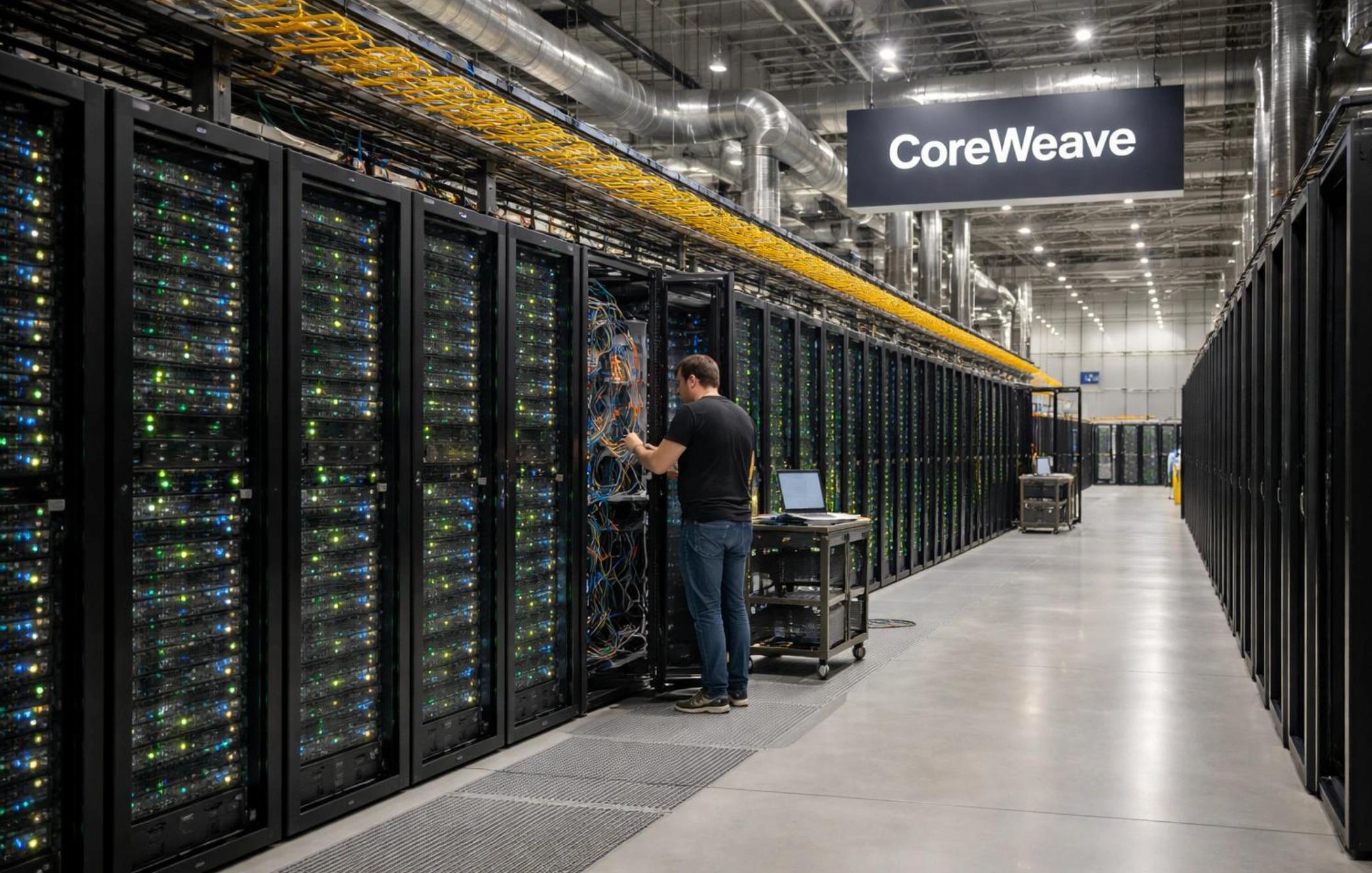
The mechanism is straightforward: CoreWeave finances its massive infrastructure buildout — Nvidia H100s and now Blackwell clusters — through debt, and that debt is expensive. Consensus estimates for Q3 interest expense land between $860 million and $940 million. At the midpoint, $900 million in quarterly interest expense against a $3.54B revenue target means debt service is consuming roughly 25 cents of every dollar of revenue before a single operating cost is counted. That's not a sustainable capital structure at scale unless revenue growth outpaces the interest accrual permanently — and that math gets harder as the company matures.
The EPS consensus of -$1.45 tells the same story numerically, representing approximately 367% year-over-year deterioration. What makes this particularly difficult for the bulls is that the Q2 beat — EPS came in at -$1.03 against a -$1.49 estimate, a 30.87% upside surprise — provided temporary relief but didn't structurally change the conversation about cash burn. Each quarter the goalposts move: the beats have been real, but the underlying loss magnitude is widening in absolute terms. That trend is what makes tonight's call more than a revenue event.
Why the Bull Case Still Has Teeth
The bear case on financing costs is legitimate, but dismissing CoreWeave's operational momentum would be an analytical error. The Q1 2026 backlog figure of nearly $100 billion was not a projection — it was contracted revenue, the kind of visibility that most SaaS companies would trade a decade of optionality to possess. Active power consumption surpassing 1 gigawatt as of that same quarter signals genuine infrastructure at scale, not a startup running on ambition and venture funding.
The Blackwell and Vera Rubin contract ramps are the most important margin story of the quarter. New contracts tied to these architectures are estimated to carry 5 to 10 percentage points higher contribution margins than the legacy H100 cluster deployments. If CoreWeave's mix shift toward these higher-margin workloads accelerated meaningfully in Q3 — and given Barchart's pre-earnings analysis, there's reason to believe it did — the gross margin line could be the upside surprise that moves the stock regardless of the EPS headline.
The managed inference adoption story is equally important. Inference workloads, unlike training runs, are recurring and sticky — once a customer operationalizes inference at scale on CoreWeave's infrastructure, the switching costs are high and the revenue is annuity-like. If management quantifies that shift tonight with specific utilization or contract duration data, that's the kind of disclosure that re-rates a stock even with a widening GAAP loss.
What Traders Watch Next
The Big Tech AI capex cycle, which has now crossed $720 billion in total committed spending, is CoreWeave's secular tailwind. Piper Sandler's disclosure of a $3.4 billion single purchase of power-generation equipment by an unnamed frontier AI lab underscores the velocity at which physical AI infrastructure is being built. CoreWeave sits in the middle of that supply chain — it's not just a cloud provider, it's a critical piece of the compute layer that hyperscalers and frontier labs both rely on when their own capacity is constrained.
However, traders should not ignore the emerging risk on the asset side of CoreWeave's balance sheet. Reports of investors selling AI chip and data-center loans at steep discounts — driven by concerns about rapidly depreciating GPUs — represent a direct challenge to CoreWeave's financing model. If the collateral backing CRWV's debt is marked down aggressively by lenders, the refinancing risk embedded in that 16% bond yield compounds. This is not a tail risk; it's a live conversation in credit markets right now.
The specific levels to watch after the 5:00 PM ET call are well-defined. If CRWV prints revenue above $3.7 billion — roughly a 5% beat — and management provides backlog growth above the $100 billion Q1 figure while guiding Q4 interest expense below $1 billion, the stock has a credible path back above its recent 52-week highs. If revenue lands in line or below, and the backlog figure is flat or the interest expense trajectory accelerates, the sub-4x P/S multiple will look less like a bargain and more like a fundamental re-rating. The Bloomberg analysis of AI chip demand through TSMC's October data confirms the demand environment hasn't broken — which means a CRWV miss tonight would be a company-specific event, not a sector event, and should be traded accordingly. Tomorrow's open is the first clean signal.
The Weekly Investor
Daily market analysis for active traders. Free.