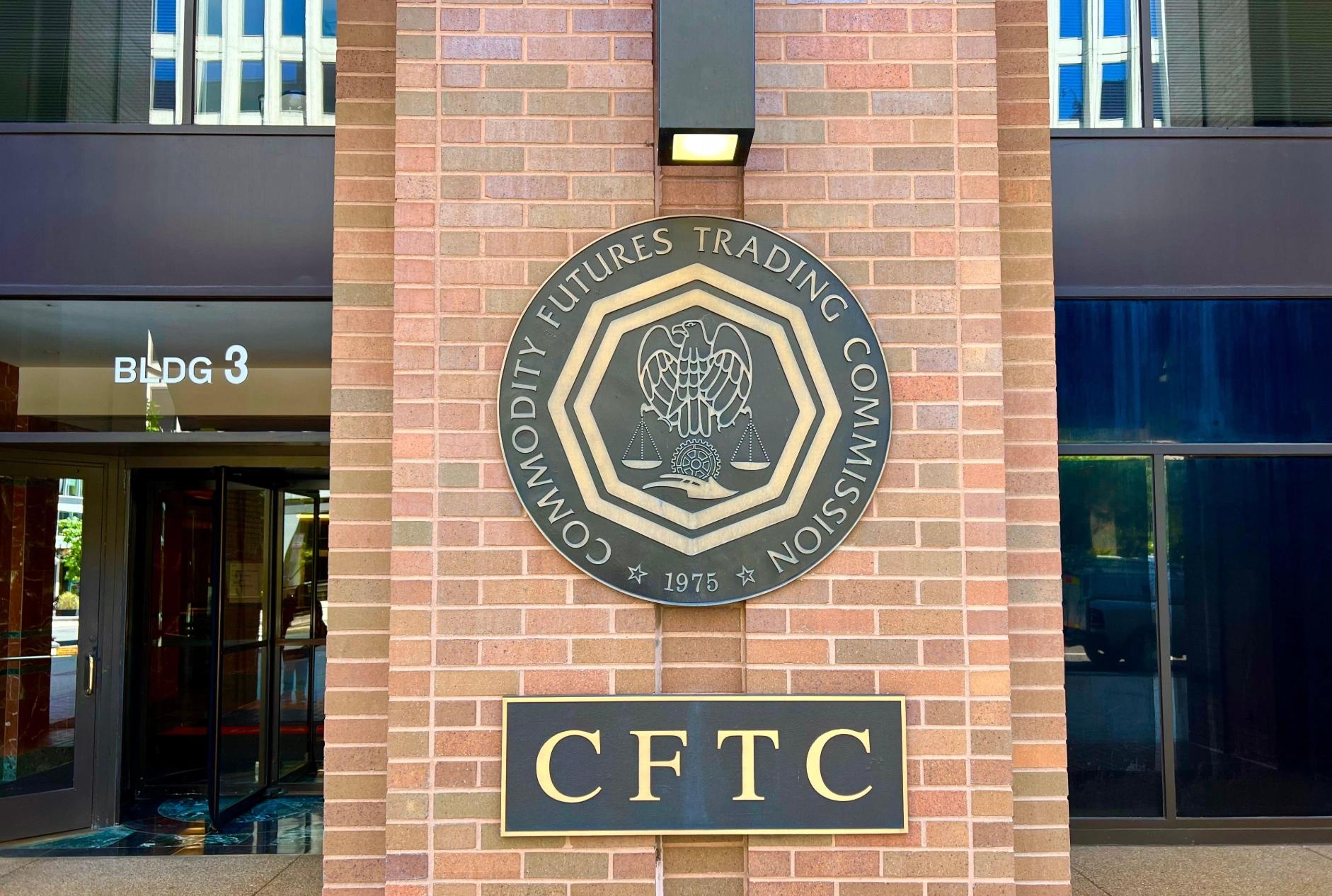
CFTC Clears Crypto as Collateral With a 20% Haircut
The CFTC issued guidance Tuesday allowing exchanges to hold Bitcoin, Ethereum, and stablecoins as financial reserves with a minimum 20% haircut on BTC and ETH.
Key Points
- The CFTC issued guidance Tuesday permitting registered exchanges to use Bitcoin, Ethereum, and qualifying stablecoins as financial reserves, with a minimum 20% haircut applied to BTC and ETH and 2% to stablecoins.
- The ruling arrives as Bitcoin trades at $60,439 in a market gripped by extreme fear, potentially offering a structural legitimacy signal even as spot demand remains absent.
- Traders should watch how exchanges respond to the registration requirement for on-chain platforms — a condition that could reshape DeFi's U.S. market access over the next 6–12 months.
The CFTC dropped its most consequential crypto market structure guidance in years on Tuesday morning, formally permitting U.S.-registered exchanges to hold Bitcoin, Ethereum, and qualifying payment stablecoins as financial reserves — with a minimum haircut of 20% applied to BTC and ETH and just 2% applied to stablecoins. The timing lands in the middle of the worst Bitcoin ETF outflow month on record, and the market's initial reaction has been muted, but the long-term structural implications for how regulated entities manage crypto exposure are significant.
What the CFTC Actually Said
The guidance, issued Tuesday, is regulatory staff-level direction rather than a formal rulemaking — meaning it does not carry the force of law but signals clearly that CFTC staff would not object to exchanges treating Bitcoin, Ethereum, and compliant stablecoins as eligible reserve assets. The 20% haircut on BTC and ETH is the operative number. It means a registered exchange holding $100 million in Bitcoin would be permitted to count $80 million of that position toward its financial reserve requirements. For stablecoins meeting the qualifying payment criteria, the haircut drops to 2%, effectively treating them near-equivalent to cash.
That haircut differential is significant because it encodes the CFTC's risk hierarchy directly into market structure rules. Bitcoin and Ethereum, despite being the two largest crypto assets by market cap at $1.22 trillion and $207.67 billion respectively, are treated as materially more volatile and credit-risky than qualifying stablecoins. The 20% discount is conservative — Bitcoin's realized 30-day volatility during the current selloff has been punishing, with the asset moving from roughly $64,635 seven days ago to a weekend low of $55,130 before rebounding to Tuesday's $60,439, a drawdown and recovery spanning nearly 15% in under a week. The haircut structure suggests regulators built this guidance with exactly that volatility profile in mind.
The second component of Tuesday's guidance — that on-chain platforms must register with the CFTC or partner with a licensed exchange to operate in the U.S. market — carries different implications. DeFi protocols that operate without a central legal entity have largely avoided the question of U.S. registration by arguing they are software rather than exchanges. The CFTC's guidance now draws a direct line: if your platform functions as an exchange and serves U.S. users, you either register or you partner with a registered entity. How that requirement gets enforced, and over what timeline, is the open question that the crypto legal community is now actively parsing.
The Regulatory Stack Building Around Crypto
Tuesday's CFTC action does not exist in isolation. The U.S. Senate passed the DEATH BETS Act, prohibiting prediction markets from listing contracts tied to war, terrorism, and death — a narrowly targeted measure that clips the wings of the prediction market sector without touching mainstream crypto trading. South Korea separately announced it will publish a draft of a comprehensive crypto legal framework this week, the latest signal that major economies outside the U.S. are accelerating toward formal regulatory structures rather than enforcement-first approaches.
For traders, the aggregate picture from this week's regulatory calendar is one of incremental formalization rather than restriction. The CFTC guidance on reserves is permissive — it opens a door for registered exchanges to treat BTC and ETH as legitimate balance sheet assets rather than speculative holdings that need to be fully hedged or excluded from reserve calculations. That is a structurally bullish development for the long-term institutionalization of crypto markets, even if it generates zero immediate buying pressure in a market where the Fear & Greed Index is pinned at 11 and ETF outflows are running at a record monthly pace.
The practical effect in the near term is likely to show up in exchange balance sheets and risk management disclosures rather than in spot prices. A registered derivatives exchange that previously held cash-only reserves now has regulatory cover to hold a portion of those reserves in Bitcoin or Ethereum, subject to the haircut. At current prices, that creates incremental structural demand from a category of buyer — regulated exchange operators — that did not previously exist in this form. The scale of that demand is impossible to quantify from today's guidance alone, but the direction of travel is clear.
What Traders Watch Next
The market's near-term reaction to Tuesday's CFTC news will be a useful signal in itself. Bitcoin is trading at $60,439 with an RSI of 25.69, technically oversold, and spot demand is structurally absent — the Coinbase premium has been negative for 60 consecutive days and stablecoin supply is contracting. If positive regulatory news of this magnitude cannot generate even a modest lift in spot volumes or halt ETF outflows, it tells traders something important about the depth of the current deleveraging cycle. Monday's combined crypto ETF outflows of $658.4 million — with $509.3 million from IBIT alone — represent institutional selling that regulatory tailwinds alone are unlikely to reverse.
New York Fed President John Williams speaks later Tuesday, and his remarks on rate policy will almost certainly generate more immediate price movement than the CFTC guidance. Williams is a permanent FOMC voting member, and any hawkish signal on the inflation outlook would pressure risk assets across the board, hitting a Bitcoin already trading 6.49% lower on the week. Friday's PCE print is the larger macro event, and the Ethereum price at $1,683 — with ETH ETFs in seven consecutive days of outflows — suggests the altcoin complex is even more vulnerable to a macro shock than Bitcoin's headline number implies.
The regulatory calendar extending into year-end is now meaningfully clearer after Tuesday's CFTC action. South Korea's framework draft this week, the Senate's DEATH BETS Act, and the CFTC's reserve and on-chain platform guidance collectively represent the most concentrated week of crypto regulatory output since early 2025. For exchanges specifically, the 20% haircut number is the figure to build around — it defines the cost of holding BTC or ETH on a regulated balance sheet and will shape treasury decisions at every registered entity that now has permission to make them.
The Weekly Investor
Daily market analysis for active traders. Free.