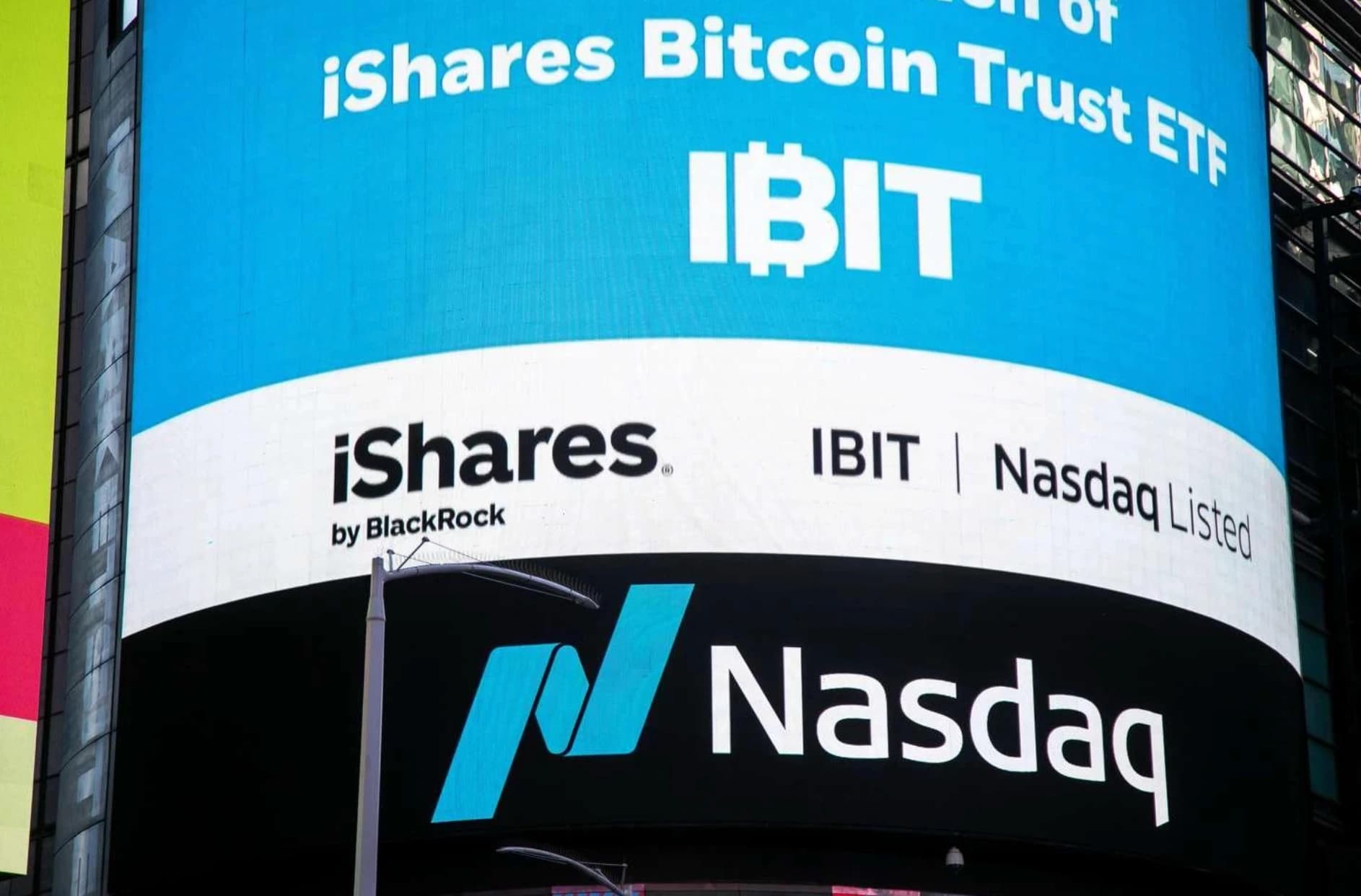
Bitcoin ETFs Haul $528M in a Day — Price Won't Follow
Spot bitcoin ETFs pulled in $528M Wednesday, their biggest single-day haul since Sept. 22 — but BTC's realized volatility tells a different story.
Key Points
- Spot bitcoin ETFs recorded $528.4M in net inflows Wednesday — their largest single-day haul since September 22 — with BlackRock's IBIT alone absorbing $235M.
- Three-session cumulative BTC ETF inflows have topped $1B, yet bitcoin's 28-day realized volatility has collapsed to 1.2%, near its lowest reading of the year, signaling institutional accumulation without retail conviction.
- The Oct. 28 Fed rate decision and Nov. 3 U.S. midterm elections are the twin catalysts that will determine whether this demand surge finally translates into price discovery or gets absorbed into a continued sideways grind.
Spot bitcoin ETFs pulled in $528.4 million Wednesday — their single largest daily inflow since September 22 — pushing the three-session cumulative total past $1 billion and snapping two consecutive weeks of heavy outflows that had drained $909 million from the complex. The numbers are unambiguously large. The price action is not.
The Flow Breakdown
BlackRock and Fidelity did not share the tape Wednesday — they owned it. IBIT absorbed $235 million and FBTC took in $212.71 million, meaning the two largest issuers accounted for $447.71 million, or 84.8 cents of every dollar that entered the space. The rest of the field picked up scraps: Grayscale's converted GBTC added $32.59 million, Bitwise's BITB contributed $19.23 million, and Ark's ARKB brought in $9.79 million. Grayscale's Mini Trust, Franklin's EZBC, and Valkyrie's BRRR filled out the remainder with sub-$10 million flows each. Four funds — VanEck's HODL, Morgan Stanley's MSBT, Invesco's BTCO, and WisdomTree's BTCW — recorded zero net flows for the session. That bifurcation matters: when small funds go dark, it typically means retail engagement is absent and the buying is institutionally concentrated.
The concentration story cuts two ways. On one hand, IBIT and FBTC pulling in nearly $450 million in a single session reflects genuine institutional conviction — these are not retail click-buys on a Robinhood app. On the other hand, institutional buyers of this scale do not need to move the spot price on any given day; they work through authorized participants and creation baskets that absorb supply methodically. The result is a flow signal that looks bullish in a spreadsheet but leaves the price chart largely unmoved.
October context sharpens the picture. Before Wednesday's surge, October's net ETF flow balance had actually gone negative — the complex had shed $909 million across the prior two weeks ($228 million in week one, $681 million in week two). Wednesday's $528.4 million injection and the three-session $1 billion-plus run have now pushed the month's net to approximately $461 million positive. Year-to-date net inflows stand at $1.34 billion. Those are real asset-gathering numbers, but they are also a reminder of how quickly sentiment can reverse: one bad macro week wiped out nearly a month of prior gains in outflows before this week's reversal.
Ethereum's One-Day Reprieve Changes Nothing
Ethereum ETFs ended a five-session outflow streak Wednesday, recording $14.9 million in combined net inflows. Do not mistake a single green session for a trend. October has been a systematic liquidation event for ETH exposure: the complex has shed $1.08 billion in net outflows this month alone, effectively unwinding September's entire inflow haul in under four weeks. Year-to-date net inflows have shrunk to approximately $485 million — a figure that was materially higher entering the month.
The asset itself confirms the structural weakness. Ethereum is trading above $2,438, down roughly 10% in October and off approximately 18% for the year. For a network that was supposed to benefit from the same institutional adoption narrative driving bitcoin flows, that performance gap is striking. The spread between BTC ETF year-to-date net inflows of $1.34 billion and ETH's $485 million — with ETH's number eroding fast — tells you where institutional money is making its choice. Solana-linked funds and XRP ETFs are barely registering: $585,000 and $709,000 in net purchases respectively Wednesday, after an extended drought. The alt-crypto ETF ecosystem outside of bitcoin is effectively on life support at current flow rates.
What Wednesday's $14.9 million ETH inflow actually represents is noise within a much louder negative signal. One session does not break a trend that has cost the Ethereum ETF complex more than a billion dollars in a single calendar month. Traders positioning around an ETH recovery thesis need a catalyst that does not yet exist — and the Fed meeting next week is more likely to affect BTC than ETH, given BTC's closer correlation to macro rate-sensitivity at current institutional flow levels.
What Traders Watch Next
The critical tension in this trade is simple: three sessions of $1 billion in combined inflows, and bitcoin's 28-day realized volatility is at 1.2%, near its lowest reading of the year. Flows at this magnitude historically precede either a volatility expansion event or a prolonged consolidation as supply is absorbed. The market is telling you it does not yet know which outcome arrives first.
Two dates define the near-term binary. The Federal Reserve's October 28 rate decision arrives in six days. The Fed's posture on the pace of easing — or any signal of a pause — will directly influence the risk appetite that has been funding this ETF buying. Bitcoin has shown a demonstrable correlation to rate-sensitivity this cycle; a hawkish surprise on the 28th would test whether institutional buyers defend the bid or quietly walk away. The November 3 midterm elections introduce a second layer of uncertainty, particularly around potential regulatory posture toward digital assets depending on which party consolidates legislative influence.
The level to watch on IBIT specifically is the $235 million daily inflow figure from Wednesday — if that pace sustains or accelerates into next week, it would represent a genuine demand signal that the underlying is absorbing. If IBIT reverts to sub-$100 million daily flow ahead of the Fed decision, the $1 billion three-session haul will look more like a positioning flush than a structural trend. Bitcoin's price action around the $68,000–$70,000 range — wherever spot settles into the Oct. 28 decision — will be the tell. The inflows are real. The conviction has not yet been priced in.
The Weekly Investor
Daily market analysis for active traders. Free.