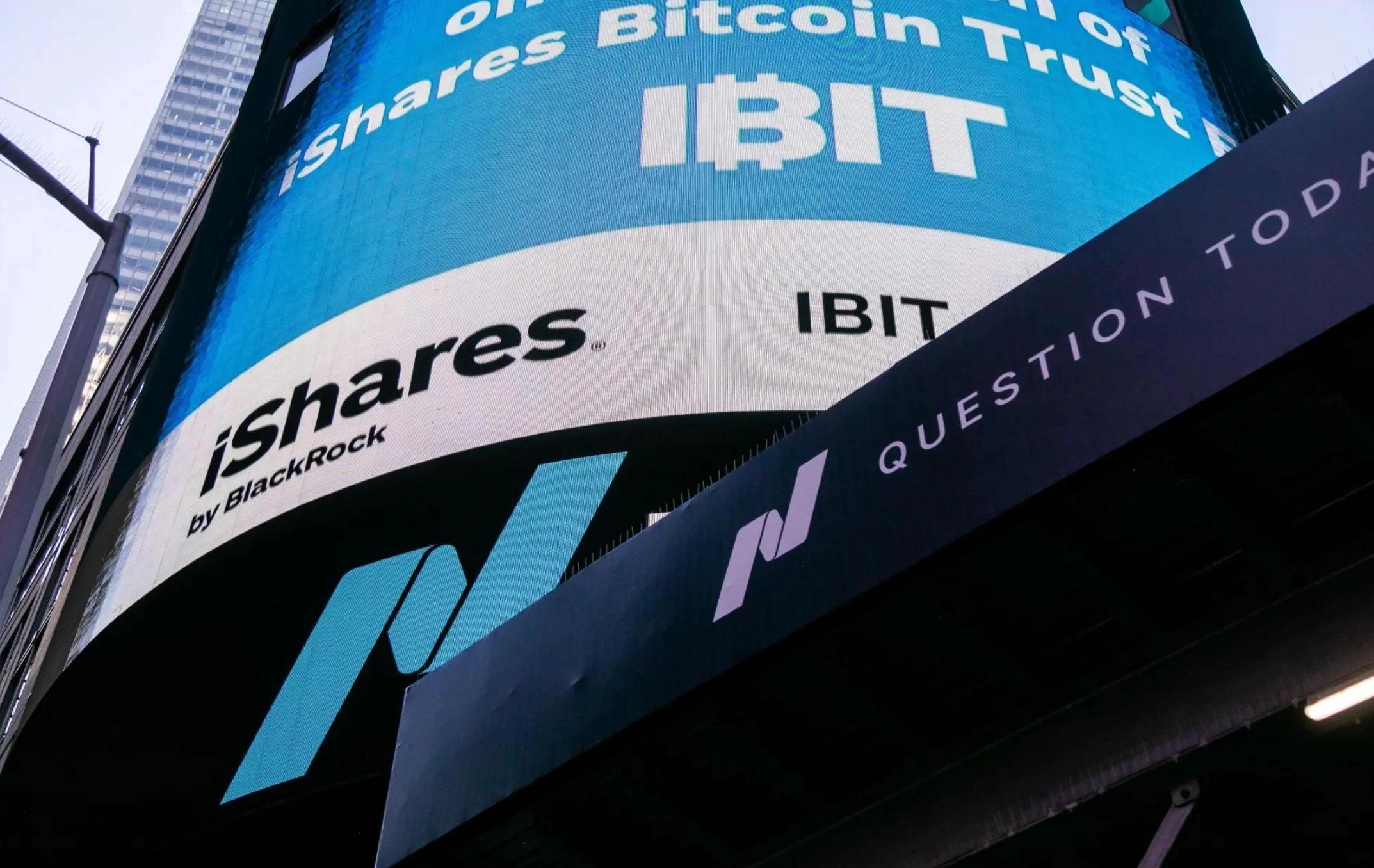
Bitcoin ETF Exodus: $4.94B November Outflows Near Record
Bitcoin ETF outflows hit $4.94B in November as IBIT sheds $4.17B alone. What Tuesday's $231M bleed means for traders today.
Key Points
- U.S. spot Bitcoin ETFs have shed $4.94 billion in cumulative November outflows, with IBIT alone accounting for $4.17 billion — the fund's worst month on record.
- Bitcoin's slide back below $60,000, compounded by a new Trump tariff threat, has overwhelmed any macro tailwind and triggered institutional-scale redemptions across all major funds.
- Watch today's October PCE print: a hot reading would extinguish remaining rate-cut hopes and could push the six-session outflow streak into its seventh day with fresh selling pressure on IBIT and FBTC.
$4.94 billion. That's how much has bled out of U.S. spot Bitcoin ETFs in November alone — and with five trading days still to go, the month is on a collision course with the worst outflow record since the funds launched in January 2024. BlackRock's IBIT is at the center of it, having surrendered $4.17 billion this month while recording a single day of net inflows across the entire November calendar. Bitcoin itself has broken back below $60,000, and Tuesday's session delivered another $231.56 million in net redemptions — a number that tells you institutional sellers are not done.
The Anatomy of a Six-Session Bleed
Tuesday's fund-by-fund breakdown is worth dissecting because the selling isn't uniform — it's concentrated and purposeful. IBIT led the carnage with $175.30 million in net outflows on November 24, followed by Fidelity's FBTC at $44.03 million, ARK's ARKB at $15.80 million, and Bitwise's BITB at $10.34 million. Those four funds alone account for the entirety of the day's $231.56 million net outflow — and then some, because three funds actually attracted capital: EZBC pulled in $6.88 million, Grayscale's Bitcoin Mini Trust added $3.96 million, and MSBT contributed $3.07 million. The net total, however, leaves no ambiguity about the direction of institutional sentiment.
Zoom out and the IBIT damage becomes more striking. The six-session outflow streak that began November 17 has now produced approximately $2.6 billion in total net redemptions from that single fund. The streak's worst individual sessions were back-to-back on November 19 and 20, when IBIT bled $541.1 million and $544.73 million respectively — both among the largest single-day redemptions any ETF in this category has ever recorded. According to CoinTurk, those two sessions alone wiped out roughly six months of steady inflow accumulation in 48 hours.
The Ethereum side of the ledger isn't offering relief either. Combined crypto ETF outflows on November 24 reached approximately $294.8 million when Ethereum funds' $64.1 million in net redemptions are added to Bitcoin's $231.4 million. Solana ETFs managed a rounding-error $700,000 in inflows — not enough to register as a countertrend, but notable as the only crypto category attracting new money on the day.
What's Actually Driving the Selling
Blaming price action alone is too simple. The sequence of events matters. 10x Research documented that investors withdrew $4.57 billion from spot Bitcoin ETFs over the 30 days following the Federal Reserve's October meeting — meaning the selling predates Tuesday's tariff headlines and reflects a more structural reassessment of the rate environment. When the Fed in October pushed back against the pace of projected cuts, it removed a key pillar of the crypto bull thesis: cheap dollar liquidity flowing into risk assets. Bitcoin ETF holders who bought into that trade began unwinding it systematically, and the data shows redemptions occurring on most trading days throughout that window.
The November 24 tariff shock — a fresh Trump threat targeting imports — added an acute risk-off catalyst on top of an already deteriorating trend. CryptoNews reported that the tariff announcement wiped out much of Bitcoin's Nvidia-fueled rebound from the prior session, leaving BTC back below the $60,000 level that has become a psychological line of demarcation between orderly correction and genuine breakdown. At $60,000, long-duration holders who entered during the January 2024 ETF launch excitement are still in profit — but only just, and patience is visibly running thin.
It's also worth noting what the cumulative inception-to-date picture tells us about the stakes involved. The U.S. spot Bitcoin ETF complex has attracted $52.34 billion in total net inflows since launch, with IBIT alone responsible for $62.32 billion in gross inflows against $28.27 billion in net outflows from Grayscale's GBTC. The grand total still represents a historic capital formation event. But the November drawdown is happening fast enough that the narrative of relentless institutional adoption — which drove Bitcoin to its highs — is being actively questioned in real time.
What Traders Watch Next
The most immediate catalyst is already in the market. The Bureau of Economic Analysis released its October PCE inflation report and the second estimate of Q3 GDP at 8:30 a.m. Eastern this morning — the last major macro data print before the Thanksgiving holiday weekend. PCE is the Federal Reserve's preferred inflation gauge, and any reading above the 2.3% consensus estimate would force traders to reprice rate-cut expectations further out into 2027. That repricing would be directly bearish for Bitcoin ETF flows: the correlation between rate-cut probability and crypto ETF net inflows has been tight enough in 2026 that a hot PCE print could extend the outflow streak into Wednesday's close.
If PCE comes in cool — say, at or below 2.2% — the relief rally has a ceiling at approximately $63,500 on BTC, the level that capped the Nvidia-driven bounce earlier this week. Breaking above that level with any conviction would require multiple days of ETF net inflows, and right now the only funds attracting money consistently are smaller players like EZBC and the Grayscale Mini Trust — not the institutional-scale IBIT flows that actually move the market. Watch FBTC as the secondary signal: Fidelity's fund has been less volatile than IBIT on a day-to-day basis, and if FBTC flips to net inflows before IBIT does, it typically signals a broader sentiment turn is 24 to 48 hours away. The critical date beyond today is November 30, when the final trading session of the month will set the official November outflow record — currently tracking toward a number that may redefine the downside benchmark for this asset class.
The Weekly Investor
Daily market analysis for active traders. Free.