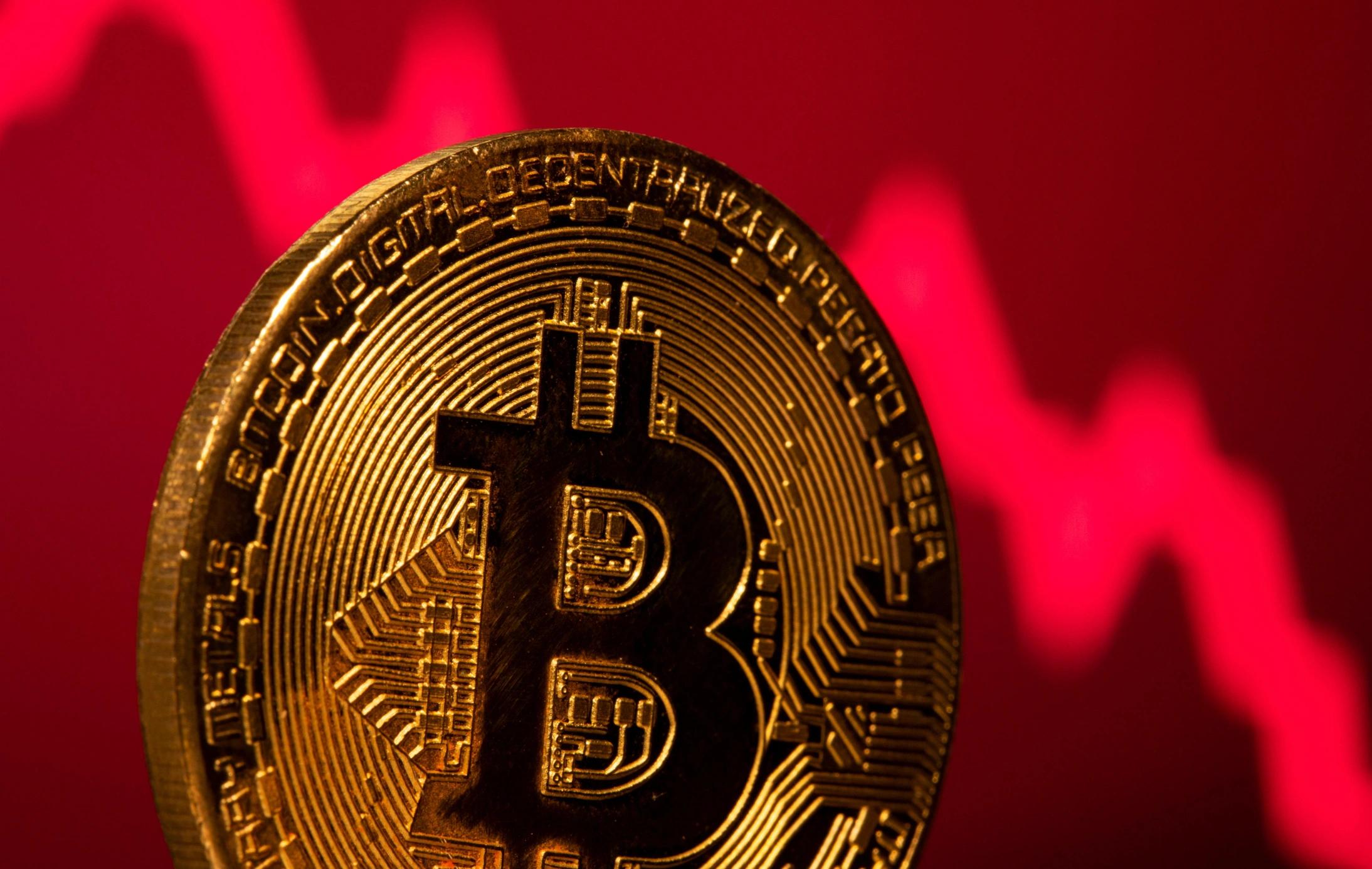
Bitcoin Breaks $63K as FOMC Minutes Trigger ETF Exodus
Bitcoin slides to $62,922 after FOMC minutes signal December rate hike, as spot ETFs bleed $239.9M in a single session and market depth craters 38%.
Key Points
- Bitcoin fell to $62,922 on Bybit this morning — down 2.39% in 24 hours and 14% from $74,040 just one week ago — as FOMC minutes signaling a December rate hike crushed sentiment across risk assets simultaneously.
- BlackRock's IBIT alone absorbed $209.5M of the $239.9M in spot BTC ETF outflows recorded today, with November's cumulative ETF bleed now topping $2.6 billion and ETF net assets hitting a three-month low of $77.7 billion.
- Watch the $62,068 intraday low as the critical line in the sand — a confirmed daily close below it opens a direct technical path to $60,000 and, if that fails, the $57,000 range where on-chain support clusters next.
Bitcoin is trading at $62,922 this morning — down 2.39% in 24 hours, down 14% in seven days, and sitting closer to its 52-week floor of $57,717 than to anything resembling the $116,410 high posted earlier this year. The catalyst was Wednesday's FOMC meeting minutes, which signaled a December rate hike and detonated a simultaneous selloff across Bitcoin, gold ($3,736), and silver ($44.88). The macro message was blunt: risk assets are not welcome at these valuations when the Fed is tightening.
The Structural Selloff Behind the Headline
This is not a one-day flush. Bitcoin closed at $64,939 on November 17, $64,921 on November 16, and $65,256 on November 15. Before that, it was trading near $74,040 on November 12 — a figure that now looks like a distant memory after a collapse that has erased the entire post-election bounce in under two weeks. At $62,922, BTC sits 49.6% below its all-time high of $126,080, which was set on October 6, 2025. That context matters for anyone still anchoring to cycle-high narratives.
The on-chain picture reinforces the bearish tape. Analyst Ali Martinez has identified a major UTXO Realized Price Distribution cluster between $63,111 and $64,373, where approximately 1.22 million BTC last changed hands. That band — which should have served as a demand floor — has now flipped to overhead resistance. The market printed an intraday low of $62,068 this session, and Polymarket traders are currently pricing the $62,000–$64,000 range as the most likely landing zone at 54%, with less than 9% probability assigned to a sub-$62,000 close. That 9% looks underpriced given the absence of any institutional bid.
Compounding the technical damage is the liquidity destruction left behind by the October 29 Binance hack, attributed by the FBI to the North Korean group TraderTraitor. Bitcoin's market depth within 1% of its midpoint has fallen nearly 38% from this year's peak — a direct and measurable consequence of the confidence shock that followed the breach. When depth evaporates, moves in either direction become more violent, more sustained, and less mean-reverting. Traders pricing this as a standard dip-buying opportunity are operating with an incomplete model.
The ETF Bleed Is the Clearest Signal
Spot Bitcoin ETFs recorded $239.9M in net outflows on November 19, following $306.4M in redemptions the prior session. The combined two-day bleed of $546.3M brings November's cumulative ETF net outflows to approximately $2.6 billion — and 2026 total net outflows have now crossed $2.5 billion. Total ETF net assets have collapsed to $77.7 billion, the lowest reading in three months.
The composition of today's outflows is what should concern holders most. BlackRock's IBIT — the most liquid, most institutionally trusted Bitcoin ETF on the market — accounted for $209.5M of the $239.9M total, or 87% of the entire day's redemptions. GBTC contributed $17.7M and ARKB added $13.1M. When IBIT is leading the exits, the signal is unambiguous: the institutional money that drove Bitcoin's 2025 and early 2026 rally is no longer a buyer at these levels. It is a seller.
Long-term Bitcoin holders have reduced their aggregate positions by approximately 121,151 BTC over the past 30 days. That is not panic selling by retail — that is the deliberate, systematic de-risking of large, patient positions that have held through multiple cycles. The Fear & Greed Index printed 10 this morning, down from 11, in the "Extreme Fear" zone. Historically, Extreme Fear readings resolve in one of two ways: a sharp capitulation flush that sets a durable bottom, or a grinding, weeks-long erosion that exhausts buyers before the floor is established. The ETF flow data argues strongly for the latter scenario here.
The DOJ obtained court approval to seize or restrain more than $1.2 billion stolen in the Binance hack, adding a legal overhang to what is already a structurally damaged exchange environment. Binance has stated it replaced all stolen customer assets using treasury and insurance funds by November 12, and separately obtained a global freeze order from the Abu Dhabi Global Market courts targeting $6.5 billion in assets across 26,000 addresses. Those are meaningful defensive actions. They do not, however, restore the 38% of market depth that evaporated in the hack's aftermath — and that liquidity gap is what is amplifying every downside move in the current tape.
What Traders Watch Next
The number to watch is $62,068 — today's intraday low and the nearest technically significant level before $60,000. A confirmed daily close below $62,068 would constitute a clean break of the current consolidation range and open a measured-move target toward $60,000, the round-number psychological floor that Bybit's analysts have flagged as the next line of institutional interest. Below $60,000, the next meaningful on-chain support cluster sits in the $57,000 range, which also aligns with the lower boundary of BTC's 52-week range at $57,717.
On the upside, the path is narrow. The $63,111–$64,373 cost-basis band now acts as overhead resistance for 1.22 million BTC. Any recovery attempt that stalls in that zone — without a material reversal in ETF flows — should be treated as a selling opportunity rather than a trend change. The conditions for a durable bottom require two things that are not yet present: a cessation of institutional ETF redemptions, and a stabilization of market depth in the wake of the Binance hack. December's FOMC decision — now widely expected to deliver a rate hike — represents the next hard catalyst on the calendar. If the hike materializes, BTC will face that test with a compromised technical structure, depleted institutional demand, and a Fear & Greed Index already pinned at Extreme Fear. The bear case for $57,000 before year-end is becoming harder to dismiss.
The Weekly Investor
Daily market analysis for active traders. Free.