Anthropic, OpenAI, and the AI Product Blitz Reshaping the Stack
GPT-6.2 Sol launches, Claude Ship ships autonomous code review, and ANTH faces a $303M lock-up cliff on Dec. 15. The AI product cycle is accelerating fast.
Key Points
- Anthropic's ANTH fell 1.43% to $87.64 Monday — failing to participate in the chip rally — with 303 million shares coming off lock-up on December 15.
- OpenAI launched GPT-6.2 Sol to all paid ChatGPT users today while Anthropic simultaneously shipped Claude Ship, an autonomous code-review agent — the competitive tempo is now measured in days, not quarters.
- ANTH's Nasdaq 100 addition on December 21 is a forced-buying catalyst, but the December 15 lock-up expiry six days earlier is the more immediate risk.
Anthropic's ANTH shed 1.43% to $87.64 on Monday — its third day of trading — conspicuously refusing to join a session that lifted the Nasdaq 6.51% and dragged nearly every AI-adjacent name higher. The stock remains above its $83 IPO price, but just barely, and the structural risk on the calendar is explicit: 303 million shares come off lock-up on December 15, six days before ANTH's forced inclusion in the Nasdaq 100.
The IPO Hangover Is Already Visible
Anthropic raised a record $93.5 billion in its IPO — a figure that reframed the valuation ceiling for private AI labs globally and validated DeepSeek founder Liang Wenfeng's $55 billion net worth, which Bloomberg's Billionaires Index derives from DeepSeek's freshly announced $86 billion valuation. The debut session delivered a 17% gain. Then reality arrived: ANTH fell 8.5% on its second day and has drifted since, closing Monday at $87.64 against a tape that was buying everything with a semiconductor in it.
The disconnect is partly mechanical and partly fundamental. On the mechanical side, ANTH is too new and too thinly traded to have the institutional float that generates sympathy moves in a broad rally. The lock-up means that most of Anthropic's early investors, employees, and strategic partners — including TSMC Partners Ltd, which acquired 6,024,096 shares at approximately $500 million around the IPO — are still sitting on restricted stock. Until December 15, the tradable float is constrained, and the bid-ask dynamics reflect that illiquidity. On the fundamental side, Anthropic does not have Nvidia's near-term earnings leverage; it is a research-and-product organization generating revenue through API access and enterprise contracts, not a hardware company with a $95 billion backlog.
The TSMC stake deserves attention beyond the headline. TSMC's subsidiary acquired roughly 0.03% of Anthropic at IPO pricing. That is a strategic signal — the world's most important chip manufacturer wants exposure to the company it believes will be among the largest consumers of its most advanced silicon for the next decade. It is not a controlling position; it is an alignment stake. For ANTH shareholders, the TSMC investment functions as a form of implicit endorsement of Anthropic's long-term compute roadmap, which matters precisely because compute access is the binding constraint in frontier AI development.
MSCI index inclusion on November 30 — six days from today — will force passive allocators to buy ANTH regardless of their views on the company. The quantum of forced buying from MSCI rebalancing will be modest given ANTH's current float, but the Nasdaq 100 addition on December 21 is the larger mechanical event. Index funds tracking the Nasdaq 100 manage trillions in assets, and the forced-buy from that inclusion will represent a materially larger demand surge than anything MSCI triggers. The problem is sequencing: the lock-up expires December 15, the inclusion hits December 21. If early Anthropic investors decide the index-driven demand is their exit window, they have six days to sell into forced buying. That is not a prediction — it is a structure that every ANTH holder needs to map before December 15.
A Product Cycle Measured in Days
While ANTH's equity dynamics play out, Anthropic's operational team is not standing still. The company released Claude Ship today — an autonomous agent capable of reviewing, fixing, and approving code changes without human sign-off on each step. That is a qualitative escalation from earlier Claude coding tools: prior iterations assisted developers; Claude Ship acts on their behalf in the codebase. The commercial target is obvious. Enterprises paying for GitHub Copilot, Cursor, or comparable AI coding tools now have a direct competitor from Anthropic that is bundled into their existing Claude Enterprise contracts. For Anthropic's revenue trajectory, enterprise adoption of Claude Ship is more immediately meaningful than any consumer ChatGPT comparison.
Anthropic also rolled out Enterprise Frontier Safeguards — an early-access safety layer for Mythos and Fable enterprise customers, with a public beta that opened November 23. The timing is deliberate. As the EU considers expanding the Digital Markets Act to classify AI businesses as gatekeepers, and as a UK superintelligence bill heads toward its second reading on November 27, enterprise safety frameworks are becoming a commercial differentiator rather than just a regulatory checkbox. Anthropic's Constitutional AI methodology has always been its primary brand distinction from OpenAI; EFS operationalizes that distinction into an enterprise product that compliance officers can point to in procurement reviews.
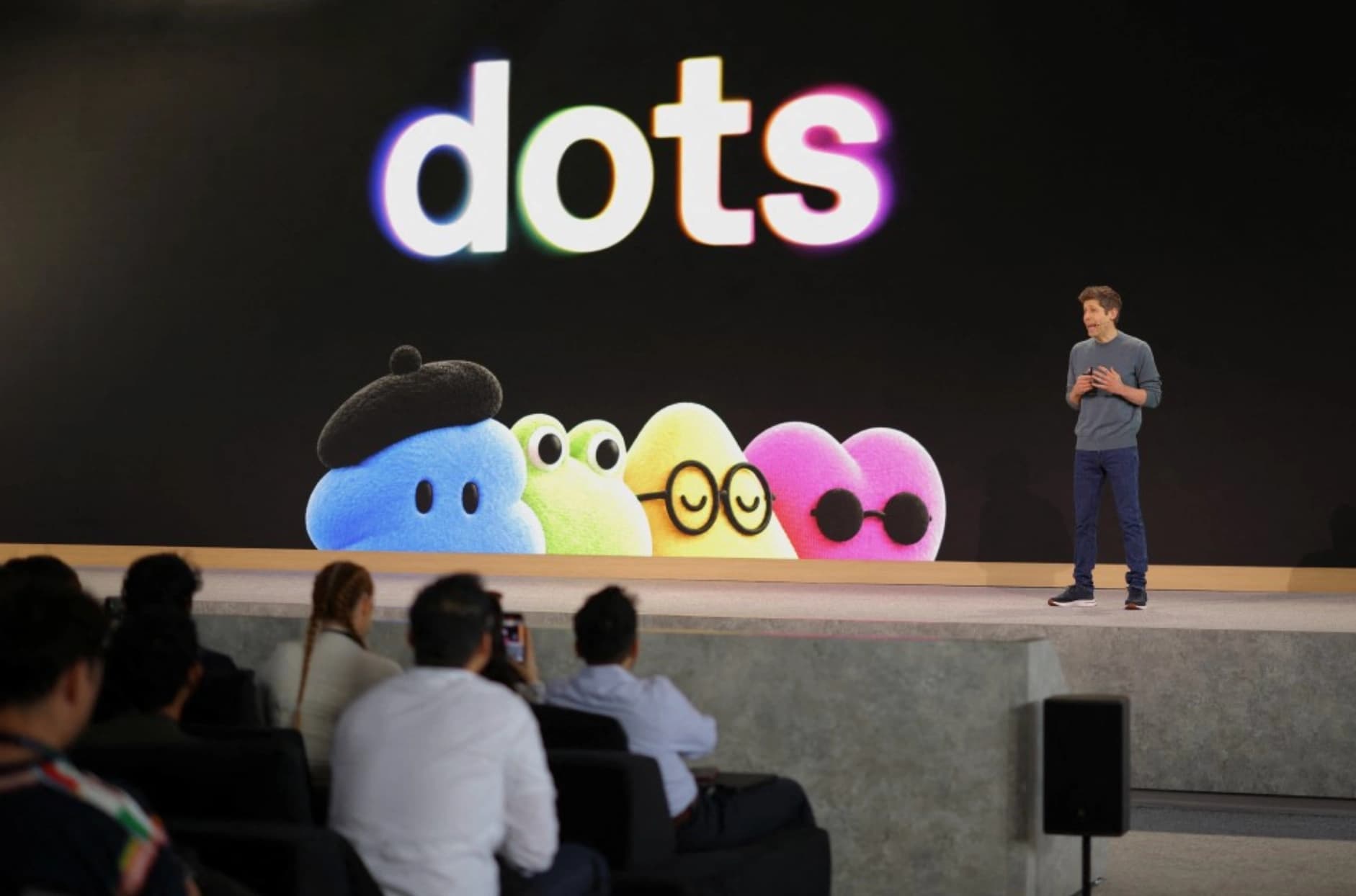
OpenAI countered on the same day with GPT-6.2 Sol, now live for all paid ChatGPT users globally. GPT-5.6 Sol and Terra are scheduled for retirement on December 23 — a forced migration that will push OpenAI's existing paid base onto the newer model whether they opt in or not. OpenAI also launched OpenWorks, a 20-city pilot paying local experts up to $8,000 per month to coach eligible small businesses on ChatGPT adoption, bundled with free ChatGPT Business accounts for participating owners. That is a go-to-market play aimed directly at the SMB segment that Microsoft has historically owned through Office 365 — and it's funded, structured, and rolling out now, not in a roadmap deck.
The Competitive Stack Is Reconfiguring Weekly
The model release cadence now resembles a software sprint cycle more than the annual or semi-annual frontier model launches that defined 2023 and 2024. Google launched Gemini 4 Neon with Tool Retrieval for developers today. Z.ai shipped GLM-5.4, a 750-billion-parameter Loop Transformer running 28 layers for two iterations with per-token gates — the company claims intelligence comparable to 2 trillion-to-3 trillion parameter models at 200 tokens per second off-peak with a 1 million context window. Ant Group's Ant Ling team released LingSante-3.1-flash, a medical-domain model with 560 billion total parameters and approximately 25 billion active per token, though the model card explicitly restricts use to research and evaluation and prohibits independent diagnosis or prescriptions.
Deutsche Telekom's €100 million commitment to Mistral AI's Series D confirms that European capital is flowing toward European AI sovereignty plays even as American frontier labs dominate the product headlines. Mistral's commercial positioning — open weights, European regulatory alignment, multilingual performance — gives Deutsche Telekom a credible alternative to routing all enterprise AI spend through OpenAI or Google infrastructure. For traders watching AI infrastructure broadly, the Mistral investment is a signal that large European enterprises are prepared to pay for optionality outside the American hyperscaler stack.
The forward-looking trade in this space is not a single stock call but a sequencing problem. ANTH's December 15 lock-up expiry is the most specific, date-certain risk event in the AI sector between now and year-end. If the stock holds above $83 — its IPO price — through that date and the index-buying on December 21 absorbs the lock-up supply, the base is established. If it breaks below $83 on lock-up supply pressure before the Nasdaq 100 inclusion triggers, the forced-buy becomes a rescue mechanism rather than a catalyst. Watch the $83 level on December 15. Everything else — the model launches, the product cycles, the regulatory hearings — is the backdrop. That date and that price are the trade.
The Weekly Investor
Daily market analysis for active traders. Free.