Anthropic IPO, OpenAI at $1.25T: AI's Capital Moment
Anthropic's IPO is 6x oversubscribed at a $1.4T valuation, and OpenAI just raised $15B. The AI capital market is repricing in real time — here's what traders need to know.
Key Points
- Anthropic's IPO roadshow is approximately six times oversubscribed at a $70–$78 per share price range, with shares set to begin trading November 19 at a valuation potentially exceeding $1.4 trillion.
- OpenAI and Anthropic now combine for a $105 billion revenue run-rate — against just $11 billion across six Chinese AI labs — a gap that is reshaping where sovereign wealth funds, pension allocators, and strategic investors are placing long-duration AI bets.
- Traders should watch Anthropic's opening print on November 19 as a real-time confidence vote on frontier AI valuations across the entire sector, including the public comps in Alphabet, Microsoft, and AMD.
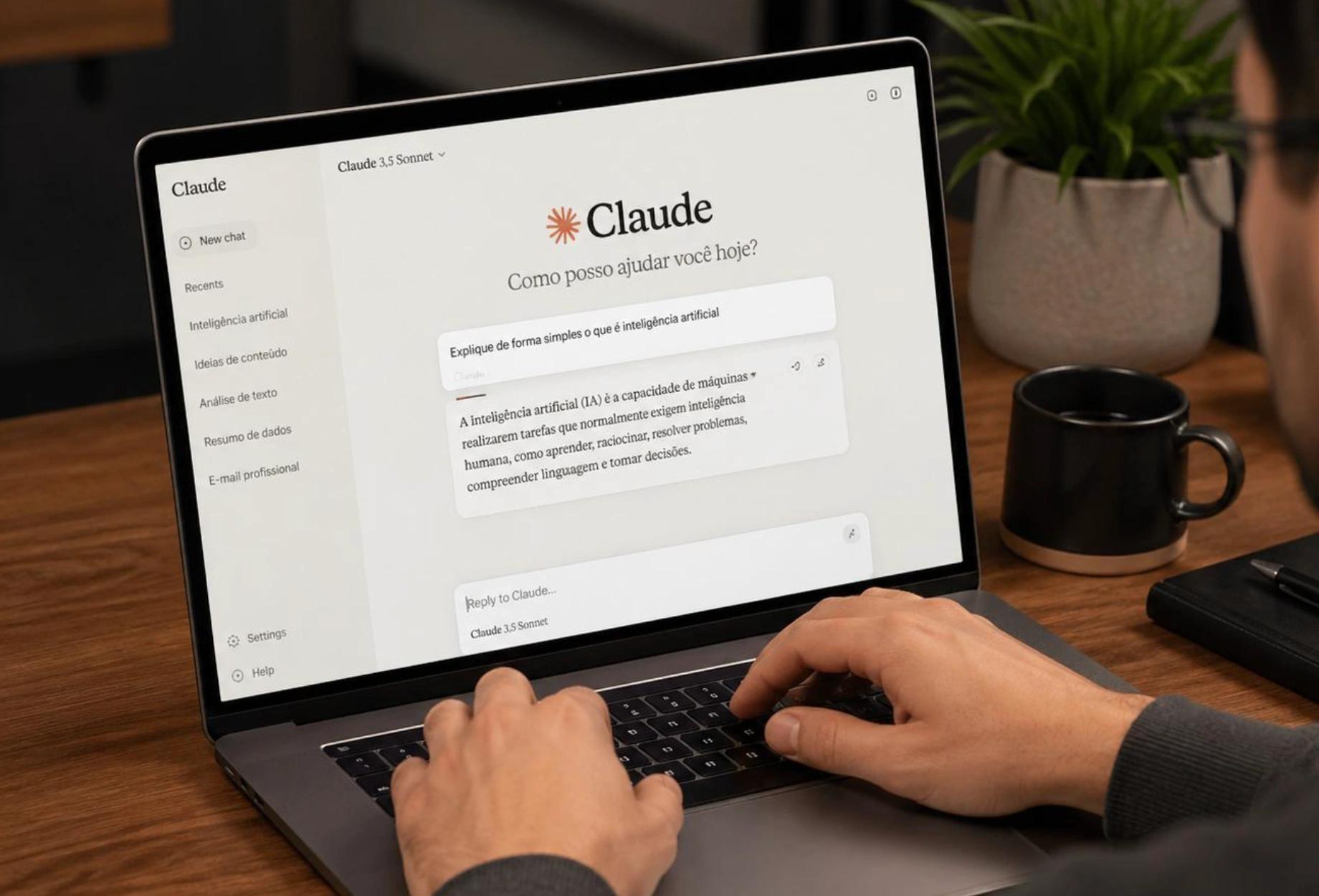
Anthropic's IPO roadshow is six times oversubscribed, the offering hasn't even priced yet, and the market is already debating whether the $70–$78 per share range — implying a valuation above $1.4 trillion — is a ceiling or a floor. Shares begin trading November 19. That same week, OpenAI confirmed a $15 billion raise at a $1.25 trillion valuation, and the combined revenue run-rate for the two leading Western frontier AI labs hit $105 billion. The capital markets are not waiting for AI to prove itself. The question now is whether the public market will ratify what private investors have already decided.
The Numbers Behind the Frenzy
Anthropic's Q3 sales rose 47% quarter-over-quarter to $17 billion — the kind of sequential growth rate that, in almost any other industry, would be considered statistically implausible. In frontier AI in 2026, it is becoming the baseline expectation. The IPO is expected to raise upward of $60 billion, which would make it one of the largest technology offerings in market history by proceeds. The $70–$78 per share range is the publicly stated target, but six-times oversubscription means the institutional book is built well above minimum, and bookrunners will face genuine pricing pressure from allocators who want size and are willing to pay for it.
The strategic backdrop matters as much as the revenue trajectory. TSMC this week approved investments of up to $500 million each in OpenAI and Anthropic, plus a separate $500 million vehicle focused on the broader semiconductor ecosystem — a signal from the world's most important chip foundry that it views these two companies as critical long-term customers worth anchoring at the equity level. When TSMC is writing nine-figure checks into your pre-IPO cap table, it communicates something that no roadshow slide deck can replicate: the supply chain believes in the demand. That is a materially different form of validation than venture capital conviction, and institutional allocators are reading it exactly that way.
OpenAI's Parallel Power Play
While Anthropic is staging its public debut, OpenAI is simultaneously executing what amounts to a parallel capital and product offensive. The $15 billion raise at a $1.25 trillion valuation arrived alongside the launch of "Daybreak," a new cybersecurity initiative comprising two distinct products: Daybreak Red Team, which deploys multiple AI agents to identify and verify exploitable weaknesses in enterprise web applications, and Daybreak Defense Factory, which prepares patches and routes them directly to engineering teams. Cybersecurity is a $200 billion-plus annual market with structural tailwinds and enterprise procurement budgets that are largely non-discretionary — OpenAI is not entering a niche, it is entering one of the most defensible spending categories in enterprise technology.
The revenue comparison with Chinese competitors deserves more attention than it has received. OpenAI and Anthropic's combined $105 billion run-rate against $11 billion across six Chinese AI labs is not simply a bragging-rights statistic — it reflects a compounding advantage in model training data, infrastructure investment, and developer ecosystem lock-in that widens with every quarter. Western AI companies are not ahead because of regulation or government protection; they are ahead because they deployed capital earlier, attracted the best researchers, and built distribution through products that enterprises and consumers are actively paying for. The gap is a function of execution velocity, and it is accelerating.
What the Google and Cerebras Data Points Tell You
The competitive texture of the AI infrastructure market is filling in rapidly around the two headline events. Google released Gemini 4 Hydrogen this week — a faster, lower-cost model optimized for coding and AI agents, priced at $2.70 per million input tokens and $13.50 per million output tokens on the Priority tier, with Batch and Flex tiers at half those rates. That pricing is a deliberate competitive signal aimed at Anthropic's Claude API and OpenAI's developer tier, and it arrives precisely as Anthropic is trying to tell public market investors a story about durable margin and pricing power. The timing is not accidental.
Cerebras, the AI chip startup that went public earlier this year, lifted its 2026 revenue outlook to $940 million to $960 million and guided for revenue to roughly triple in 2027, underpinned by a backlog of approximately $26 billion. That backlog figure is the operative number for traders trying to assess whether AI infrastructure spending is a 2026 story or a multi-year structural cycle. A $26 billion backlog at a company doing sub-$1 billion in annual revenue implies years of contracted demand — the kind of visibility that justifies the valuation premiums the market is paying across the sector. Applied Materials reinforced the same theme from the equipment side, delivering a beat-and-raise quarter on the back of AI chip demand, which confirms that semiconductor capex has not flinched despite the Nvidia governance turbulence.
SpaceX's announcement of more than $74 billion in planned AI supercomputing campuses in Texas and Arizona adds yet another data point to the same story: the physical infrastructure buildout for AI is nowhere near complete, and the companies with the capital to build at hyperscale are still committing it aggressively. That level of fixed-asset investment does not get authorized by boards unless revenue visibility extends well beyond the current fiscal year.
Anthropic's November 19 opening print is the single most important data point for public market AI sentiment between now and year-end. If the stock opens above $85 — a roughly 9% premium to the top of the range — it confirms that institutional demand was structurally constrained by the IPO allocation process and that the private-to-public valuation transfer is clean. If it opens below $70, it signals that even a six-times oversubscribed book could not hold the valuation in real money conditions, and every AI-exposed multiple in the public markets — Alphabet, Microsoft, AMD — gets a haircut on the same session. That binary makes November 19 a date every trader in this sector needs circled.
The Weekly Investor
Daily market analysis for active traders. Free.