AMD's $17B Guide Is the AI Demand Floor
AMD beat Q3 estimates with $13.38B in revenue but got crushed 17% anyway. Here's what the $17B Q4 guide means for NVDA's Nov. 17 print.
Key Points
- AMD reported Q3 2026 revenue of $13.38 billion, up 44.7% year-over-year, beating the $13.08 billion consensus — then fell 17% in a single session on November 5.
- The selloff was macro and political, not fundamental: a Democratic congressional sweep triggered fears of data center construction restrictions, hammering the entire chip complex.
- Nvidia's November 17 earnings report is the next hard catalyst; AMD's $17 billion Q4 guide sets the demand floor that Huang must clear to stop the sector's bleeding.
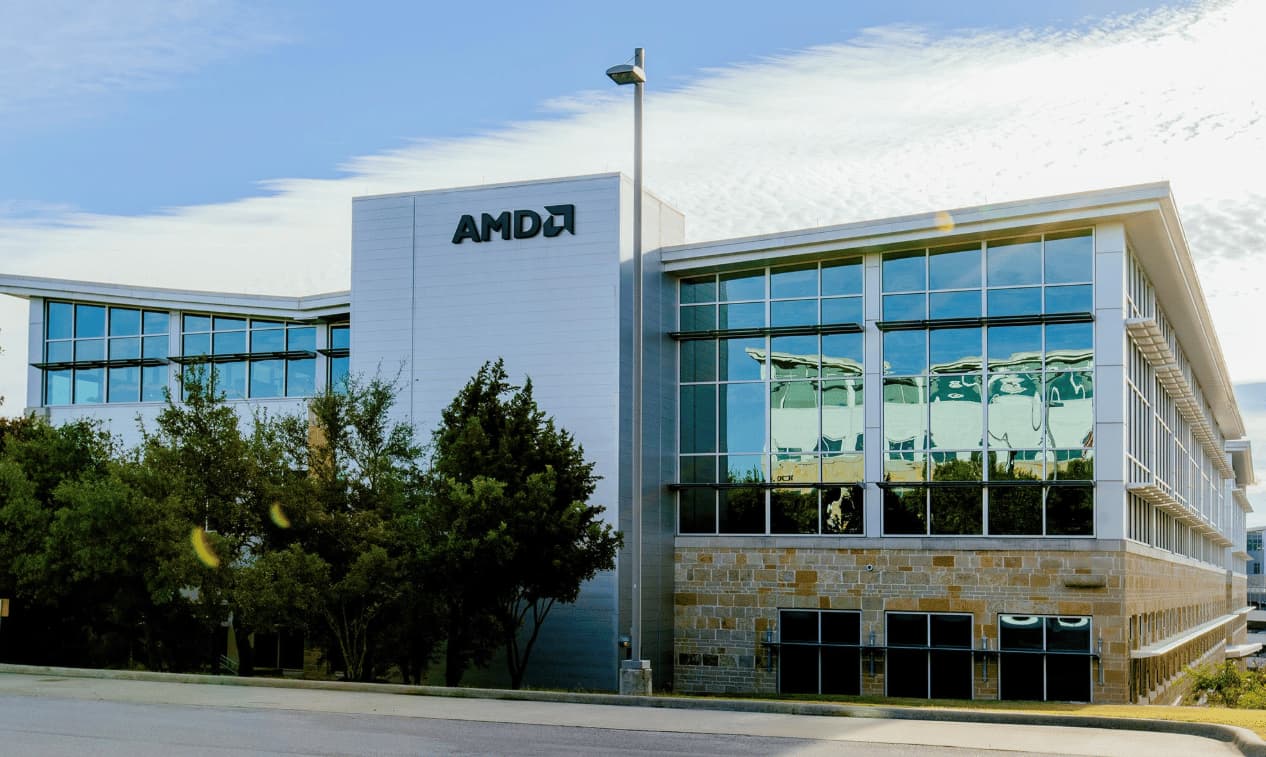
AMD reported the largest and most profitable quarter in company history Tuesday night — $13.38 billion in revenue, up 44.7% year-over-year, with a Q4 guide of approximately $17 billion — and the market punished the stock 17% anyway. That disconnect between fundamentals and price action is the most important signal in the chip sector right now, and understanding it is the difference between trading a bounce and catching a falling knife ahead of Nvidia's November 17 print.
The Beat That Didn't Matter
CEO Lisa Su was blunt on the earnings call: Q3 2026 was AMD's best quarter, by any measure, in the company's history. Revenue of $13.38 billion cleared the $13.08 billion Wall Street consensus. The data center segment — the one every institutional investor is modeling for AI upside — drove the outperformance, with AMD's expanding partnership with Meta to power the company's superintelligence infrastructure serving as the most visible proof point. That deal, alongside AMD's $2.9 billion Taalas AI chip agreement logged in a recent regulatory filing, makes the demand narrative concrete, not theoretical.
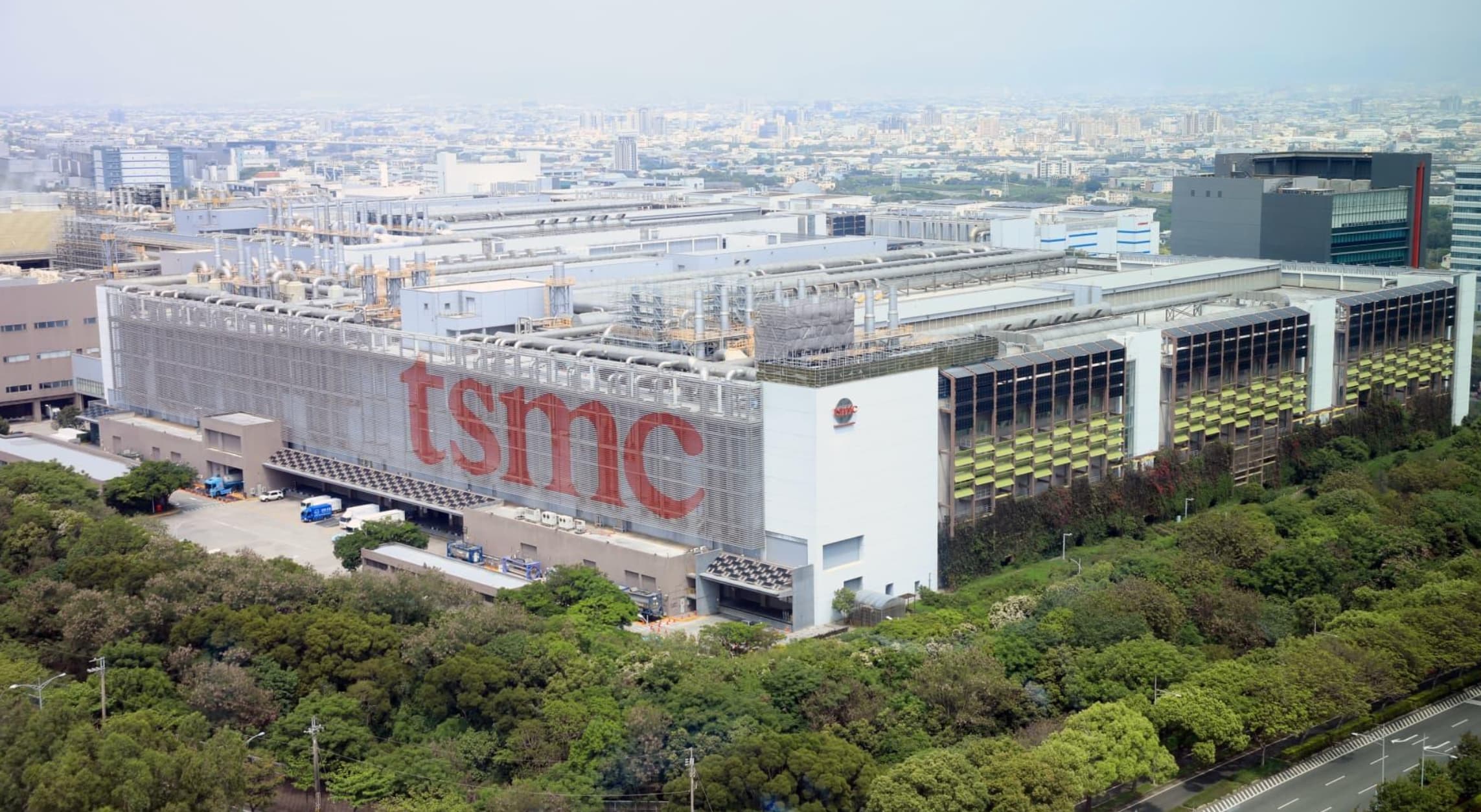
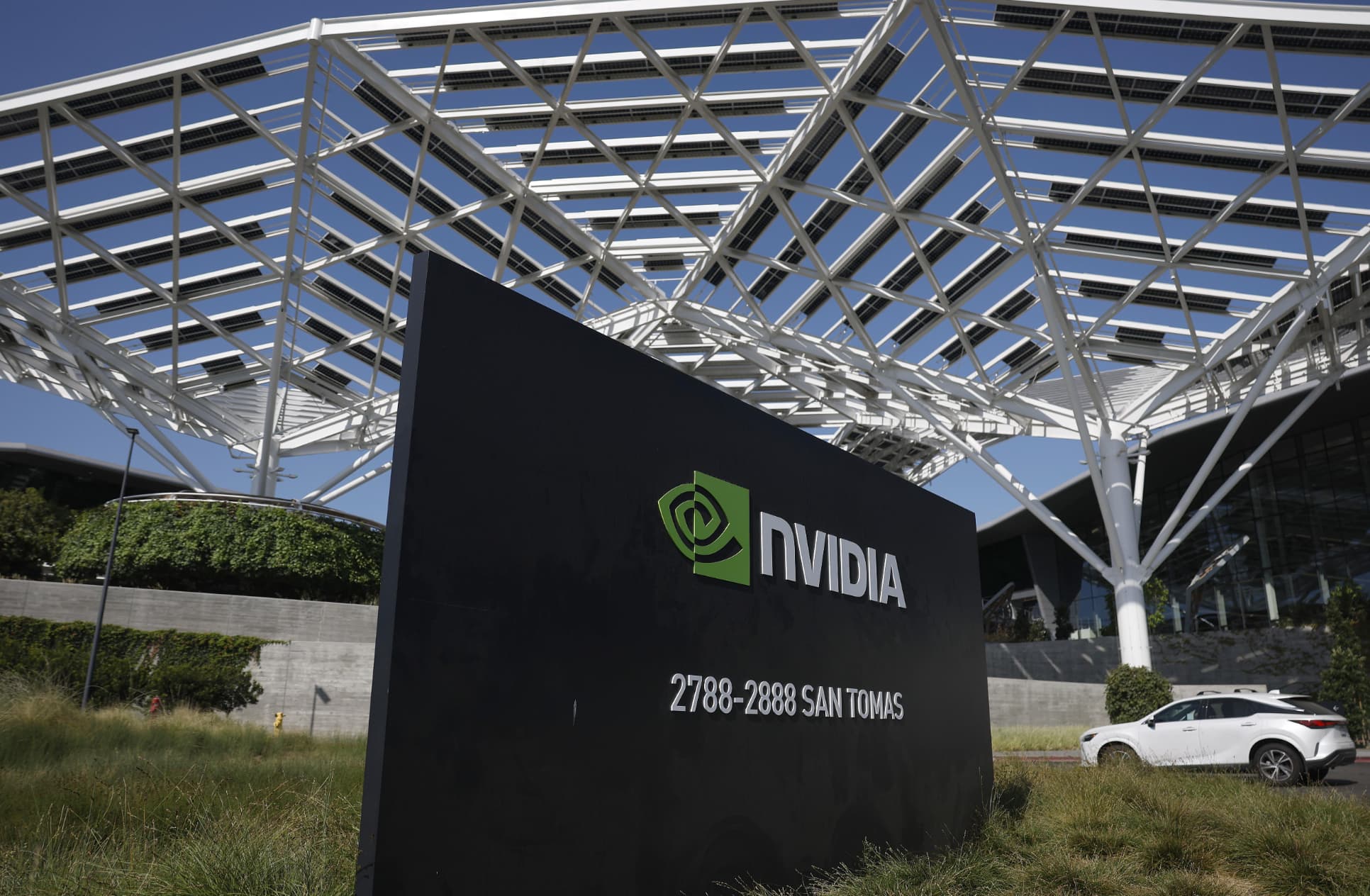
And yet, by the close of November 5, AMD was at $404.40 — down 17.26% in a single session. To put that in dollar terms: a stock that just told you Q4 revenue would be roughly $17 billion, give or take 3%, lost nearly a fifth of its market value in one trading day. The destruction wasn't limited to AMD. The same session saw Broadcom fall 10.43% to $291.53, TSMC drop 10.78% to $353.10, and Nvidia shed 9.26% to close at $181.60. Twelve AI-related stocks combined to erase $1.45 trillion in market capitalization in a single session. That is not a company-specific earnings reaction. That is a macro repricing.
The catalyst was political. Democrats swept the November 4 midterms, capturing both the House and the Senate. Investors immediately began modeling the implications: a Democratic-controlled Congress hostile to unregulated AI infrastructure buildout, potential restrictions on data center construction, and a shift in committee power that places figures like Sen. Elizabeth Warren — a consistent and vocal Nvidia critic — in positions to schedule hearings, issue subpoenas, and direct agency investigations. The fact that Democrat Gina Hinojosa won in Texas, where 25% of planned U.S. data center capacity is concentrated, sharpened the concern considerably.
The Political Overhang Is Structural, Not Temporary
Jefferies equity strategist Jane Gibbons described Thursday's selloff as "reactionary, not a fundamental reset, driven by a collision of concerns around AI spend, policy and inflation." That framing is analytically correct, but it understates how durable the policy risk is. Democrats take formal congressional control in January 2026. That is not a rumor or a risk scenario — it is the calendar. The question for chip investors is not whether oversight intensifies, but how fast and how specifically it targets the infrastructure buildout.
The DOJ antitrust investigation into Nvidia is already active and has escalated to include subpoenas issued to third-party companies, not just Nvidia itself. The focal point of that investigation, at least publicly, is Nvidia's $20 billion arrangement with AI-inference startup Groq — a deal structured in a way that avoided a merger filing. That is exactly the kind of transaction that draws scrutiny when a new congressional majority is looking for high-profile targets. Meanwhile, AMD's own political exposure, while less acute than Nvidia's, includes the broader China chip-export framework. The Megaspeed situation — in which an executive with alleged Beijing intelligence ties oversaw purchases of at least $4.8 billion of AI equipment containing Nvidia chips between June 2024 and February 2026 — has put the entire sector under a foreign-adversary lens that AMD cannot fully sidestep regardless of its own compliance posture.
None of that changes AMD's $17 billion Q4 revenue guide. AWS grew 39.3% in Q3 to nearly $46 billion, its fastest clip in nearly five years, confirming that hyperscaler AI infrastructure spending has not decelerated. Broadcom's own Q4 FY2026 AI semiconductor revenue target sits at $21.7 billion, issued in September guidance that has not been walked back. The demand is real. The question the market is now pricing is whether Washington can slow the pace of monetizing that demand — and at what valuation multiple chip stocks deserve while that question remains open. AMD's current price-to-book of 12.67x and Nvidia's trailing P/E of 40x represent multiples that leave essentially no margin of error if a single piece of hostile legislation clears committee.
What Traders Watch Next
This morning's pre-market action suggests the two-day, $3 trillion S&P 500 wipeout was at minimum technically extended. As of Friday morning, Lam Research is leading the bounce at +9.8%, followed by Marvell at +7.8%, KLA at +7.5%, and Micron at +7.4%. AMD is reclaiming 6.6%, TSMC 6.3%, and Nvidia 3.4%. The relative underperformance of Nvidia in today's bounce — recovering less than half of Wednesday's 9.26% loss while equipment names like Lam and KLA rip nearly 10% — is worth watching. Equipment stocks typically bounce harder because they sit one step removed from the direct political narrative; Nvidia's more modest recovery suggests the market is not yet willing to fully dismiss the Jensen Huang-specific regulatory and congressional risk.
That risk crystallizes on two specific dates. November 17 is Nvidia's Q3 earnings report. November 18 is the joint closed-door congressional briefing that Republican House committee chairmen Brian Mast, John Moolenaar, and Rick Crawford have formally requested from Huang — a request tied directly to the Megaspeed intelligence assessment reported by the New York Times on October 29. The juxtaposition is extraordinary: Huang is being asked to report to Congress the morning after his company reports earnings in what may be the most politically charged single-stock event in the semiconductor sector's recent history. AMD's $17 billion Q4 guide is the demand floor. Nvidia's November 17 print is the ceiling. If Huang delivers numbers that confirm the AI infrastructure cycle is intact — and if the congressional briefing produces nothing more than a letter and a news cycle — the pre-market bounce that began this morning has room to extend toward AMD's pre-election levels above $480. If Nvidia guides conservatively, or if the November 18 briefing produces a subpoena or a headline suggesting export controls are coming, the two-day selloff will look like a preview rather than a panic bottom. Watch Nvidia's data center revenue line and its implied Q4 gross margin for the first signal.
The Weekly Investor
Daily market analysis for active traders. Free.