ADP Jobs Miss Warning: 67K Forecast Threatens December Hike
ADP private payrolls October consensus sits at 67K vs September's 90K beat. With December Fed hike odds at 79%, today's number is binary for markets.
Key Points
- ADP's October private payrolls consensus of 67K would mark a 26% deceleration from September's 90K beat, the sharpest monthly drop in hiring momentum this cycle.
- Two Fed governors dissented at October's hold to push for an immediate hike, and job openings rising to 7.52 million in September drove December hike odds to 79% on CME FedWatch.
- A print above 80K today likely cements December, while a sub-50K shock reopens the hold debate heading into Friday's NFP — watch the 10-year yield at 4.928% as the real-time verdict.
ADP's October private payrolls number hits the tape at 8:15 AM ET this morning with consensus pinned at 67K — a figure that, if confirmed, would represent the weakest monthly private hiring read since the spring and drain momentum from a labor market that just two months ago looked like it was reaccelerating. The stakes are unusually high: with December Fed hike odds sitting at 79% on CME FedWatch and a 10-2 FOMC vote in October already revealing two governors who wanted to hike immediately, today's ADP print is the first hard data point of the week in a two-day sequence that ends Friday with nonfarm payrolls.
The Fed's Live Wire
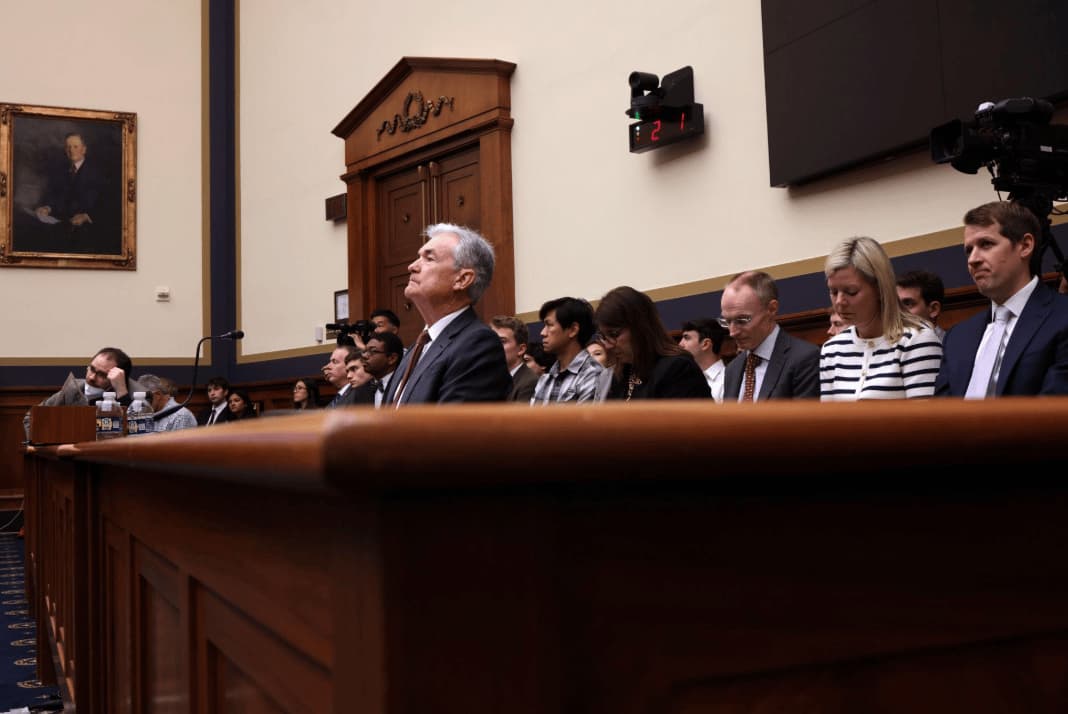
The October FOMC decision — a hold at 3.75%–4.00% — was not a comfortable one. Governors Lisa D. Cook and Beth M. Hammack both dissented in favor of a 25 basis point hike at that meeting, an unusually explicit signal from inside the building that the committee's patience is conditional and running thin. Chairman Kevin Warsh's post-meeting statement upgraded the economy's characterization from "solid" to "strong," language that in Fed-speak is not casual. The committee sees growth; it also sees inflation at "elevated" levels and is not signaling any rush toward cuts.
What tipped December odds from 72% to 79% was not the FOMC statement itself — it was the September JOLTS report, released Tuesday, which showed job openings climbing back to 7.52 million. That number matters because it reflects labor demand, not just hiring activity, and it tells the Fed that the supply-demand imbalance in the jobs market has not normalized despite 14 months of rates above 3.50%. The Fed hiked once in September — its first move of 2026 — after holding from January through July. If the data keeps cooperating with the hawks, December will not be a debate. It will be a formality.
The critical detail inside today's ADP report will not be the headline. It will be the composition. September's 90K beat was driven disproportionately by services-sector hiring, which is exactly the pocket of the economy the Fed is watching most closely because it is both the most wage-sensitive and the most inflation-persistent. If October's services component remains firm while goods and manufacturing hiring softens, that is the worst possible combination from a policy standpoint: it validates the ISM Prices Paid component of 74.0 — which follows at 10:00 AM ET — without offering any relief on the inflation side of the ledger.
What the Data Actually Shows
The ADP series has had a complicated relationship with the BLS nonfarm payrolls number this cycle. In August, ADP came in at 36K — a near-recessionary print — before rebounding to 90K in September against a consensus of 73K. That volatility has made the series less useful as a pure NFP predictor but more useful as a signal of directional momentum in private-sector hiring. The question today is whether the August weakness was an aberration or the beginning of a trend that September briefly interrupted.
Context matters here. The Atlanta Fed's GDPNow tracker is currently running at 3.7% for Q4, a robust pace that is inconsistent with an economy that is about to roll over. Consumer spending has remained resilient, productivity growth has been strong enough to show up explicitly in the FOMC statement, and the S&P Global Services PMI flash for October came in at 57.9 — still comfortably in expansion territory, though down from September's 58.8. None of that backdrop screams 67K. If anything, it argues for a number closer to 80K, which would push December hike odds to the low-to-mid 80s percent range before the opening bell on Wall Street.
The bond market is already pricing significant stress. The 10-year Treasury yield at 4.928% is within striking distance of the psychologically significant 5% threshold that has repeatedly triggered equity volatility this cycle. The 30-year sits at 5.311% and the 5-year at 4.723%, producing a yield curve that is no longer inverted at the front end but remains under pressure from the long end — driven in large part by Treasury supply. This afternoon's quarterly refunding statement at 1:30 PM ET, following Monday's Q4 borrowing estimate of $628 billion, will add another layer of pressure on duration if coupon issuance guidance surprises to the upside. The bond market is not waiting for the Fed to move — it has already moved.
What Traders Watch Next
The sequencing of today's data flow is critical. ADP at 8:15 AM ET sets the tone. If it beats 80K, risk assets will likely sell off on the front end of the curve — the 2-year yield, currently below the 10-year, will push higher as December becomes consensus. If ADP misses badly, say sub-50K, there will be a brief rally in Treasuries and equities before the market remembers that ISM Services and its 74.0 Prices Paid component arrive at 10:00 AM ET and can reverse that move in a single print.
The ISM Services report is arguably more durable in its market impact than ADP because it covers both activity and price pressure simultaneously. The business activity sub-index at 56.5 and the employment sub-index at 50.1 from September signal a services economy that is growing but not adding jobs at a pace that should worry the Fed on its own. The Prices Paid component at 74.0 is the problem — anything above 70 is historically associated with services inflation that does not resolve quickly, and that component has shown no meaningful downward trend in the last three months.
Traders positioning ahead of Friday's NFP — consensus currently expected in the low-to-mid 100K range based on the ADP and JOLTS trajectory — should treat today as a dress rehearsal. The key level to watch on the 10-year is 5.00%: a close above that figure following today's data would represent a significant technical and psychological break that historically has preceded equity multiple compression in the range of 8–12% over the following six to eight weeks. The next hard catalyst after today is Friday's BLS nonfarm payrolls at 8:30 AM ET, followed by the FOMC blackout period beginning November 28 — after which the committee goes dark until the December 8–9 decision. Everything between now and November 27 is live.
The Weekly Investor
Daily market analysis for active traders. Free.