13 ETFs Closing Oct. 19 as Space Funds Hit $750M
Themes ETF Trust kills 13 funds by October 19 as single-name AI leverage fails. Meanwhile, space ETFs surge toward a potential $1.5T SpaceX IPO. Where money is moving.
Key Points
- Themes ETF Trust is liquidating 13 ETFs effective October 19, including leveraged single-name AI plays on Anthropic and Nscale, confirming that niche leverage products without institutional backing cannot survive the current AUM environment.
- Space ETFs are the sharpest counterexample — Procure Space ETF (UFO) has grown from $50 million to $750 million in 12 months as issuers position aggressively ahead of a potential SpaceX IPO valued near $1.5 trillion.
- Watch whether the wave of new space ETF entrants — MARS, NASA, ORBX — begins cannibalizing UFO's AUM or whether the SpaceX IPO catalyst is large enough to expand the entire category.
Themes ETF Trust announced October 9 that it is shuttering 13 ETFs — effective close of trading on October 19 — because the funds failed to attract sufficient assets to remain viable. The closures include leveraged and inverse single-name products tied to Anthropic (ANUU, ANDD, ANSS) and Nscale (NSUU, NSDD), and they arrive as the same thematic universe is producing one of the ETF industry's cleaner success stories: space funds, fueled by SpaceX IPO anticipation, are drawing hundreds of millions in fresh capital.
When the Thematic Bet Goes Wrong
The Themes ETF liquidations are a textbook case of product-market misfit at the fund level. Single-name leveraged ETFs — particularly those tied to private companies that do not trade on public exchanges — require a very specific buyer: sophisticated, short-term, tactically oriented, and willing to accept the compounding drag that daily-reset leverage products impose over multi-day holding periods. Anthropic remains private. Nscale, the AI cloud infrastructure company, does not have the name recognition or retail trading volume necessary to sustain a suite of leveraged products across bull, bear, and neutral variants simultaneously. Without daily trading volume to generate management fee revenue and market-maker interest to keep spreads tight, these funds become self-defeating.
This is Themes ETF Trust's second wave of closures in roughly six weeks. Three additional funds — LGCF, SMCF, and LIMI (Lithium & Battery Metal Miners) — were shuttered in September, suggesting the issuer is conducting a portfolio-level triage rather than responding to isolated underperformance. Creation orders for the 13 October funds halt after October 16, giving traders a three-session window to exit before the liquidation process begins. Any holder still in these positions after October 16 will receive cash at NAV during the wind-down — not a catastrophic outcome, but not a clean one either, particularly for anyone holding leveraged products where NAV can diverge meaningfully from intended exposure during liquidation.
Where the Thematic Dollar Is Actually Going
The ETF industry is not pulling back from thematic products — it is sorting them brutally. The same week Themes ETF Trust announced its closures, the broader U.S. ETF market was on pace for approximately 1,200 new fund launches in 2026, with nearly 370 already live in just over four months. September alone saw $151 billion in industry inflows, pushing year-to-date totals to a record $1.54 trillion and total AUM to $16.3 trillion. The product graveyard and the product boom are running simultaneously, and the dividing line is simple: themes with a credible near-term catalyst and addressable institutional audience survive; themes without them do not.
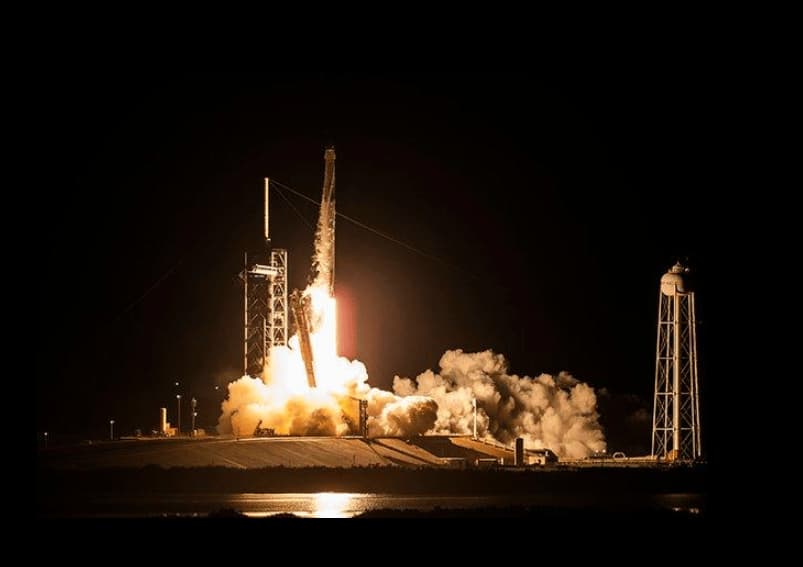
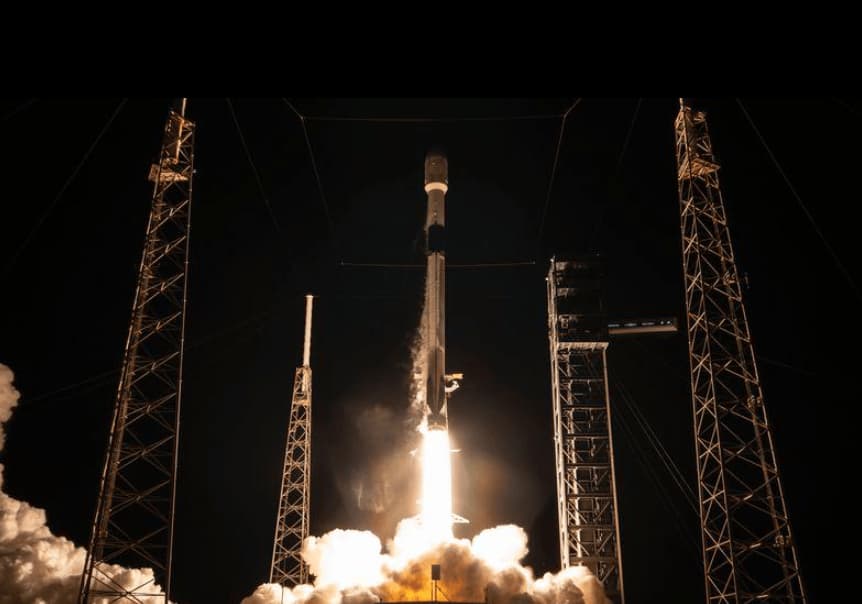
Space ETFs sit squarely on the winning side of that divide. The Procure Space ETF (UFO) has grown from $50 million to $750 million in assets over the past 12 months — a 15-fold increase that almost certainly would not have happened without the gravitational pull of a looming SpaceX IPO. SpaceX has been discussed at a valuation near $1.5 trillion, which would make it the largest IPO in market history if it proceeds. ETF issuers are not waiting for the prospectus. The Roundhill Space & Technology ETF (MARS), the Tema Space Innovators ETF (NASA), and the Global X Space Tech ETF (ORBX) have all launched as direct competitors to UFO, each attempting to establish AUM before the IPO event crystallizes retail and institutional demand into a single, searchable thematic category.
The AI Hardware Pivot and What Launches Signal
The week's other notable new entries reveal a second major thematic current: the shift in AI investment from software and model providers toward physical infrastructure. The REX AI Chipmaking ETF (CHIP) — tracking the VettaFi AI Chipmaking Index — targets the semiconductor fabrication supply chain rather than the finished-chip names that have dominated AI equity flows since 2023. This is a meaningful distinction. The iShares A.I. Innovation and Tech Active ETF (BAI) surged 1.16% today, outperforming every other sector ETF in today's session and signaling that active AI thematic strategies are drawing consistent buyer interest even as semiconductor ETFs face headwinds. SOXL and SOXX each recorded approximately $1.4 billion in outflows for the week ending October 2 — institutional money rotating out of broad semiconductor exposure precisely as more targeted AI infrastructure products launch to catch it on the other side.
The week's launch slate also included the Global X LLM ETF (LLMA), which provides direct exposure to large language model infrastructure companies, and the Amplify Top 10 Semiconductors ETF (CPU), a concentrated play on the ten largest semiconductor names. The concentration of CPU versus the thematic specificity of LLMA and CHIP illustrates how issuers are segmenting the AI trade into increasingly granular sub-exposures — a product evolution that historically accelerates near the peak of a thematic cycle but also reflects genuine differentiation in the underlying business models of AI picks-and-shovels versus AI application companies. Options-income strategies also featured prominently in last week's launches, with the FT Vest Laddered Autocallable Buffer & Resilient Income ETF (ACYB) and the VanEck U.S. Equity Buffer ETF – October (OCT) targeting the yield-hungry investor base that has been directing record capital into fixed-income ETFs all year.
The Date That Changes the Space ETF Calculus
The competitive dynamic among UFO, MARS, NASA, and ORBX will resolve in one of two ways: either SpaceX files a public offering document within the next 12–18 months and the entire space ETF category expands on the back of inflow demand, or the IPO timeline slips and the funds begin cannibalizing each other's AUM in a zero-sum fight for a fixed pool of thematic dollars. UFO's $750 million head start is a real advantage — first-mover AUM creates liquidity, tighter spreads, and index inclusion eligibility that later entrants cannot easily replicate — but it is not insurmountable if MARS or NASA launches a more precise SpaceX-heavy methodology that captures the IPO trade more directly. Watch SpaceX's secondary market valuation and any regulatory filing activity through Q1 2027. A Form S-1 submission would be the single most important catalyst for this entire ETF sub-sector and would likely drive hundreds of millions in rapid inflows across the category within days of the announcement.
The Weekly Investor
Daily market analysis for active traders. Free.